Sequential Combination of Pharmacotherapy and Psychotherapy in Major Depressive Disorder: A Systematic Review and Meta-analysis
- PMID: 33237285
- PMCID: PMC7689568
- DOI: 10.1001/jamapsychiatry.2020.3650
Sequential Combination of Pharmacotherapy and Psychotherapy in Major Depressive Disorder: A Systematic Review and Meta-analysis
Abstract
Importance: The sequential model emerged from the awareness that the persistence of residual symptoms and the frequent occurrence of psychiatric comorbidity were both associated with poor long-term outcome of major depressive disorder (MDD).
Objective: To conduct an updated meta-analysis to examine the association of the sequential combination of pharmacotherapy and psychotherapy with reduced risk of relapse and recurrence in MDD.
Data sources: Keyword searches were conducted in PubMed, PsycInfo, Web of Science, and the Cochrane Library from inception of each database through November 2019. Reference lists from relevant studies were examined using the following keywords: sequential treatment, drugs and psychotherapy, combined treatment, continuation or maintenance, relapse or recurrence and prevention, and depress* or major depress*, selecting adults and randomized controlled trials as additional limits. Authors of selected articles were contacted if needed.
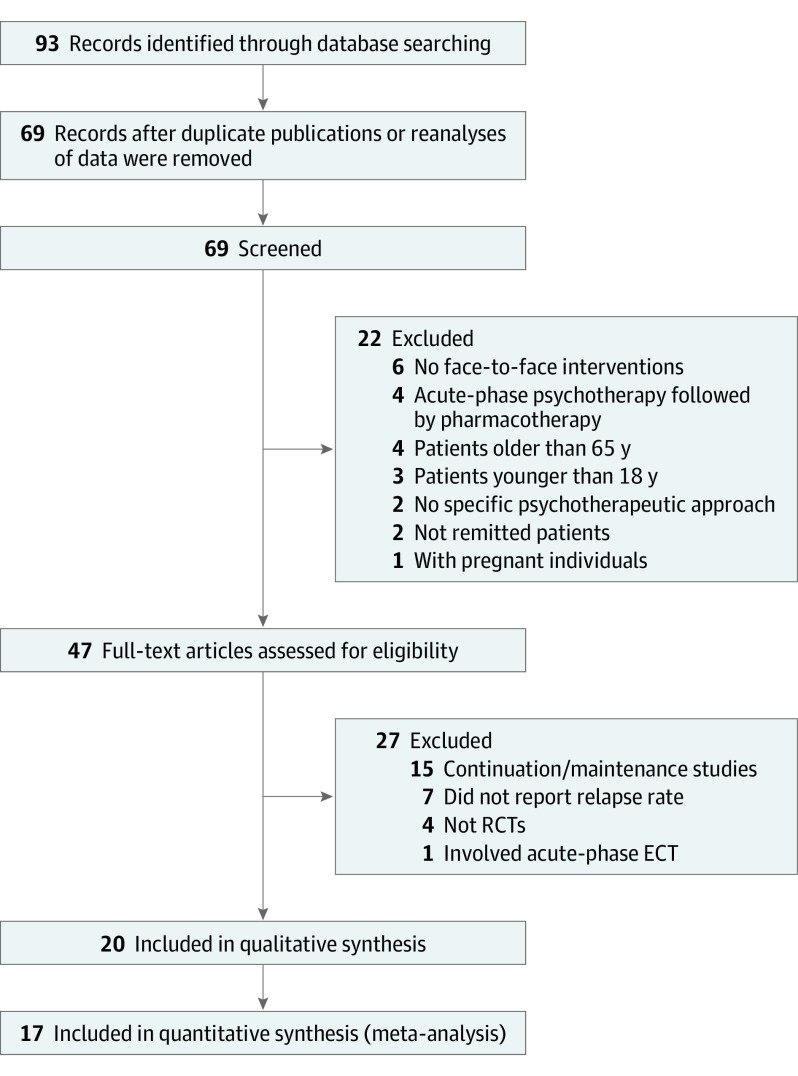
Study selection: Randomized clinical trials examining the effectiveness of the sequential use of psychotherapy following response to acute-phase pharmacotherapy in the treatment of adult remitted patients with MDD were selected independently by 2 reviewers.
Data extraction and synthesis: The methods used fulfilled the Preferred Reporting Items for Systematic Reviews and Meta-analyses (PRISMA) reporting guideline. Data extraction and methodologic quality assessment were conducted independently by the reviewers. Examination of the pooled results was performed based on the random-effects model. Heterogeneity between study results and likelihood of significant publication bias were assessed. Sensitivity analyses and meta-regressions were also run.
Main outcomes and measures: The primary outcome measures were relapse or recurrence rates of MDD, as defined by study investigators, at the longest available follow-up.
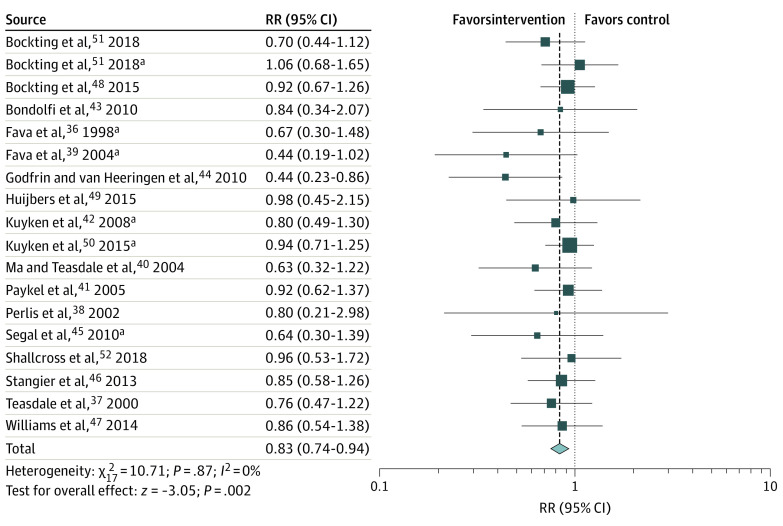
Results: Seventeen randomized clinical trials met criteria for inclusion in the meta-analysis, with 1 study yielding 2 comparisons (2283 patients overall, with 1208 patients in a sequential treatment arm and 1075 in a control arm). The pooled risk ratio for relapse/recurrence of MDD was 0.84 (95% CI, 0.74-0.94), suggesting a relative advantage in preventing relapse/recurrence for the sequential combination of treatments compared with control conditions.
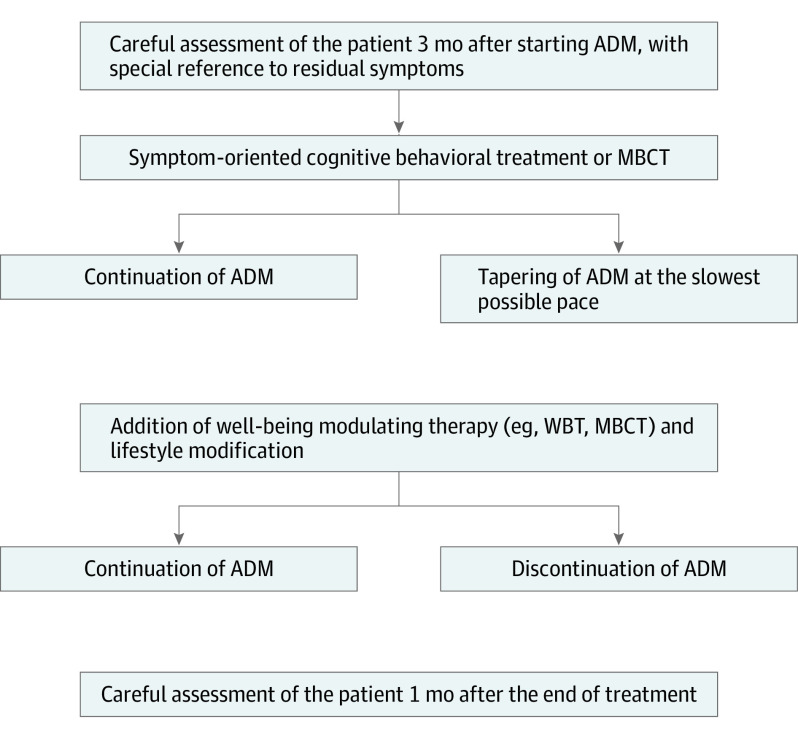
Conclusions and relevance: The results of this systematic review and meta-analysis indicate that the sequential integration of psychotherapy following response to acute-phase pharmacotherapy, alone or combined with antidepressant medication, was associated with reduced risk of relapse and recurrence in MDD. The preventive value of the sequential strategy relies on abatement of residual symptoms and/or increase in psychological well-being. The steps for implementing the sequential approach in remitted patients with recurrent MDD are provided.
Conflict of interest statement
Figures
References
Publication types
MeSH terms
Substances
LinkOut - more resources
Full Text Sources
Other Literature Sources
Medical
Miscellaneous