


Macromorphological findings in cases of death in water: a critical view on "drowning signs"
- PMID: 33237456
- PMCID: PMC7782435
- DOI: 10.1007/s00414-020-02469-9
Macromorphological findings in cases of death in water: a critical view on "drowning signs"
Abstract
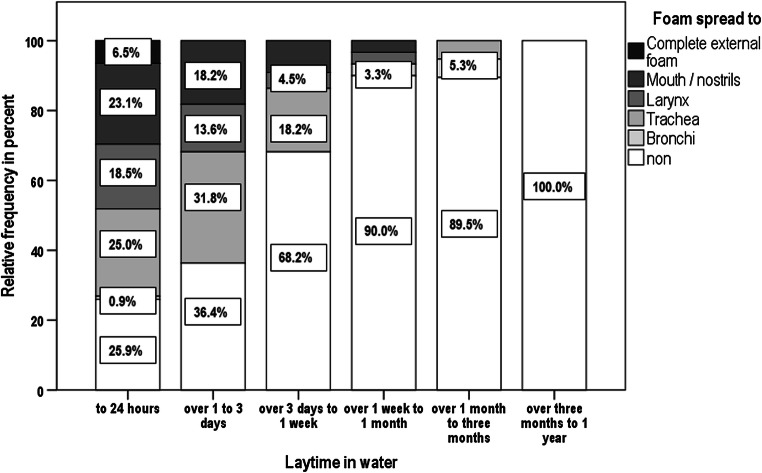
Death in water is a challenging issue in forensic pathology since from natural death to homicide all circumstances of death in water are conceivable. Therefore, the correct interpretation of all abnormal autopsy findings is important. In order to determine a death by drowning, numerous internal and external signs of drowning are already described. However, these are supposed to be influenced by various factors reducing their significance and evidence. Moreover, the autopsy of water corpses often reveals further pathological findings that should not be underestimated for determining the cause of death. The aim of this study was to set frequencies of the observed drowning signs in context to the forensic literature and to identify possible influencing factors. In this study, we observed that pathological organ changes of the cardiovascular system were significantly more common in corpses after shortened (atypical) drowning processes than in classical drowned victims. Furthermore only a complete formation of external foam, immediately after the corpse's recovery, was exclusively found in drowning victims. All other drowning signs were either also observed in non-drowning deaths in water or no information could be provided with reasonable assurance. In addition, many of the examined drowning signs were negatively affected by prolonged postmortem intervals, putrefaction, or resuscitation attempts. It can be concluded from our analysis that morbidity is an important factor in deaths in water. Morbidity can support a death by drowning in case of incidents in water. For the examined drowning signs, no high diagnostic certainty could be observed. Nevertheless, these findings can increase their diagnostic value-if forensic physicians take influencing factors into consideration.
Keywords: Autopsy diagnoses; Drowning; Emphysema aquosum; Foam; Putrefaction; Svechnikov sign.
Conflict of interest statement
The authors declare that they have no conflict of interest.
Figures


Comment in
-
Commentary on "Macromorphological findings in cases of death in water: a critical view on drowning signs".Int J Legal Med. 2021 Jul;135(4):1563-1564. doi: 10.1007/s00414-021-02524-z. Epub 2021 Feb 14. Int J Legal Med. 2021. PMID: 33586029 No abstract available.
References
-
- Püschel K (2007) Problemfall „Wasserleiche“/Ertrinken. Unfall, Suizid, natürlicher Tod oder Tötungsdelikt?. Kriminalistik 61:545–550
-
- WHO . Global report on drowning. Geneva: World Health Organization; 2014.
MeSH terms
LinkOut - more resources
Full Text Sources
Medical
