


Motivation and Problem Solving (MAPS): Motivationally Based Skills Training for Treating Substance Use
- PMID: 33239855
- PMCID: PMC7685295
- DOI: 10.1016/j.cbpra.2011.11.001
Motivation and Problem Solving (MAPS): Motivationally Based Skills Training for Treating Substance Use
Abstract
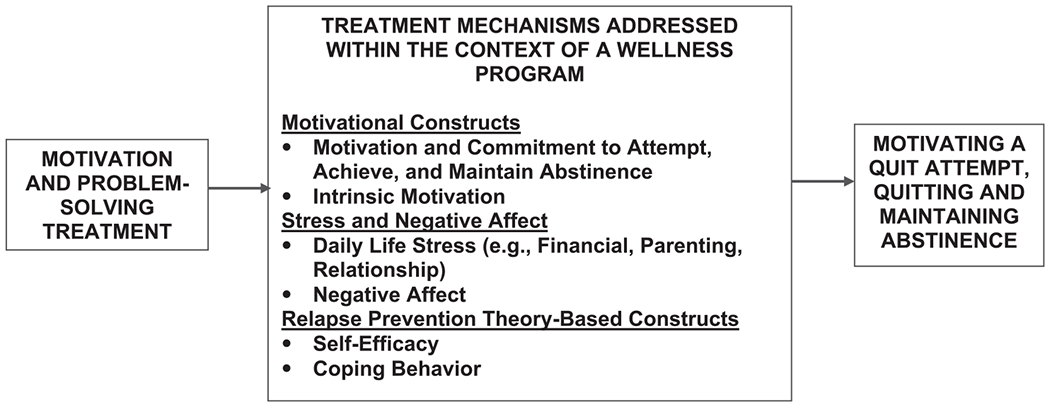
Over 10 years ago, Baer and colleagues proposed the integration of skills training and motivational strategies for the treatment of substance abuse. Since that time, several studies evaluating the efficacy of such hybrid approaches have been published, but few have been efficacious. Motivation and Problem Solving (MAPS) is a comprehensive, dynamic, and holistic intervention that incorporates empirically supported cognitive behavioral and social cognitive theory-based treatment strategies within an overarching motivational framework, and has been demonstrated to be effective in a randomized clinical trial focused on the prevention of postpartum smoking relapse. MAPS was designed to be applicable to not only relapse prevention but also the cessation of substance use, and is relevant for individuals regardless of their motivation to change. MAPS views motivation as dynamically fluctuating from moment to moment throughout the behavior change process, and comprehensively addresses multiple issues important to the individual and relevant to change through the creation of a wellness program. As a result, we believe that MAPS enhances the likelihood that individuals will successfully achieve and maintain abstinence from substance use, and that its comprehensive focus on addressing diverse and salient issues enhances both engagement in treatment and its applicability in modifying other health risk behaviors. The current paper introduces MAPS, distinguishes it from other hybrid and stage-based substance use treatments, and provides detailed information and clinical text regarding how MAPS is specifically and uniquely implemented to address key mechanisms relevant to quitting smoking and maintaining abstinence.
Keywords: motivation; skills training; smoking cessation; social cognitive theory; tobacco dependence.
References
-
- Amrhein PC, Miller WR, Yahne CE, Palmer M, & Fulcher L (2003). Client commitment language during motivational interviewing predicts drug use outcomes. Journal of Consulting and Clinical Psychology, 71, 862–878. - PubMed
-
- Anton RF, O’Malley SS, Ciraulo DA, Cisler RA, Couper D, Donovan DM, … COMBINE Study Research Group. (2006). Combined pharmacotherapies and behavioral interventions for alcohol dependence: the COMBINE study: A randomized controlled trial. Jama, 295(17), 2003–2017. - PubMed
-
- Arkowitz H, & Westra HA (2004). Integrating motivational interviewing and cognitive behavioral therapy in the treatment of depression and anxiety. Journal of Cognitive Psychotherapy: An International Quarterly, 18, 337–350.
-
- Babor TF, Carroll K, Christiansen K, Kadden R, Litt M, McRee B, …, Herrell J (2004). Brief treatments for cannabis dependence: Findings from a randomized multisite trial. Journal of Consulting and Clinical Psychology, 72, 455–466. - PubMed
-
- Baer JS, Kivlahan DR, & Donovan DM (1999). Integrating skills training and motivational therapies. Implications for the treatment of substance dependence. Journal of Substance Abuse Treatment, 17(1–2), 15–23. - PubMed
Grants and funding
LinkOut - more resources
Full Text Sources
Medical
Research Materials