


Sediment source fingerprinting: benchmarking recent outputs, remaining challenges and emerging themes
- PMID: 33239964
- PMCID: PMC7679299
- DOI: 10.1007/s11368-020-02755-4
Sediment source fingerprinting: benchmarking recent outputs, remaining challenges and emerging themes
Abstract
Purpose: This review of sediment source fingerprinting assesses the current state-of-the-art, remaining challenges and emerging themes. It combines inputs from international scientists either with track records in the approach or with expertise relevant to progressing the science.
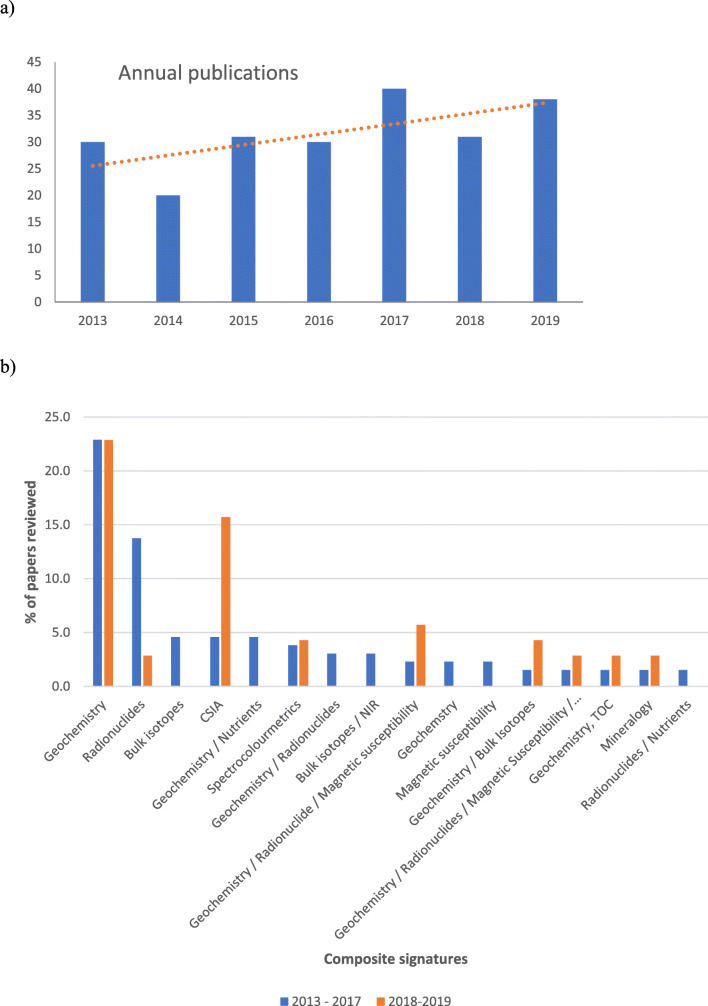
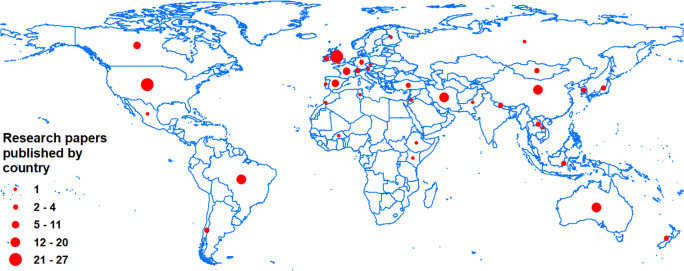
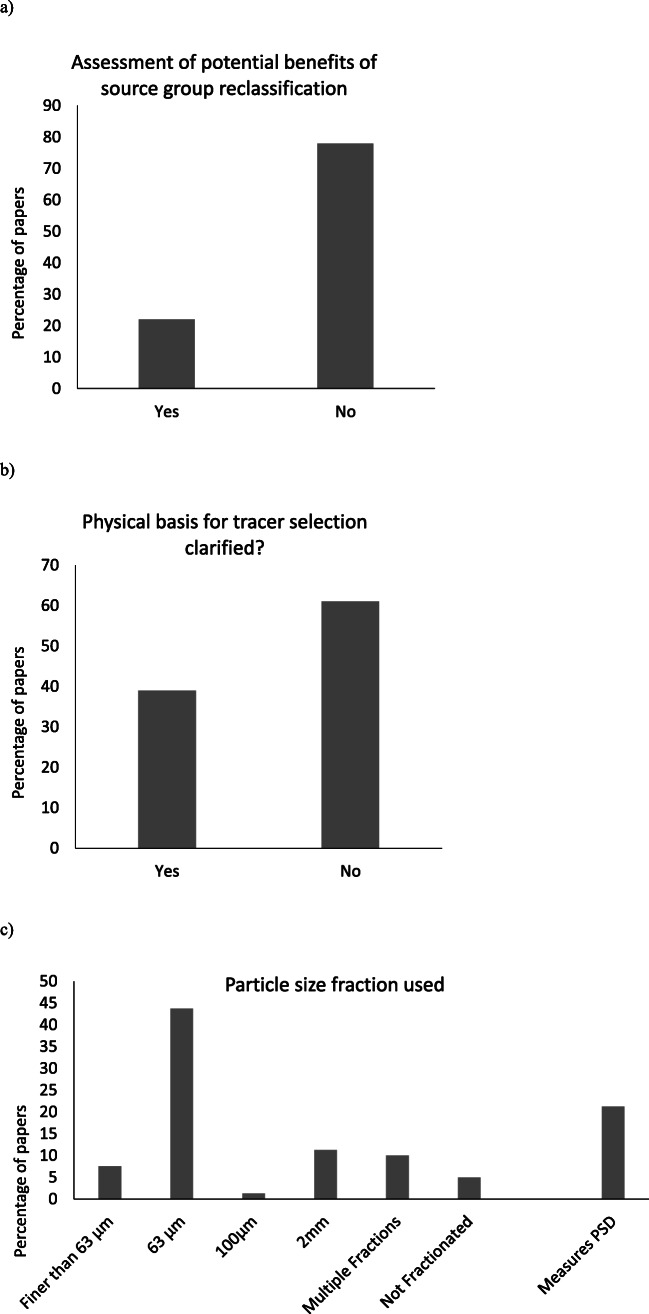
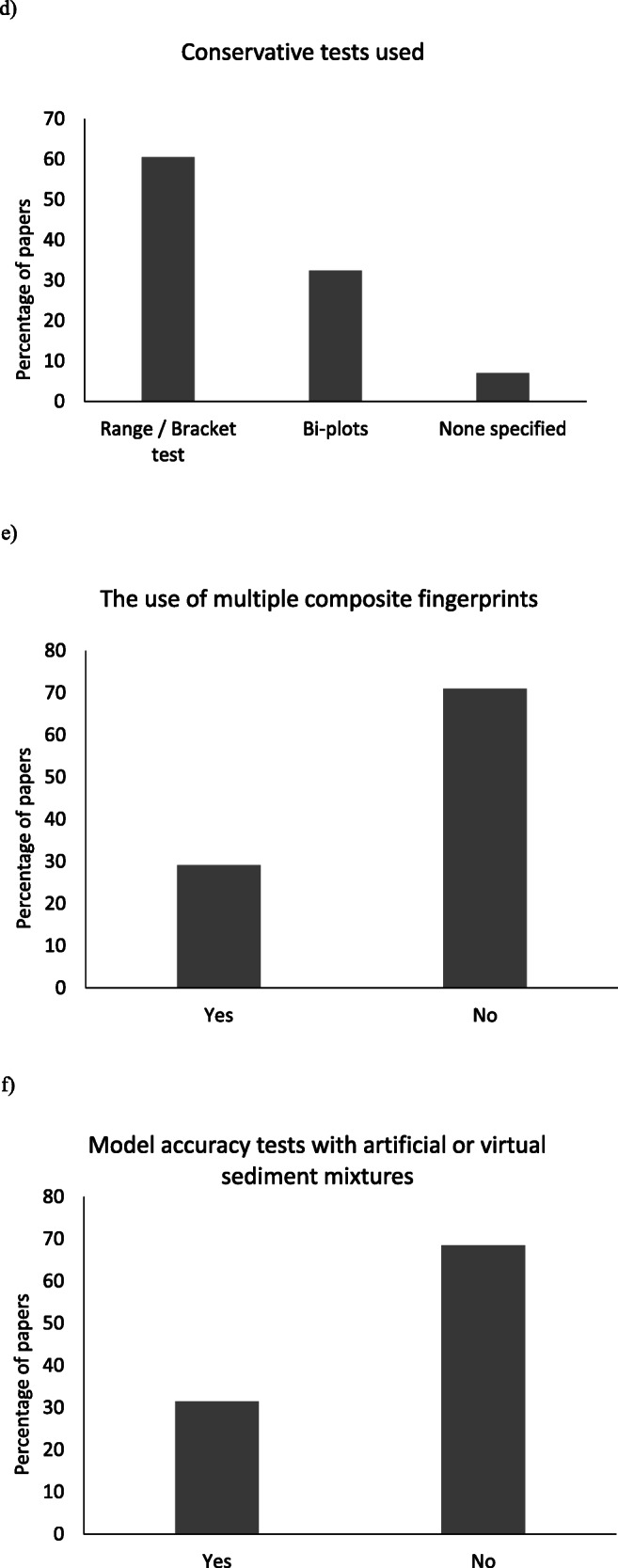
Methods: Web of Science and Google Scholar were used to review published papers spanning the period 2013-2019, inclusive, to confirm publication trends in quantities of papers by study area country and the types of tracers used. The most recent (2018-2019, inclusive) papers were also benchmarked using a methodological decision-tree published in 2017.
Scope: Areas requiring further research and international consensus on methodological detail are reviewed, and these comprise spatial variability in tracers and corresponding sampling implications for end-members, temporal variability in tracers and sampling implications for end-members and target sediment, tracer conservation and knowledge-based pre-selection, the physico-chemical basis for source discrimination and dissemination of fingerprinting results to stakeholders. Emerging themes are also discussed: novel tracers, concentration-dependence for biomarkers, combining sediment fingerprinting and age-dating, applications to sediment-bound pollutants, incorporation of supportive spatial information to augment discrimination and modelling, aeolian sediment source fingerprinting, integration with process-based models and development of open-access software tools for data processing.
Conclusions: The popularity of sediment source fingerprinting continues on an upward trend globally, but with this growth comes issues surrounding lack of standardisation and procedural diversity. Nonetheless, the last 2 years have also evidenced growing uptake of critical requirements for robust applications and this review is intended to signpost investigators, both old and new, towards these benchmarks and remaining research challenges for, and emerging options for different applications of, the fingerprinting approach.
Keywords: Biomarkers; Fingerprinting approach; Sediment-age dating; Tracers; Weathering indices.
© The Author(s) 2020.
Conflict of interest statement
Conflict of interestThe authors declare that they have no conflicts of interest.
Figures
References
-
- Alewell C, Birkholz A, Meusburger K, Wildhaber YS, Mabit L. Quantitative sediment source attribution with compound-specific isotope analysis in a C3 plant-dominated catchment (central Switzerland) Biogeosciences. 2016;13:1587–1596.
-
- Appleby PG. Chronostratigraphic techniques in recent sediments. In: Last WM, Smol JP, editors. Tracking environmental change using lake sediments volume 1: basin analysis, coring, and chronological techniques. Dordrecht: Kluwer Academic Publishers; 2001. pp. 171–203.
-
- Appleby PG, Richardson N, Nolan PJ. 241AM dating of lake-sediments. Hydrobiologia. 1991;214:35–42.
-
- Appleby PG, Semertzidou P, Piliposian GT, Chiverrell RC, Schillereff DN, Warburton J. The transport and mass balance of fallout radionuclides in Brotherswater, Cumbria (UK) J Paleolimnol. 2019;62:389–407.
-
- Arnaud F, Magand O, Chapron E, Bertrand S, Boes X, Charlet F, Melieres MA. Radionuclide dating (Pb-210, Cs-137, Am-241) of recent lake sediments in a highly active geodynamic setting (Lakes Puyehue and Icalma-Chilean Lake District) Sci Total Environ. 2006;366:837–850. - PubMed
Grants and funding
LinkOut - more resources
Full Text Sources