


Microglia and Inflammatory Responses in Diabetic Retinopathy
- PMID: 33240260
- PMCID: PMC7681237
- DOI: 10.3389/fimmu.2020.564077
Microglia and Inflammatory Responses in Diabetic Retinopathy
Abstract
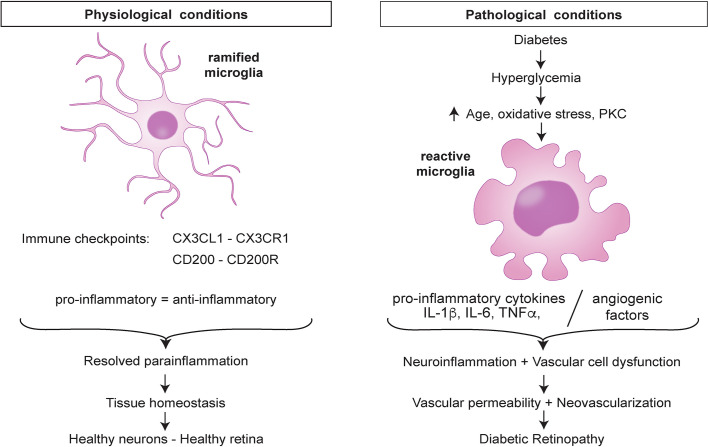
Diabetic retinopathy is a vision-threatening disease affecting neurons and microvasculature of the retina. The development of this disease is associated with the action of inflammatory factors that are connected to the activation of microglial cells, the resident tissue macrophages of the CNS. In the quiescent state, microglial cells help maintain tissue homeostasis in the retina through phagocytosis and control of low-grade inflammation. However, prolonged tissue stress due to hyperglycemia primes microglia to become overly reactive with the concomitant production of pro-inflammatory cytokines and chemokines causing chronic inflammation. In this review, we provide evidence of microglial cell activation and pro-inflammatory molecules associated with the development and progression of diabetic retinopathy. We further highlight innovative animal models that can mimic the disease in humans and discuss strategies in modulating microglial-mediated inflammation as potential therapeutic approaches in managing the disease.
Keywords: chemokines; cytokines; diabetic retinopathy; hyperglycemia; inflammation; microglia.
Copyright © 2020 Kinuthia, Wolf and Langmann.
Figures
References
Publication types
MeSH terms
Substances
LinkOut - more resources
Full Text Sources
Medical
