


Patterns and associated factors of COVID-19 knowledge, attitude, and practice among general population and health care workers: A systematic review
- PMID: 33240497
- PMCID: PMC7675903
- DOI: 10.1177/2050312120970721
Patterns and associated factors of COVID-19 knowledge, attitude, and practice among general population and health care workers: A systematic review
Abstract
Introduction: Coronavirus disease 2019 is a pandemic disease, requiring persons around the world to take immediate action to reduce the risk of infection. This study was aimed to summarize the patterns and determinants of coronavirus disease 2019 knowledge, attitude, and practice among general populations and health workers.
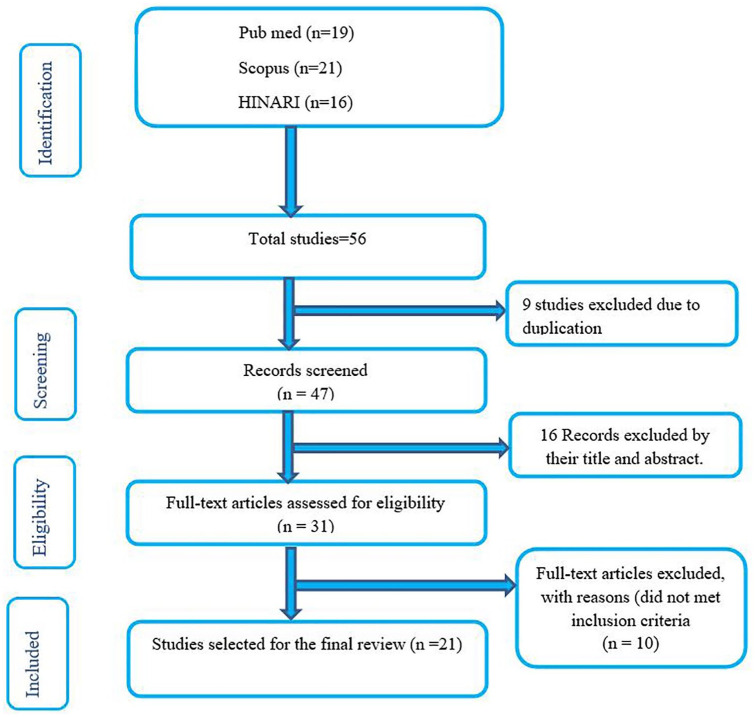
Methods: A cross-sectional study from PubMed, HINARI, and Scopus were searched from March 16 to July 30, 2020. The review was done in line with the Preferred Reporting Items for Systematic Reviews and Meta-analyses-2009.
Result: We found 56 articles upon the initial search. Finally, 21 studies were filtered to be studied in this systematic review. Overall, the majority of the articles that were previously published had good knowledge about coronavirus disease 2019 that lies in the ranges from 40% to 99.5%. A good attitude lies in the ranges from 70% to 97.1%. Among impact of coronavirus disease 2019 on mental health, only anxiety was reported that ranges from 24.6% to 96.3%. We found the variable practice towards combating coronavirus disease 2019. Several factors were associated with poor knowledge, attitudes, and practice skills regarding the pandemic of coronavirus disease 2019 such as level of education, occupation, income, gender, age, residence, work experience, religion, having media, marital status, and race.
Conclusion: The majority of the articles that were previously published had found good knowledge and attitude about coronavirus disease 2019 and variable reports for practice to combat the disease. Most of them were severely worried about the disease. Therefore, the mental effect of the coronavirus disease 2019 should be studied at large, and every country should implement the strategy to combat the disease to increase the level of practice.
Keywords: Coronavirus disease 2019; associated factors; attitude; knowledge; practice.
© The Author(s) 2020.
Conflict of interest statement
Declaration of conflicting interests: The author(s) declared no potential conflicts of interest with respect to the research, authorship, and/or publication of this article.
Figures
References
Publication types
LinkOut - more resources
Full Text Sources
