


Diabetic Cardiomyopathy as a Clinical Entity: Is It a Myth?
- PMID: 33240696
- PMCID: PMC7681757
- DOI: 10.7759/cureus.11100
Diabetic Cardiomyopathy as a Clinical Entity: Is It a Myth?
Abstract
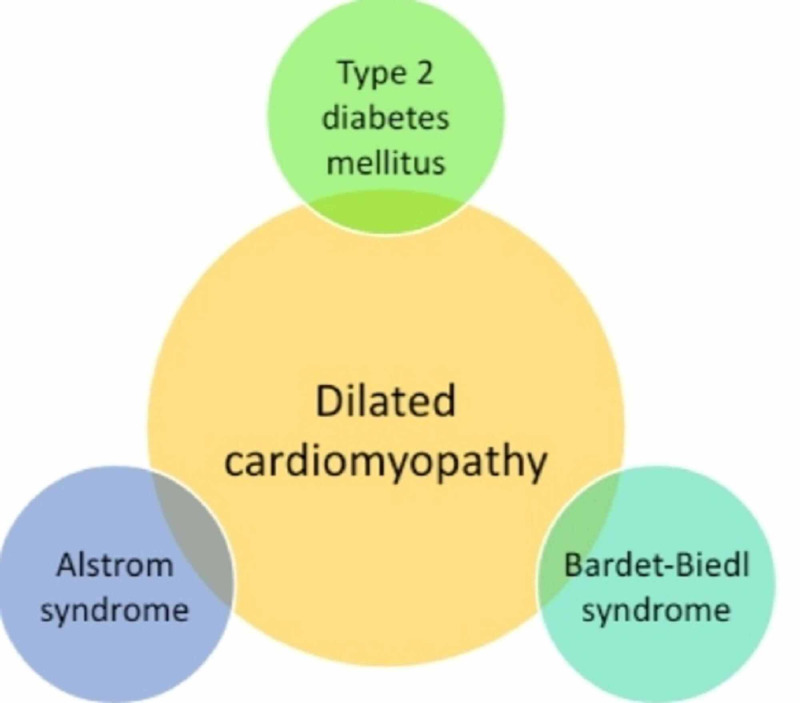
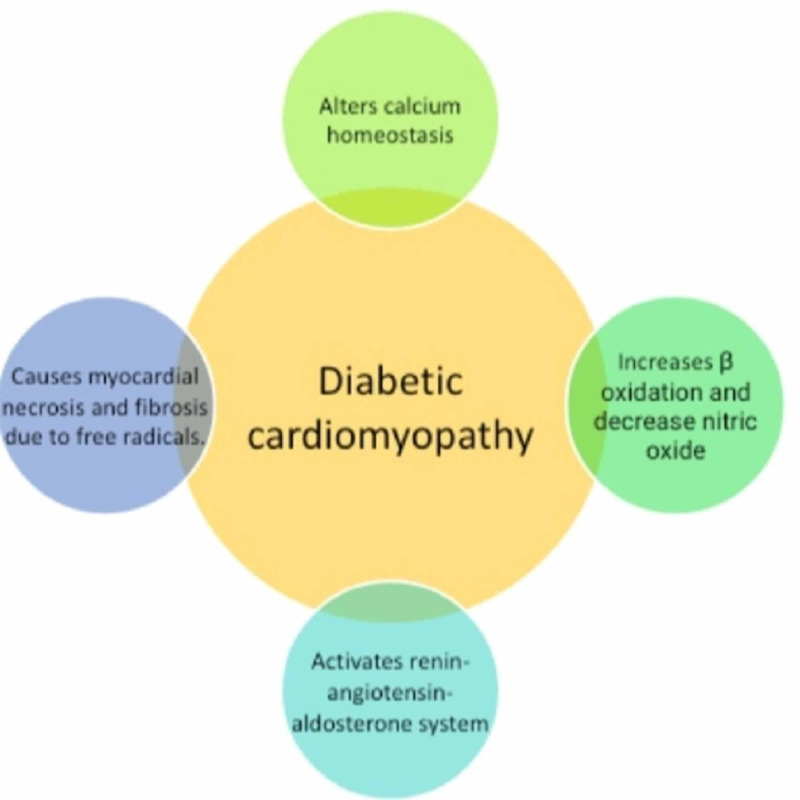
Dilated cardiomyopathy (DCM) is a common form of cardiomyopathy that affects the cardiac muscle. It is a life-threatening condition that causes heart failure as it decreases the myocardial ability to pump sufficient blood throughout the body. Numerous causes trigger DCM without pathophysiology; however, the key concept is a decrease in the systolic function of either the left ventricle or of both the left and right ventricles. Long-term diabetes plays an important role in the pathogenesis of DCM in the form of diabetic cardiomyopathy. Diabetic cardiomyopathy is a non-ischemic form of DCM, which is associated with diabetes. It is unrelated to atherosclerosis and hypertension. The PubMed and Google Scholar databases were used to identify the relevant studies related to diabetes and DCM. We found that diabetes was associated with cardiac muscle injury by activating the renin-angiotensin-aldosterone system, myocardial inflammation, and fibrosis. Based on the available data, we concluded that there is strong evidence to support the interrelation of DCM and diabetes.
Keywords: diabetic cardiomyopathy; dilated cardiomyopthy; type 2 diabetes mellitus.
Copyright © 2020, Zaveri et al.
Conflict of interest statement
The authors have declared that no competing interests exist.
Figures
References
-
- Dilated cardiomyopathy pathology. [Jun;2020 ];https://emedicine.medscape.com/article/2017823-overview 2015
-
- Dilated cardiomyopathy (DCM) [Jun;2020 ];https://www.heart.org/en/health-topics/cardiomyopathy/what-is-cardiomyop... 2016
-
- Personalizing risk stratification for sudden death in dilated cardiomyopathy: the past, present, and future. Halliday BP, Cleland JG, Goldberger JJ, Prasad SK. http://www.ahajournals.org/doi/full/10.1161/CIRCULATIONAHA.116.027134. Circulation. 2017;136:215–231. - PMC - PubMed
Publication types
LinkOut - more resources
Full Text Sources