. 2020 Nov 9:7:568201.
doi: 10.3389/fmed.2020.568201. eCollection 2020.

Bridging "Office-Based Care" With the "Virtual Practice Care Model": Evolving Care for Chronic Kidney Disease Patients in the COVID-19 Pandemic-And Beyond

Affiliations

Bridging "Office-Based Care" With the "Virtual Practice Care Model": Evolving Care for Chronic Kidney Disease Patients in the COVID-19 Pandemic-And Beyond

Bingbin Zhao et al. Front Med (Lausanne). .

Abstract

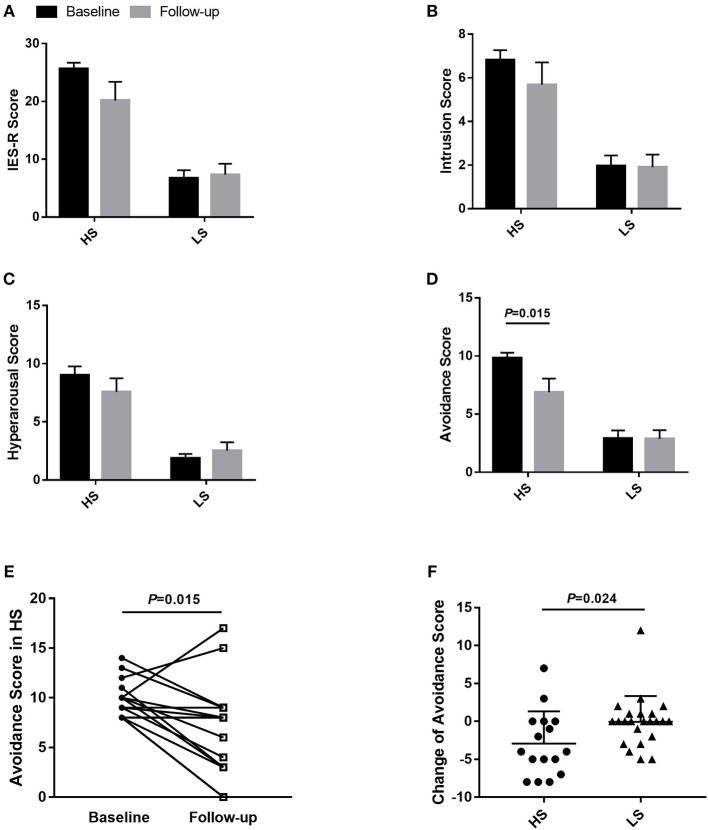
Since the outbreak of the coronavirus epidemic, the "virtual" telemedicine has become a critical substitute for patient-provider interactions. However, virtual encounters often face challenges in the care of patients in high-risk categories such as chronic kidney disease (CKD) patients. In this study, we explore the patient's satisfaction and the practical effects of a newly established telemedicine program on CKD patients' care during the COVID-19 pandemic. Based on a prior version of an online patient care platform established in 2017, we developed a customized and improved online telemedicine program designed to specifically address the challenges emerging from the pandemic. This included an online, smart phone-based strategy for triage and medical care delivery and psychological support. We invited a total of 278 CKD patients to join the new platform during the pandemic. The subjects in group A were patients utilizing our old online CKD system and were historical users registered at least 3 months before the pandemic. A pilot survey interrogating medical and psychological conditions was conducted. Feedback on the program as well as a psychological assessment were collected after 1 month. In total, 181 patients showed active responses to the program, with 289 person-time medical consultations occurring during the study. The virtual care program provided a rapid triage for 17% (30 out of 181) patients, with timely referral to in-patient medical encounters for their worsening medical conditions or severe psychological problems. Nearly all patients (97.4%) believed the program was helpful. The number of symptoms (OR 1.309, 95%CI 1.113-1.541; P = 0.001) and being enrolled during the pandemic (OR 3.939, 95% CI 1.174-13.221; P = 0.026) were associated with high stress. During the follow-up, the high-stress CKD group at baseline showed a significant decrease in avoidance score (6.9 ± 4.7 vs. 9.8 ± 1.9, P = 0.015). In conclusion, during the pandemic, we established an online telemedicine care program for CKD patients that provides a rapid triage function, effective CKD disease management, and potentially essential psychological support.

Keywords: chronic kidney disease; coronavirus; patient care; psychological stress; telemedicine.


Figures

Figure 1
Figure 1
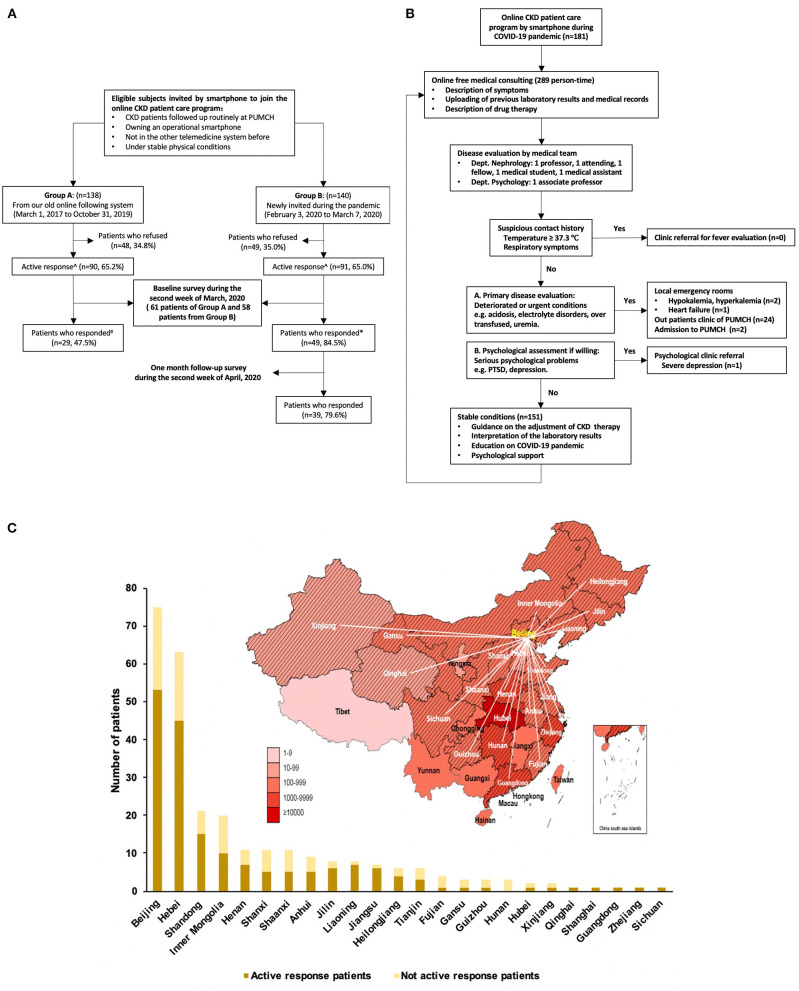
Flowchart of study design (A), the strategy of the online CKD patient care program of CKD patients (B), and the patients' distribution during COVID-19 pandemic (C). (A) Active response meant the invited patients agreed to join the online care program. #*There were 61 patients from group A and 58 patients from group B, who received questionnaires. (C) The gradation of red color illustrated severity of the pandemic of COVID-19 on April 19, 2020. The shaded areas represent the regions of origin of patient enrollees. CKD, chronic kidney disease; PTSD, post-traumatic stress disorder; PUMCH, Peking Union Medical College Hospital.
Figure 2
Figure 2
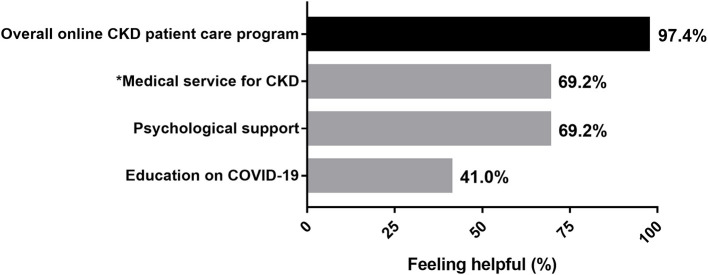
Patient satisfaction with telemedicine services (n = 39). A total of 38 (97.4%) respondents believed that this new system of care delivery was effective in at least one aspect, including medical service for kidney disease (69.2%), psychological support (69.2%), and COVID-19 prevention education (41.0%). *The medical service for CKD including evaluation of symptoms, interpretation of laboratory results, adjustment of therapy, guidance on local clinic visits, education on kidney health. CKD, chronic kidney disease.
Figure 3
Figure 3
Impact of Event Scale-Revised (IES-R) evaluation of CKD patients at baseline and 1-month follow-up. Comparison of IES-R score (A), intrusion scores (B), hyperarousal score (C), and avoidance score (D), before and 1 month after joining the online program of HS and LS patients. Comparison of avoidance score (E) between baseline and follow-up in the HS group, absolute reduction values of avoidance score (F) between HS and LS patients. The values in (A–D) were shown as mean ± SEM. HS, high-stress group; LS, low-stress group; IES-R, Impact of Event Scale-Revised; SEM, standard error of the mean.

References

    1. Klompas M. Coronavirus Disease 2019 (COVID-19): protecting hospitals from the invisible. Ann Intern Med. (2020) 172:619–20. 10.7326/M20-0751 - DOI - PMC - PubMed
    1. Bloem BR, Dorsey ER, Okun MS. The coronavirus disease 2019 crisis as catalyst for telemedicine for chronic neurological disorders. JAMA Neurol. (2020) 77:927–8. 10.1001/jamaneurol.2020.1452 - DOI - PubMed
    1. Saran R, Robinson B, Abbott KC, Bragg-Gresham J, Chen X, Gipson D, et al. US renal data system 2019 annual data report: epidemiology of kidney disease in the United States. Am J Kidney Dis. (2020) 75:A6–7. 10.1053/j.ajkd.2019.09.003 - DOI - PubMed
    1. Kimmel PL, Thamer M, Richard CM, Ray NF. Psychiatric illness in patients with end-stage renal disease. Am J Med. (1998) 105:214–21. 10.1016/s0002-9343(98)00245-9 - DOI - PubMed
    1. Perlman RL, Finkelstein FO, Liu L, Roys E, Kiser M, Eisele G, et al. Quality of life in chronic kidney disease (CKD): a cross-sectional analysis in the Renal Research Institute-CKD study. Am J Kidney Dis. (2005) 45:658–66. 10.1053/j.ajkd.2004.12.021 - DOI - PubMed

LinkOut - more resources