


Impact of implementing a competency-based job framework for clinical research professionals on employee turnover
- PMID: 33244414
- PMCID: PMC7681128
- DOI: 10.1017/cts.2020.22
Impact of implementing a competency-based job framework for clinical research professionals on employee turnover
Abstract
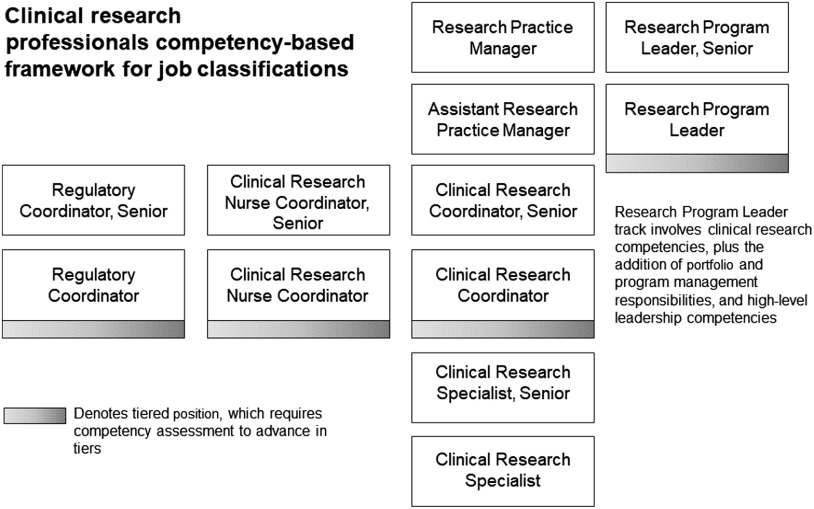
Introduction: A new competency-based job framework was implemented for clinical research professionals at a large, clinical research-intensive academic medical center. This study evaluates the rates of turnover before and after implementation of the new framework. Turnover in this workforce (as with most) is costly; it contributes to wasted dollars and lost productivity since these are highly specialized positions requiring extensive training, regardless of experience in the field.
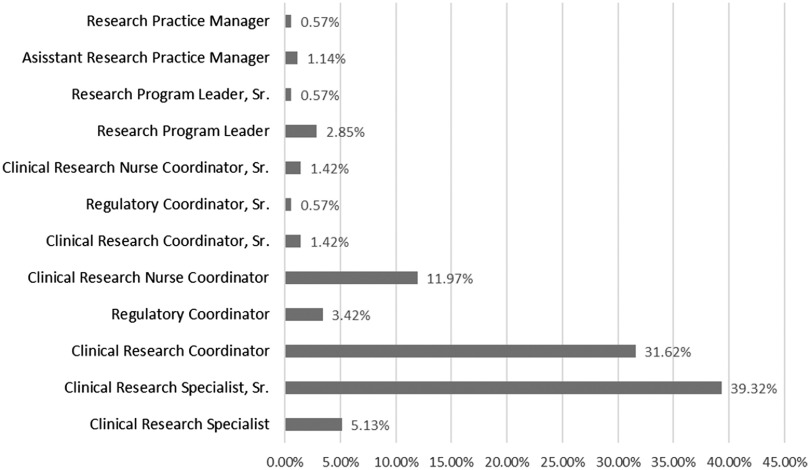
Methods: Trends in employee turnover for 3 years prior to and after the implementation of competency-based job framework for clinical research positions were studied using human resources data. Employee demographics, turnover rates, and comparisons to national statistics are summarized.
Results: Employee turnover within the clinical research professional jobs has decreased from 23% to 16%, a 45% reduction, since the implementation of competency-based job framework.
Conclusion: The new jobs and career ladders, both of which are centered on a competency-based framework, have decreased the overall turnover rate in this employee population. Since little is known about the rates of turnover in clinical research, especially in the academic medical setting, the results of this analysis can provide important insights to other academic medical centers on both employee turnover rate in general and the potential impact of implementing large-scale competency-based job changes.
Keywords: Clinical research; competency-based jobs; employee turnover; retention; workforce.
© The Association for Clinical and Translational Science 2020.
Conflict of interest statement
Ms. Snyder serves on the advisory board for Forte Research. The remaining authors have no declared conflicts of interest.
Figures
References
-
- Eakin MN. The importance of successful recruitment and retention strategies to reduce health disparities. Annals of the American Thoracic Society 2018; 15(10): 1138–1140. - PubMed
-
- Good M, Schuler L. Subject retention in a controlled clinical trial. Journal of Advanced Nursing 1997; 26(2): 351–355. - PubMed
-
- Jackson M, et al. Research staff turnover and participant adherence in the Women’s Health Initiative. Controlled Clinical Trials 2003; 24(4): 422–435. - PubMed
LinkOut - more resources
Full Text Sources