


In vitro cultivation of tansy (Tanacetum vulgare L.): a tool for the production of potent pharmaceutical agents
- PMID: 33244630
- PMCID: PMC7691073
- DOI: 10.1007/s00709-020-01588-9
In vitro cultivation of tansy (Tanacetum vulgare L.): a tool for the production of potent pharmaceutical agents
Abstract
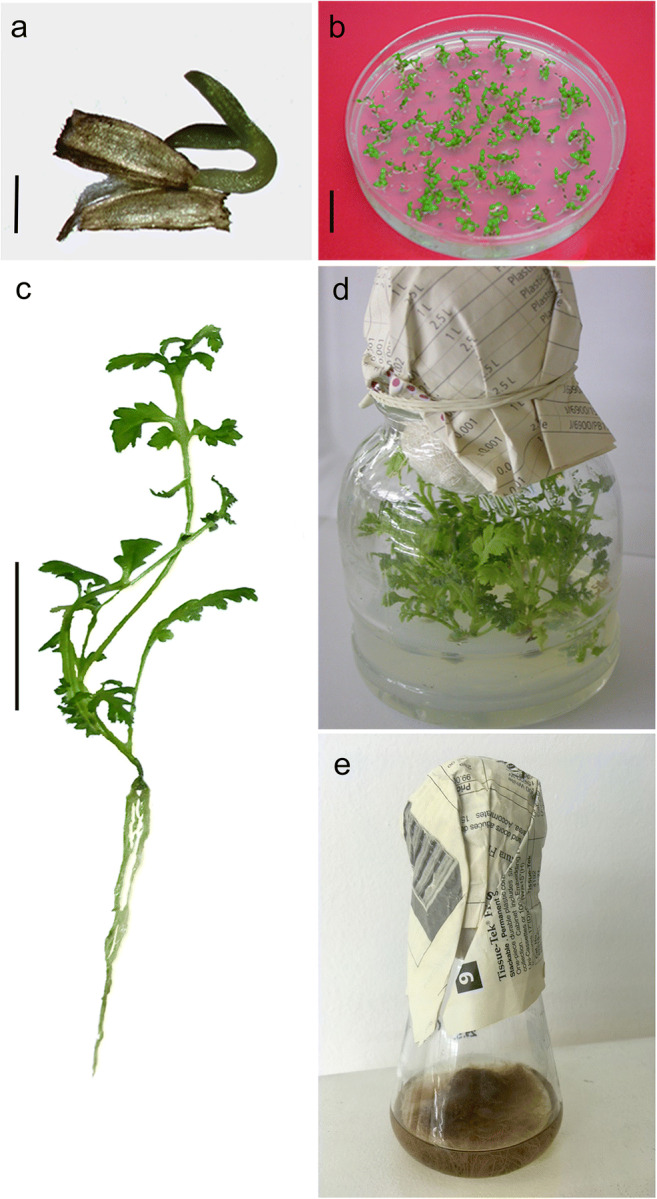
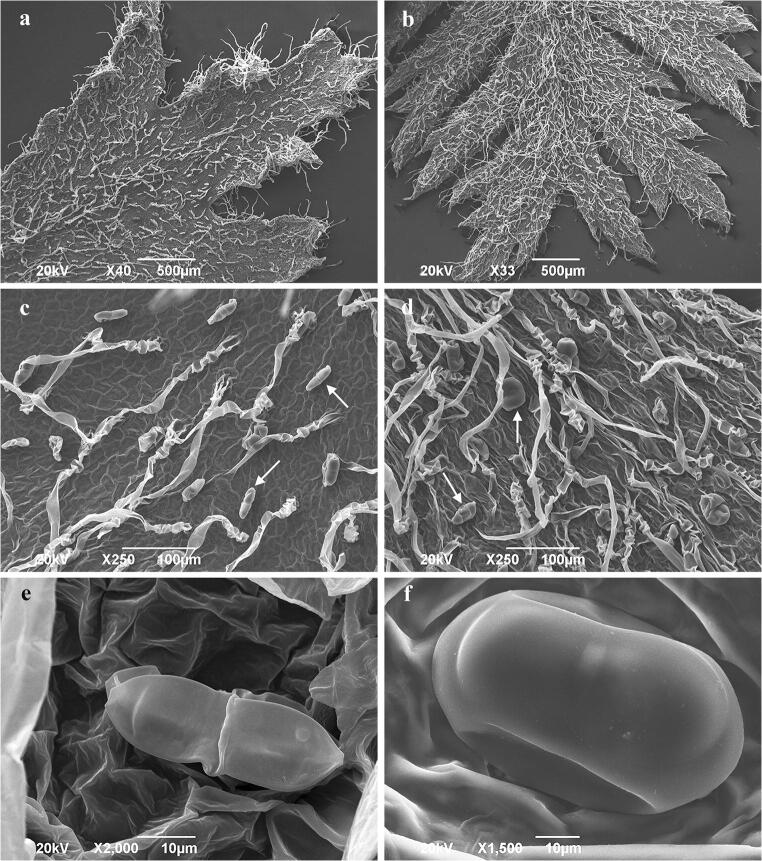
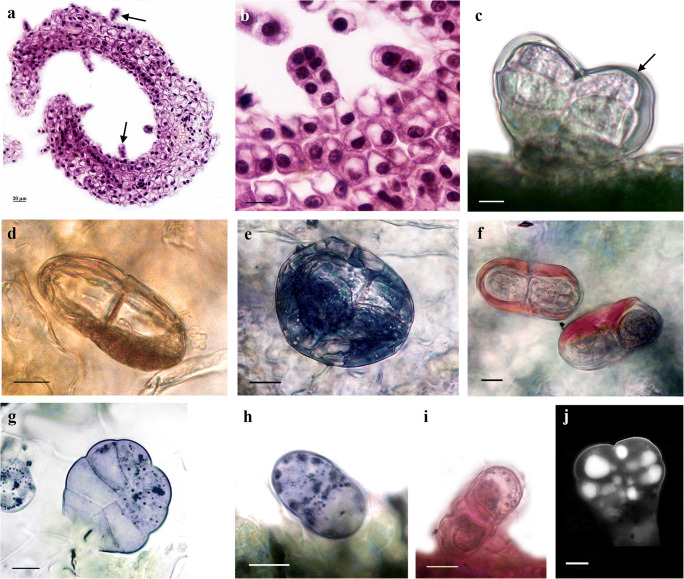
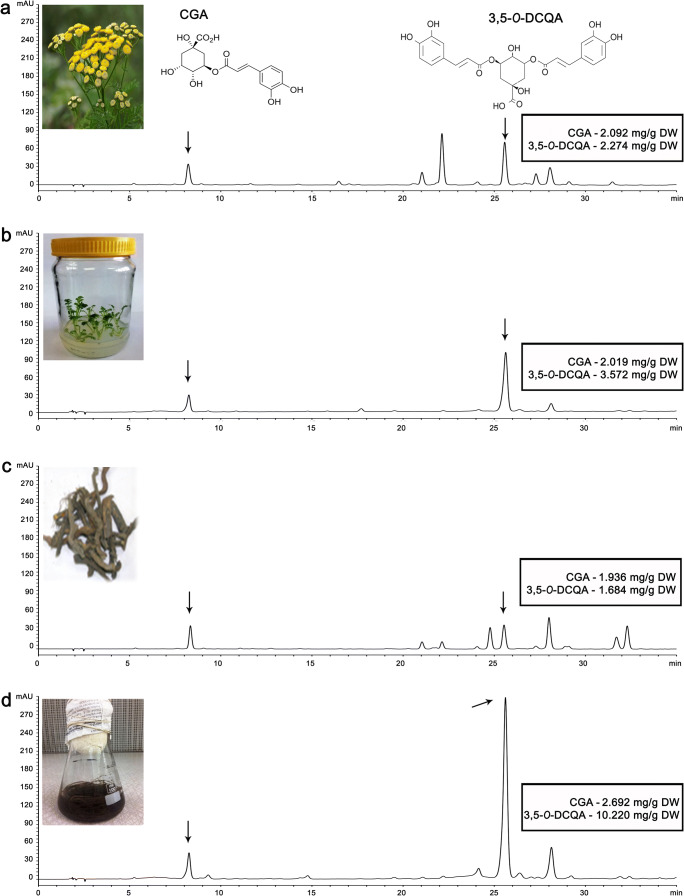
In this study, tansy (Tanacetum vulgare L.) in vitro culture was established from seeds collected from natural populations. The multiplication of plantlets was conducted through shoot tips that exhibited potent apical growth and regeneration capacities on basal medium (BM), without the addition of any plant growth regulators (PGRs). PGRs were also omitted for the establishment and cultivation of tansy root cultures. Both abaxial and adaxial leaf surfaces of in vitro micropropagated plantlets were covered with glandular biseriate trichomes. Histochemical staining showed that glandular secretions were rich in lipid and terpene compounds, confirmed by GC-MS analysis of essential oil (EO). In the total EO, similar portions of oxygenated monoterpenes (38.5% m/m) and oxygenated sesquiterpenes (22.6% m/m) were detected. Chemical profiles of methanol extracts of in vitro cultured tansy shoots and roots varied in quantity and quality from those obtained from wild-growingtansy. HPLC analysis indicated that the methanol extracts of in vitro cultured roots were the richest in 3,5-O-dicaffeoylquinic acid (3,5-O-DCQA), in which the concentration was 6 times higher (10.220 mg/g DW) than that in the extract obtained from roots of wild-growing tansy (1.684 mg/g DW). This result is noticeable in the manner of industrial production of biologically active 3,5-O-DCQA that has been shown to have antioxidant, hepatoprotective, antiviral, antimutagenic, and immunomodulatory activity. Biotechnological interventions on secondary metabolite production taking place in trichomes could further enhance the production of some important tansy metabolites and further investigation will be directed toward the elucidation of the pharmaceutical potential of tansy in vitro obtained metabolites, as mixtures or single moieties.
Keywords: Essential oil; Histochemical analysis; In vitro cultivation; Methanol extracts; Phytochemical analysis; Tansy.
Conflict of interest statement
The authors declare that they have no conflict of interests.
Figures
References
-
- Adams RP. Identification of essential oil components by gas chromatography/mass spectrometry. 4. Carol Stream: Allured Publishing Corporation; 2007. p. 469.
-
- Arora N, Koul AA. ‘Complex solution’ to a ‘complex problem’: tackling the complexity of cancer with botanicals. Eur J Cancer Prev. 2014;23:568–578. - PubMed
-
- Arumugam G, Sinniah UR, Swamy MK, Lynch PT (2020) Micropropagation and essential oil characterization of Plectranthus amboinicus (Lour.) Sprengel, an aromatic medicinal plant. In Vitro Cell Dev Biol Plant. 10.1007/s11627-020-10056-1
-
- Avato P, Fortunato IM, Ruta C, D’Elia R. Glandular hairs and essential oils in micropropagated plants of Salvia officinalis L. Plant Sci. 2005;169:29–36.
-
- Bairu MW, Stirk WA, Doležal K, Van Staden J. Optimizing the micropropagation protocol for the endangered Aloe polyphilla: can meta-topolin and its derivatives serve as replacement for benzyladenine and zeatine? Plant Cell Tissue Organ Cult. 2007;90:1523.
MeSH terms
Substances
Grants and funding
LinkOut - more resources
Full Text Sources
Medical
Miscellaneous
