


Outpatient Management of Patients Following Diagnosis of Acute Pulmonary Embolism
- PMID: 33248008
- PMCID: PMC8221072
- DOI: 10.1111/acem.14181
Outpatient Management of Patients Following Diagnosis of Acute Pulmonary Embolism
Abstract
Objective: While guidelines recommend outpatient management of patients with low-risk pulmonary embolism (PE), little is known about the disposition of patients with PE diagnosed in United States emergency departments (EDs). We sought to determine disposition practices and subsequent health care utilization in patients with acute PE in U.S. EDs.
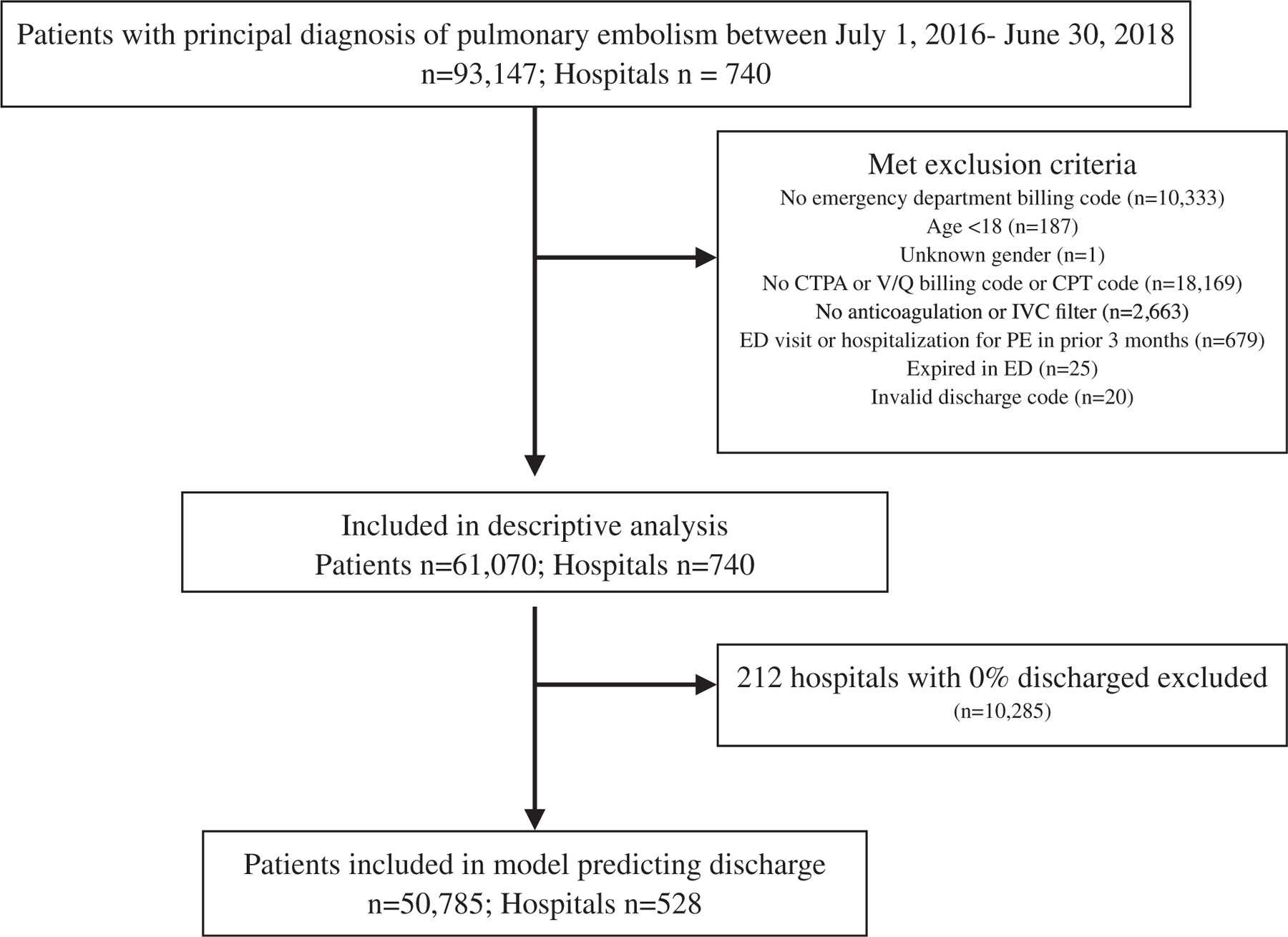
Methods: This was a retrospective cohort study of adult ED patients with a new diagnosis of acute PE treated at 740 U.S. acute care hospitals from July 1, 2016, through June 30, 2018. The primary outcome was the initial disposition following an ED visit for acute PE. Additional measures included hospital cost and 30-day revisit rate to the ED.
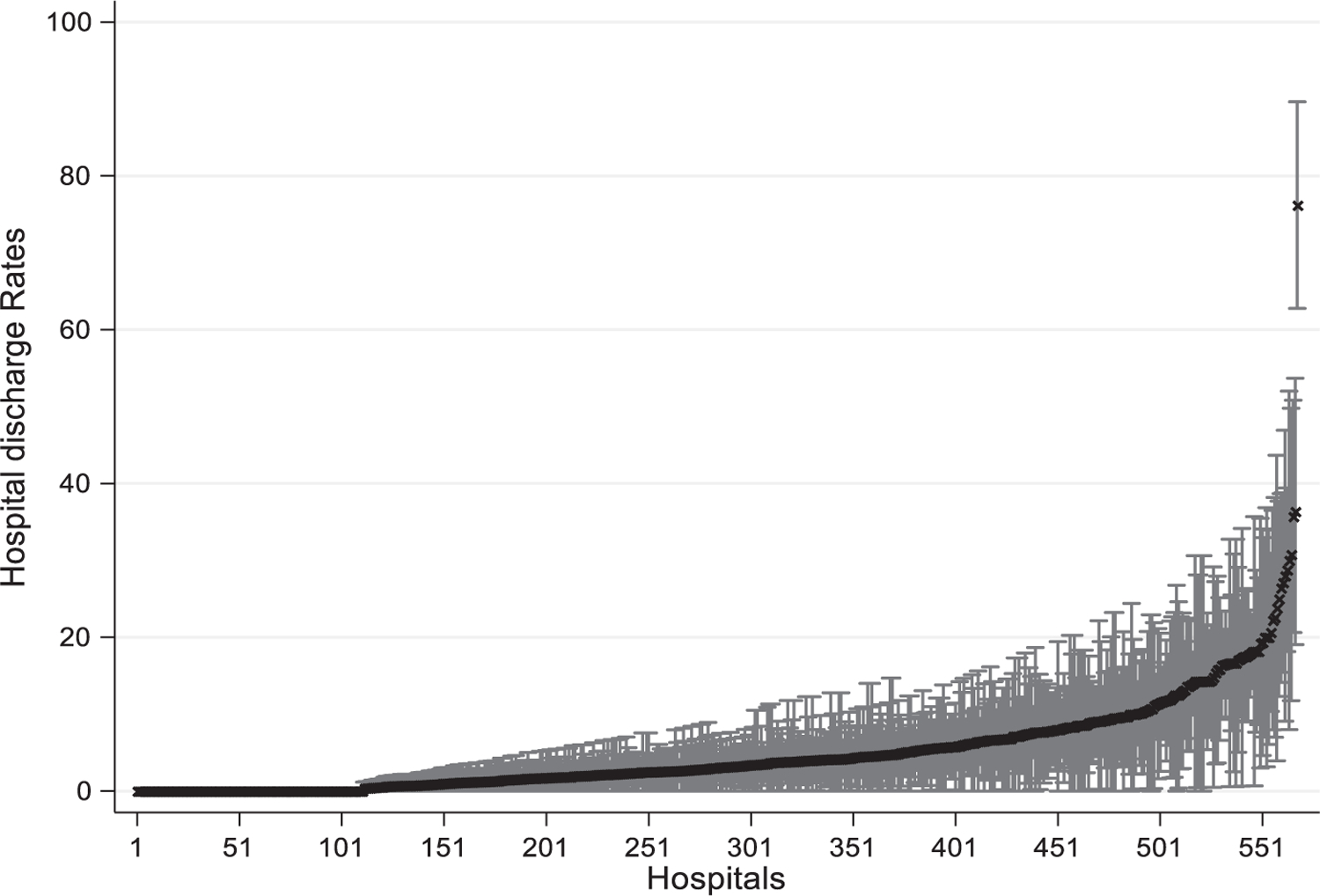
Results: A total of 61,070 cases were included in the overall cohort, of which 4.1% of new cases of PE were discharged from the ED. The median hospital-specific proportion of patients discharged was 3.1% (interquartile range = 0.8%-6.8%). The median odds ratio, representing the importance of the hospital in initial disposition decisions, was 2.21 (95% confidence interval = 2.05 to 2.37), which was greater than any patient-level factor with the exception of concurrent ED diagnosis of hypoxemia/respiratory failure, shock, or hypotension. Within 30 days of discharge, 17.9% of discharged cases had an ED return visit to the ED only and 10.3% of patients were hospitalized. Of the 30-day ED return visits in patients initially managed as outpatients, 1.3% had a bleeding-associated diagnosis.
Conclusion: Despite guidelines promoting outpatient management, few patients are currently discharged home in the United States; however, practice varies widely across hospitals. Return visit rates were high but most did not result in hospitalization.
© 2020 by the Society for Academic Emergency Medicine.
Conflict of interest statement
The authors have no potential conflicts to disclose.
Figures
Comment in
-
Overcoming barriers to outpatient management of emergency department patients with acute pulmonary embolism.Acad Emerg Med. 2021 Mar;28(3):377-378. doi: 10.1111/acem.14210. Epub 2021 Feb 5. Acad Emerg Med. 2021. PMID: 33455024 No abstract available.
-
SGEM#323: Mama I'm comin' home-For outpatient treatment of a pulmonary embolism.Acad Emerg Med. 2021 Nov;28(11):1325-1327. doi: 10.1111/acem.14271. Epub 2021 May 31. Acad Emerg Med. 2021. PMID: 33949045 No abstract available.
References
-
- HCUPnet, Healthcare Cost and Utilization Project. Rockville, MD: Agency for Healthcare Research and Quality, c2020. Available at: https://hcupnet.ahrq.gov/#setup. Accessed Jul 20, 2020. - PubMed
-
- Rui P, Kang K, Ashman J. National Hospital Ambulatory Medical Care Survey: 2016 Emergency Department Summary Tables. 2016. Available at: https://www.cdc.gov/nchs/data/nhamcs/web_tables/2016_ed_web_tables.pdf. Accessed Jul 20, 2020.
-
- Aujesky D, Roy PM, Verschuren F, et al. Outpatient versus inpatient treatment for patients with acute pulmonary embolism: an international, open-label, randomised, non-inferiority trial. Lancet 2011;378:41–8. - PubMed
-
- Piran S, Le Gal G, Wells PS, et al. Outpatient treatment of symptomatic pulmonary embolism: a systematic review and meta-analysis. Thromb Res 2013;132:515–9. - PubMed
Publication types
MeSH terms
Grants and funding
LinkOut - more resources
Full Text Sources
Medical
