


Methods for improving thermal tolerance in military personnel prior to deployment
- PMID: 33248459
- PMCID: PMC7700709
- DOI: 10.1186/s40779-020-00287-z
Methods for improving thermal tolerance in military personnel prior to deployment
Abstract
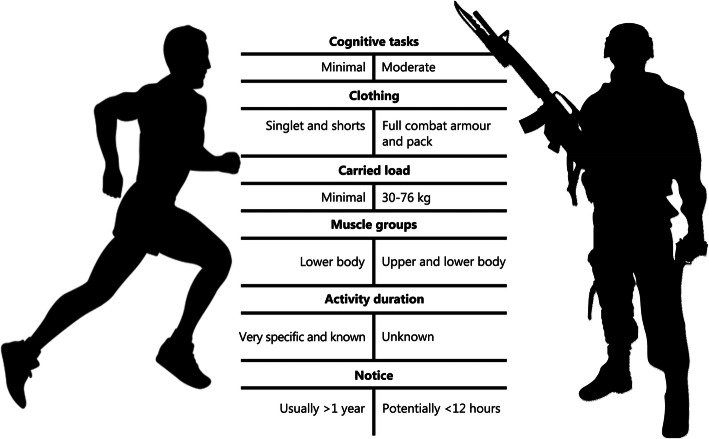
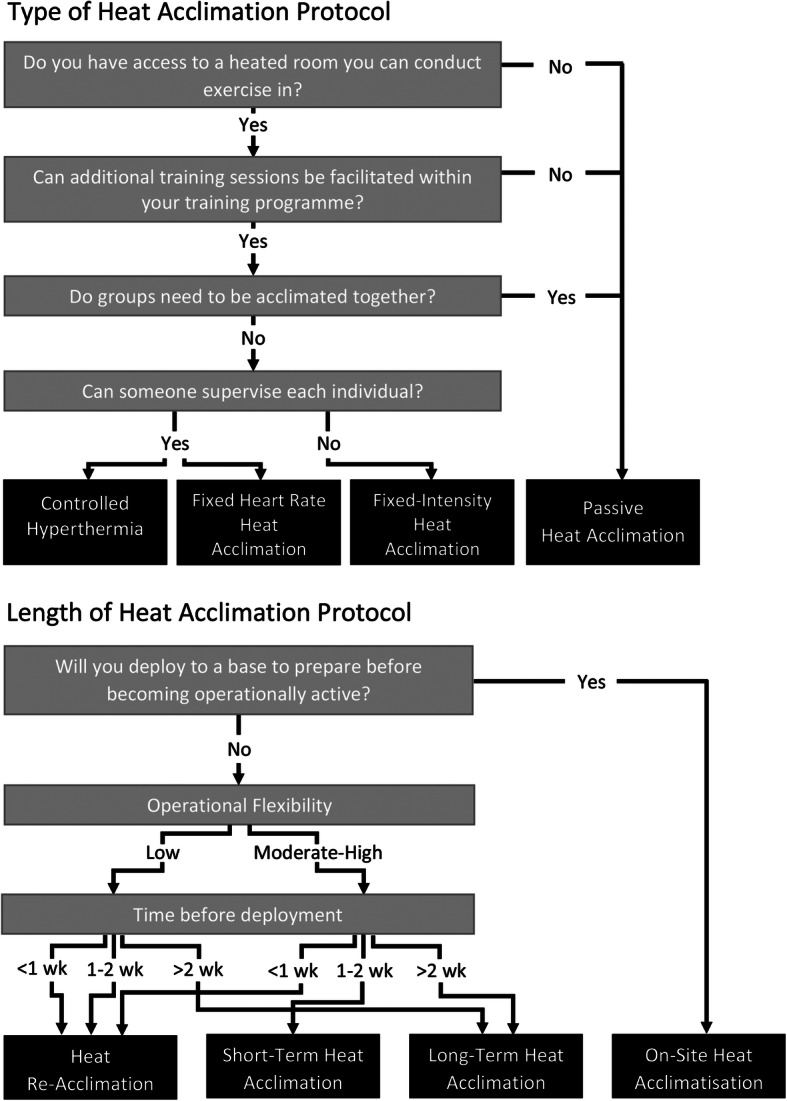
Acute exposure to heat, such as that experienced by people arriving into a hotter or more humid environment, can compromise physical and cognitive performance as well as health. In military contexts heat stress is exacerbated by the combination of protective clothing, carried loads, and unique activity profiles, making them susceptible to heat illnesses. As the operational environment is dynamic and unpredictable, strategies to minimize the effects of heat should be planned and conducted prior to deployment. This review explores how heat acclimation (HA) prior to deployment may attenuate the effects of heat by initiating physiological and behavioural adaptations to more efficiently and effectively protect thermal homeostasis, thereby improving performance and reducing heat illness risk. HA usually requires access to heat chamber facilities and takes weeks to conduct, which can often make it impractical and infeasible, especially if there are other training requirements and expectations. Recent research in athletic populations has produced protocols that are more feasible and accessible by reducing the time taken to induce adaptations, as well as exploring new methods such as passive HA. These protocols use shorter HA periods or minimise additional training requirements respectively, while still invoking key physiological adaptations, such as lowered core temperature, reduced heart rate and increased sweat rate at a given intensity. For deployments of special units at short notice (< 1 day) it might be optimal to use heat re-acclimation to maintain an elevated baseline of heat tolerance for long periods in anticipation of such an event. Methods practical for military groups are yet to be fully understood, therefore further investigation into the effectiveness of HA methods is required to establish the most effective and feasible approach to implement them within military groups.
Keywords: Conditioning; Heat acclimation; Heat illness; Human; Military; Physiology; Thermoregulation.
Conflict of interest statement
The authors declare that they have no competing interests.
Figures

References
-
- Sawka M, Wenger CB, Young AJ, Pandolf KB. Physiological responses to exercise in the heat. In: Research IOMUCOMN, Marriott B, editors. Nutritional needs in hot environments: applications for military personnel in field operations. Washington (DC): National Academies Press; 1993. - PubMed
Publication types
MeSH terms
LinkOut - more resources
Full Text Sources
Medical
Research Materials
