


Nationwide seroprevalence of SARS-CoV-2 and identification of risk factors in the general population of the Netherlands during the first epidemic wave
- PMID: 33249407
- PMCID: PMC8142429
- DOI: 10.1136/jech-2020-215678
Nationwide seroprevalence of SARS-CoV-2 and identification of risk factors in the general population of the Netherlands during the first epidemic wave
Abstract
Background: We aimed to detect SARS-CoV-2 serum antibodies in the general population of the Netherlands and identify risk factors for seropositivity amidst the first COVID-19 epidemic wave.
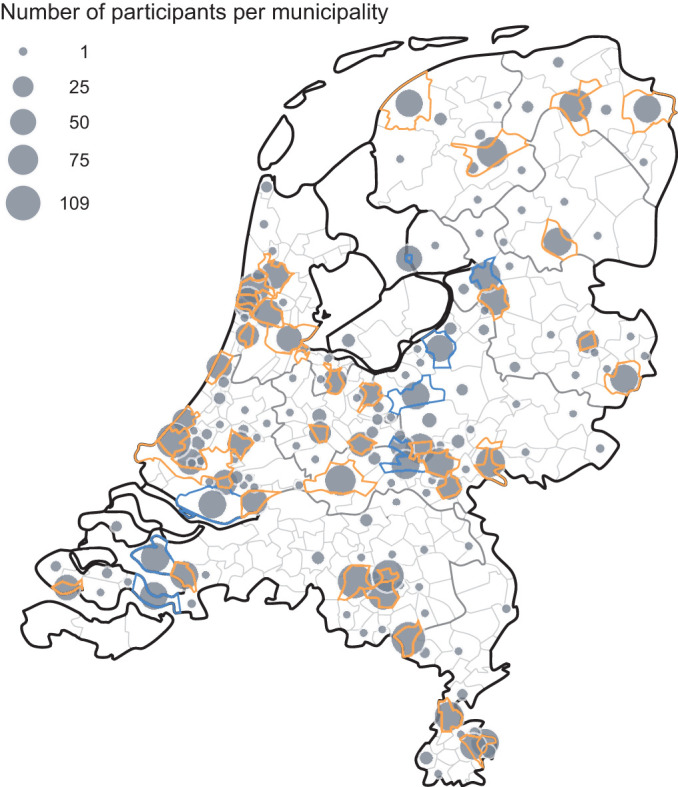
Methods: Participants (n=3207, aged 2-90 years), enrolled from a previously established nationwide serosurveillance study, provided a self-collected fingerstick blood sample and completed a questionnaire (median inclusion date 3 April 2020). IgG antibodies targeted against the spike S1-protein of SARS-CoV-2 were quantified using a validated multiplex-immunoassay. Seroprevalence was estimated controlling for survey design, individual pre-pandemic concentration, and test performance. Random-effects logistic regression identified risk factors for seropositivity.
Results: Overall seroprevalence in the Netherlands was 2.8% (95% CI 2.1 to 3.7), with no differences between sexes or ethnic background, and regionally ranging between 1.3 and 4.0%. Estimates were highest among 18-39 year-olds (4.9%), and lowest in children 2-17 years (1.7%). Multivariable analysis revealed that persons taking immunosuppressants and those from the Orthodox-Reformed Protestant community had over four times higher odds of being seropositive compared to others. Anosmia/ageusia was the most discriminative symptom between seropositive (53%) and seronegative persons (4%, p<0.0001). Antibody concentrations in seropositive persons were significantly higher in those with fever or dyspnoea in contrast to those without (p=0.01 and p=0.04, respectively).
Conclusions: In the midst of the first epidemic wave, 2.8% of the Dutch population was estimated to be infected with SARS-CoV-2, that is, 30 times higher than reported. This study identified independent groups with increased odds for seropositivity that may require specific surveillance measures to guide future protective interventions internationally, including vaccination once available.
Keywords: Epidemics; Epidemiology; Infection; Public health; Surveillance.
© Author(s) (or their employer(s)) 2020. Re-use permitted under CC BY-NC. No commercial re-use. See rights and permissions. Published by BMJ.
Conflict of interest statement
Competing interests: None declared.
Figures

References
-
- John Hopkins University . COVID-19 dashboard by the center for systems science and engineering. 2020. Available https://gisanddata.maps.arcgis.com/apps/opsdashboard/index.html#/bda7594... (accessed 2 Jul 2020).
-
- World Health Organization (WHO) . WHO Director-General’s opening remarks at the media briefing on COVID-19-11 March 2020. 2020. Available https://www.who.int/dg/speeches/detail/who-director-general-s-opening-re... (accessed 12 May 2020).
-
- National Institute for Public Health and the Environment (RIVM) . Daily situational report of COVID-19 in the Netherlands - July 2, 2020 (in Dutch). Bilthoven: RIVM, 2020.
LinkOut - more resources
Full Text Sources
Miscellaneous
