


Skin and Psychosomatics - Psychodermatology today
- PMID: 33251751
- PMCID: PMC7756276
- DOI: 10.1111/ddg.14328
Skin and Psychosomatics - Psychodermatology today
Abstract
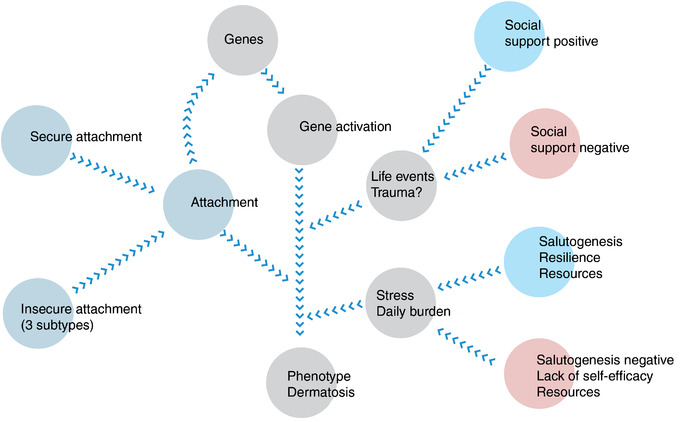
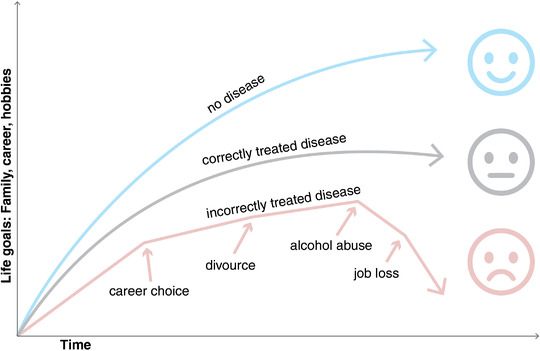
Modern psychodermatology relies on the bio-psycho-social disease model in psychosomatics, according to which biological, psychological and social factors (on various levels, from molecules to the biosphere) play a major role in the disease pathogenesis through complex, non-linear interactions over the entire disease course. It is nowadays experimentally proven that "emotions get into the skin". Recent research shows close anatomical, physiological and functional connections between skin and nervous system, already known to be ontogenetically related. These connections are reflected in many skin diseases where psychological and somatic etiological factors are closely intertwined. A holistic approach by the physician should do justice to this interdependence; biological, psychological and social factors should be adequately taken into account when taking anamnesis, making a diagnosis and choosing a therapy. The "visibility" of the skin organ bestows dermatology a special position among the various other clinical subjects, and renders a holistic, psychosomatic approach to the patient that is particularly important. The life course belongs also to modern psychodermatological approaches. Based on the modern psychodermatology concept, other corresponding sub-areas such as psychogastroenterology, psychocardiology etc. have emerged. After the theoretical part of this article, some selected skin diseases are discussed in more detail from the psychosomatic point of view.
© 2020 The Authors. Journal der Deutschen Dermatologischen Gesellschaft published by John Wiley & Sons Ltd on behalf of Deutsche Dermatologische Gesellschaft.
Conflict of interest statement
None.
Figures
References
-
- Engel GL. The need for a new medical model: a challenge for biomedicine. Science 1977; 196(4286): 129–36. - PubMed
-
- Egger J. Das biopsychosoziale Krankheitsmodell Grundzüge eines wissenschaftlich begründeten ganzheitlichen Verständnisses von Krankheit. Psych Medizin 2005; 2: 2–12.
-
- Wise TN. Psychosomatics: past, present and future. Psychother Psychosom 2014; 83(2): 65–9. - PubMed
-
- Anzieu D. Das Haut‐Ich. 3. Aufl., Frankfurt a. M., Suhrkamp Verlag, 1992.
-
- Brosig B, Gieler U. Die Haut als psychische Hülle. Giessen, Psychosozial Verlag, 2004.
MeSH terms
LinkOut - more resources
Full Text Sources
Medical
