Lexical-Semantic Cues Induce Sound Pattern Stability in Children With Developmental Language Disorder
- PMID: 33253605
- PMCID: PMC8608175
- DOI: 10.1044/2020_JSLHR-20-00244
Lexical-Semantic Cues Induce Sound Pattern Stability in Children With Developmental Language Disorder
Abstract
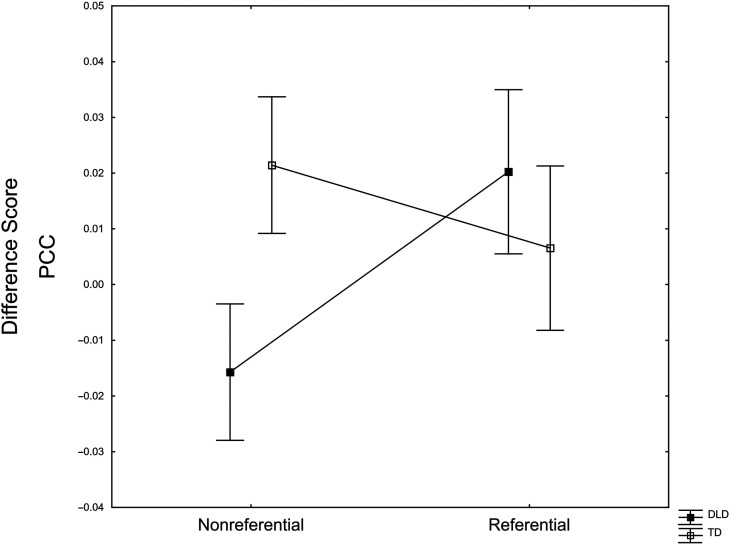
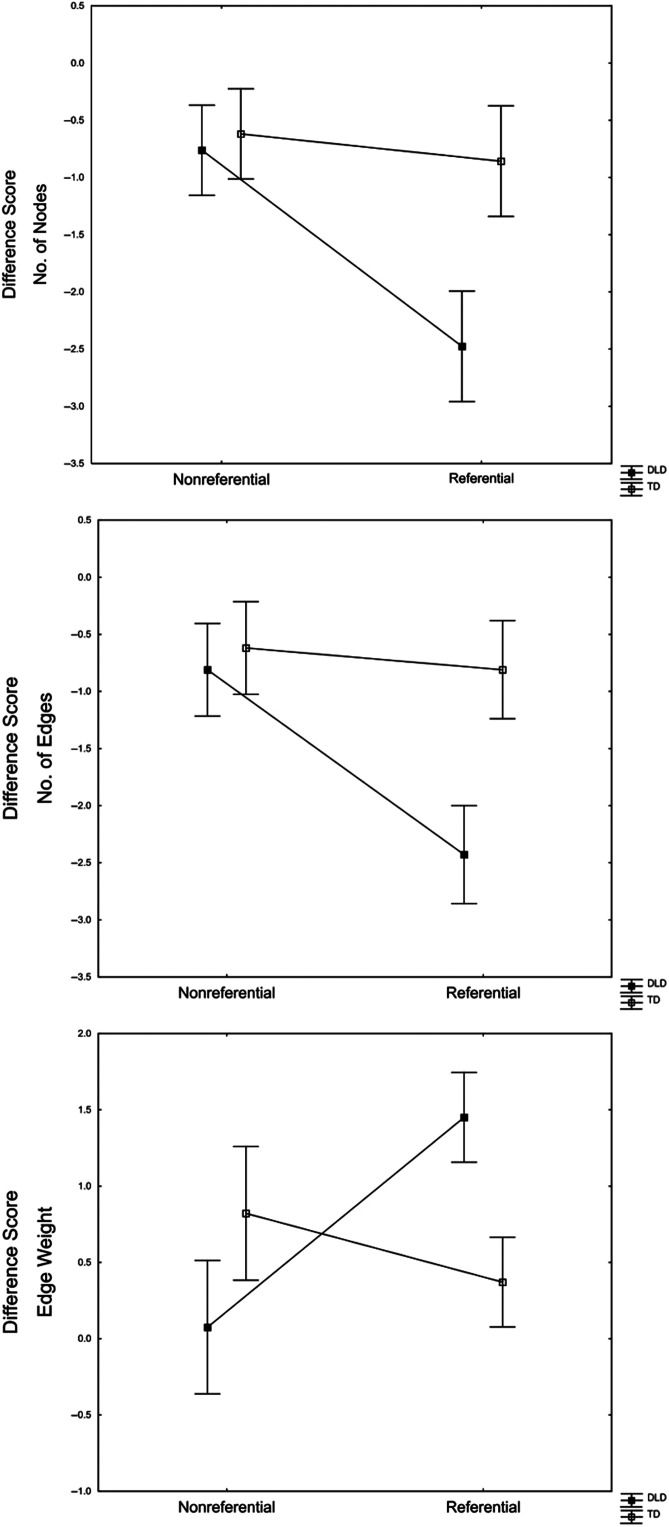
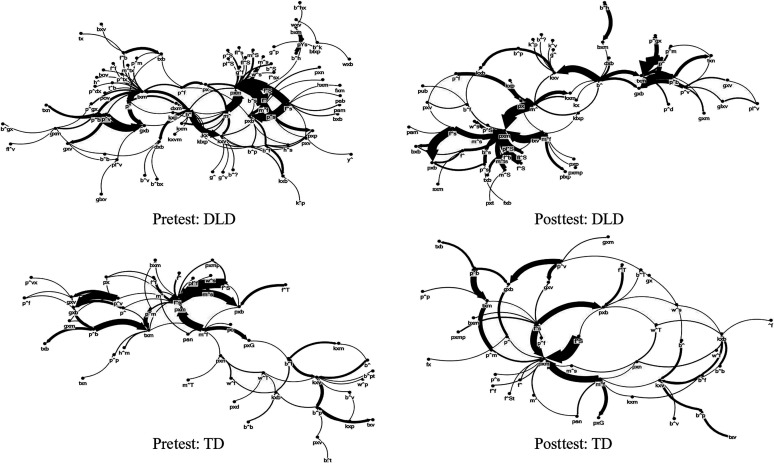
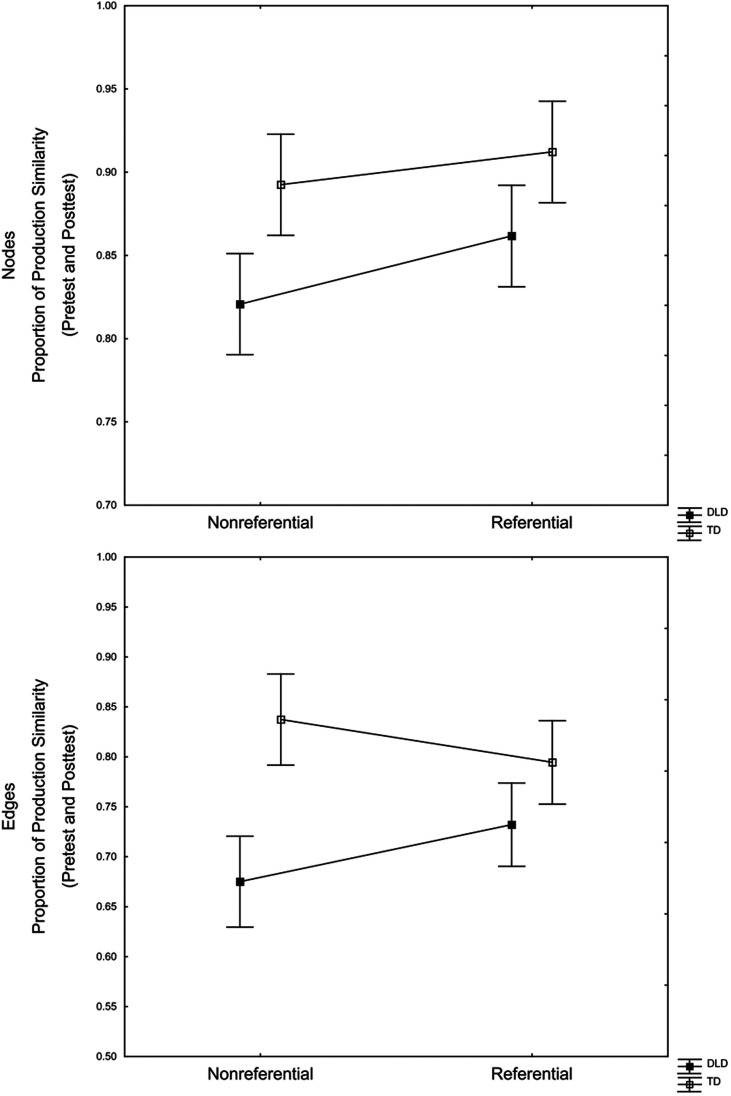
Purpose When learning novel word forms, preschoolers with developmental language disorder (DLD; also known as specific language impairment) produce speech targets inaccurately and with a high degree of intraword variability. The aim of the current study is to specify whether and how layering lexical-semantic information onto novel phonological strings would induce increased organization of sound production patterns. Method Twenty-one preschoolers with DLD and 21 peers with typical language (ranging in age from 4;1 to 5;11 [years;months]) imitated multiple renditions of novel words, half with (i.e., words) and half without (i.e., nonwords) a linked visual referent. Methods from network science were used to assess the stability and patterning of syllable sequences. Sound accuracy was also measured. Results Children with DLD were less accurate and more variable than their typical peers. However, once word forms were associated with a visual referent, network stability, but not accuracy, improved for children with DLD. Conclusions Children with DLD showed significant word form deficits as they acquired novel words and nonwords. The inclusion of a meaningful referent resulted in increased sound sequence stability, suggesting that lexical-semantic information provides a bootstrap for phonological organization in children with DLD.
Figures

References
-
- Alt, M. , Plante, E. , & Creusere, M. (2004). Semantic features in fast-mapping: Performance of preschoolers with specific language impairment versus preschoolers with normal language. Journal of Speech, Language, and Hearing Research, 47(2), 407–420. https://doi.org/10.1044/1092-4388(2004/033) - PubMed
-
- Baese-Berk, M. , & Goldrick, M. (2009). Mechanisms of interaction in speech production. Language and Cognitive Processes, 24(4), 527–554. https://doi.org/10.1080/01690960802299378 - PMC - PubMed
-
- Bankson, N. W. , & Bernthal, J. E. (1990). Bankson–Bernthal Test of Phonology. Riverside Publishing.
-
- Beckage, N. , Smith, L. B. , & Hills, T. T. (2011). Small worlds and semantic network growth in typical and late talkers. PLOS ONE, 6(5), Article e19348. https://doi.org/10.1371/journal.pone.0019348 - PMC - PubMed
-
- Benham, S. , Goffman, L. , & Schweickert, R. (2018). An application of network science to phonological sequence learning in children with developmental language disorder. Journal of Speech, Language, and Hearing Research, 61(9), 2275–2291. https://doi.org/10.1044/2018_JSLHR-L-18-0036 - PMC - PubMed
Publication types
MeSH terms
Grants and funding
LinkOut - more resources
Full Text Sources
Miscellaneous