


Cerebellar Dysfunction in Autism Spectrum Disorders: Deriving Mechanistic Insights from an Internal Model Framework
- PMID: 33253824
- PMCID: PMC8076058
- DOI: 10.1016/j.neuroscience.2020.11.012
Cerebellar Dysfunction in Autism Spectrum Disorders: Deriving Mechanistic Insights from an Internal Model Framework
Abstract
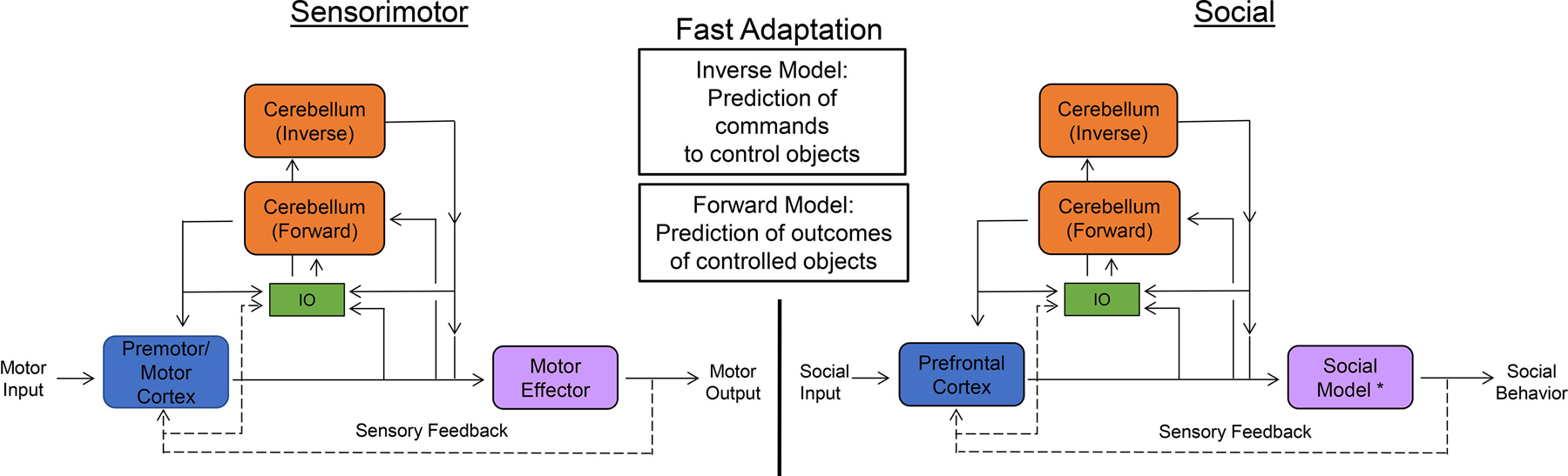
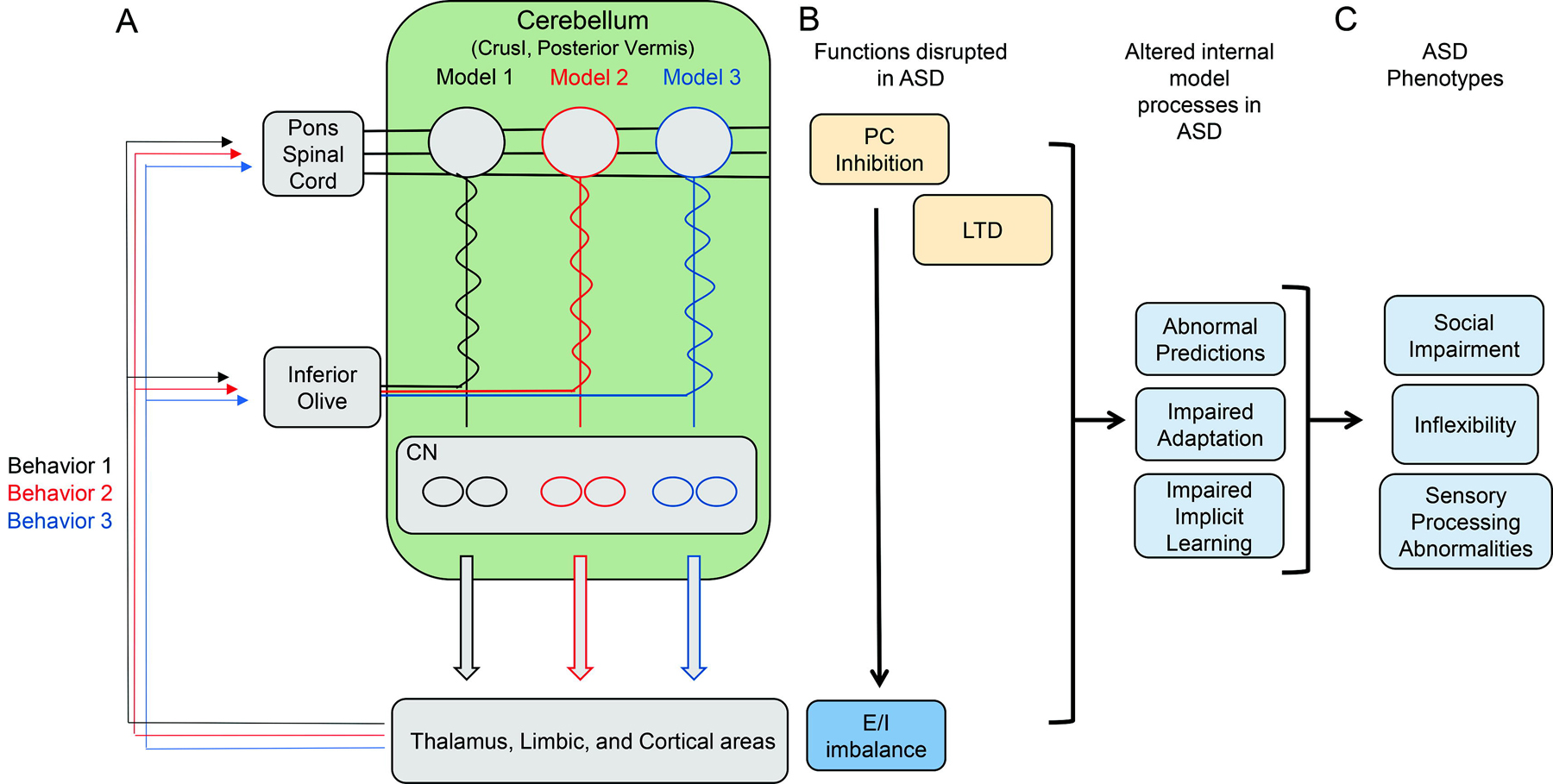
Autism spectrum disorders (ASD) are highly prevalent neurodevelopmental disorders; however, the neurobiological mechanisms underlying disordered behavior in ASD remain poorly understood. Notably, individuals with ASD have demonstrated difficulties generating implicitly derived behavioral predictions and adaptations. Although many brain regions are involved in these processes, the cerebellum contributes an outsized role to these behavioral functions. Consistent with this prominent role, cerebellar dysfunction has been increasingly implicated in ASD. In this review, we will utilize the foundational, theoretical contributions of the late neuroscientist Masao Ito to establish an internal model framework for the cerebellar contribution to ASD-relevant behavioral predictions and adaptations. Additionally, we will also explore and then apply his key experimental contributions towards an improved, mechanistic understanding of the contribution of cerebellar dysfunction to ASD.
Keywords: adaptation; autism spectrum disorders; cerebellum; implicit; internal models; prediction.
Copyright © 2020 IBRO. Published by Elsevier Ltd. All rights reserved.
Figures
References
-
- Albus JS (1971) A theory of cerebellar function. Math Biosci 10:25–61.
-
- Anderson CM, Maas LC, Frederick BD, Bendor JT, Spencer TJ, Livni E, Lukas SE, Fischman AJ, Madras BK, Renshaw PF (2006) Cerebellar vermis involvement in cocaine-related behaviors. Neuropsychopharmacology 31:1318–1326. - PubMed
-
- Asano E, Chugani D, Muzik O, Behen M, Janisse J, Rothermel R, Mangner T, Chakraborty P, Chugani H (2001) Autism in tuberous sclerosis complex is related to both cortical and subcortical dysfunction. Neurology 57:1269–1277. - PubMed
