


Metabolome of Cerebral Thrombi Reveals an Association between High Glycemia at Stroke Onset and Good Clinical Outcome
- PMID: 33255770
- PMCID: PMC7760729
- DOI: 10.3390/metabo10120483
Metabolome of Cerebral Thrombi Reveals an Association between High Glycemia at Stroke Onset and Good Clinical Outcome
Abstract
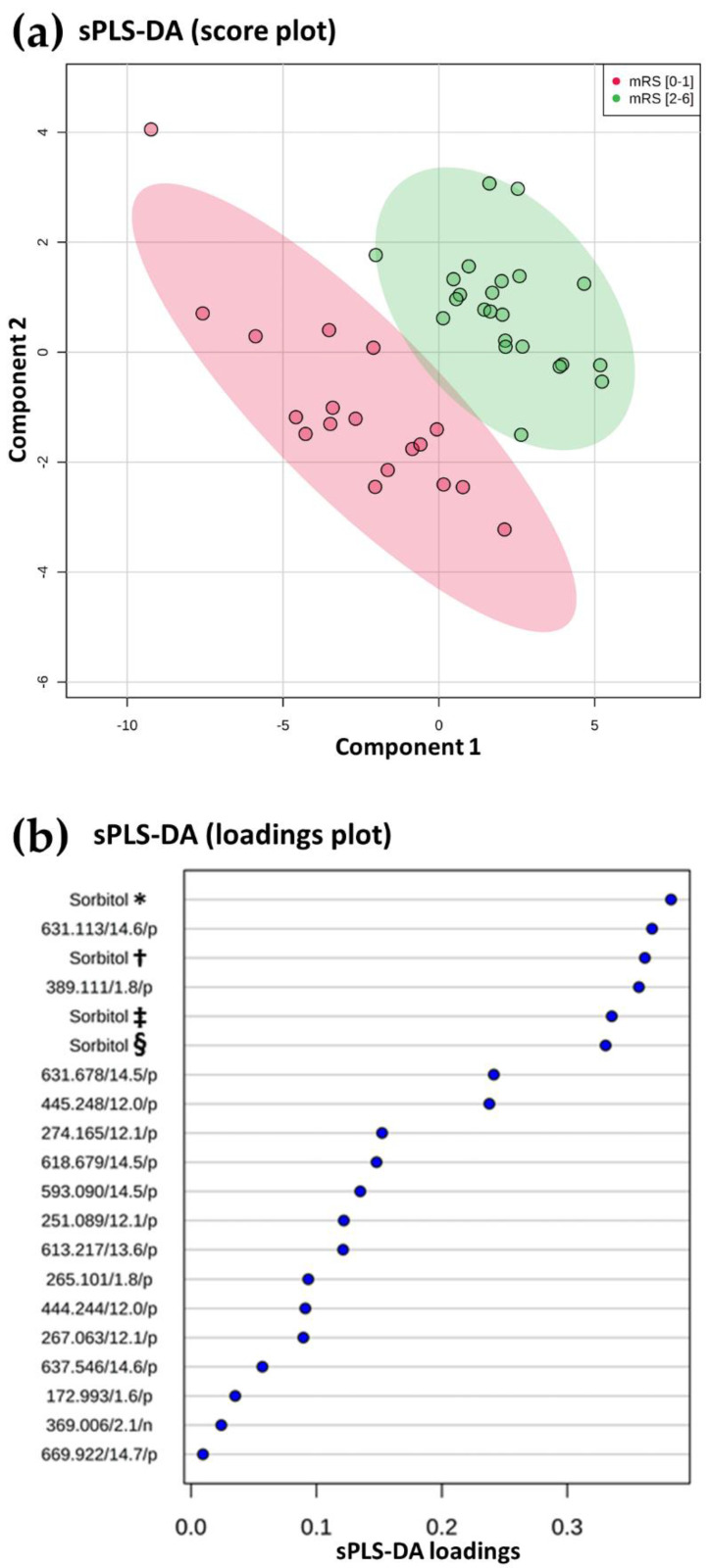
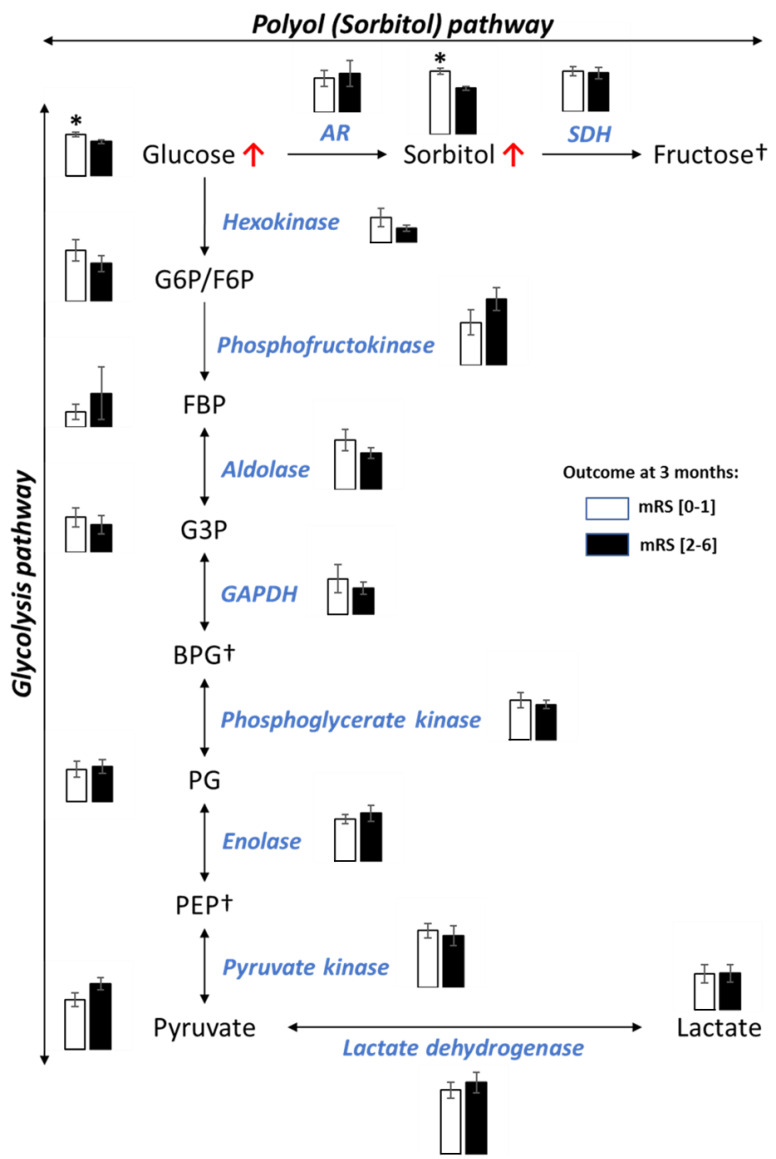
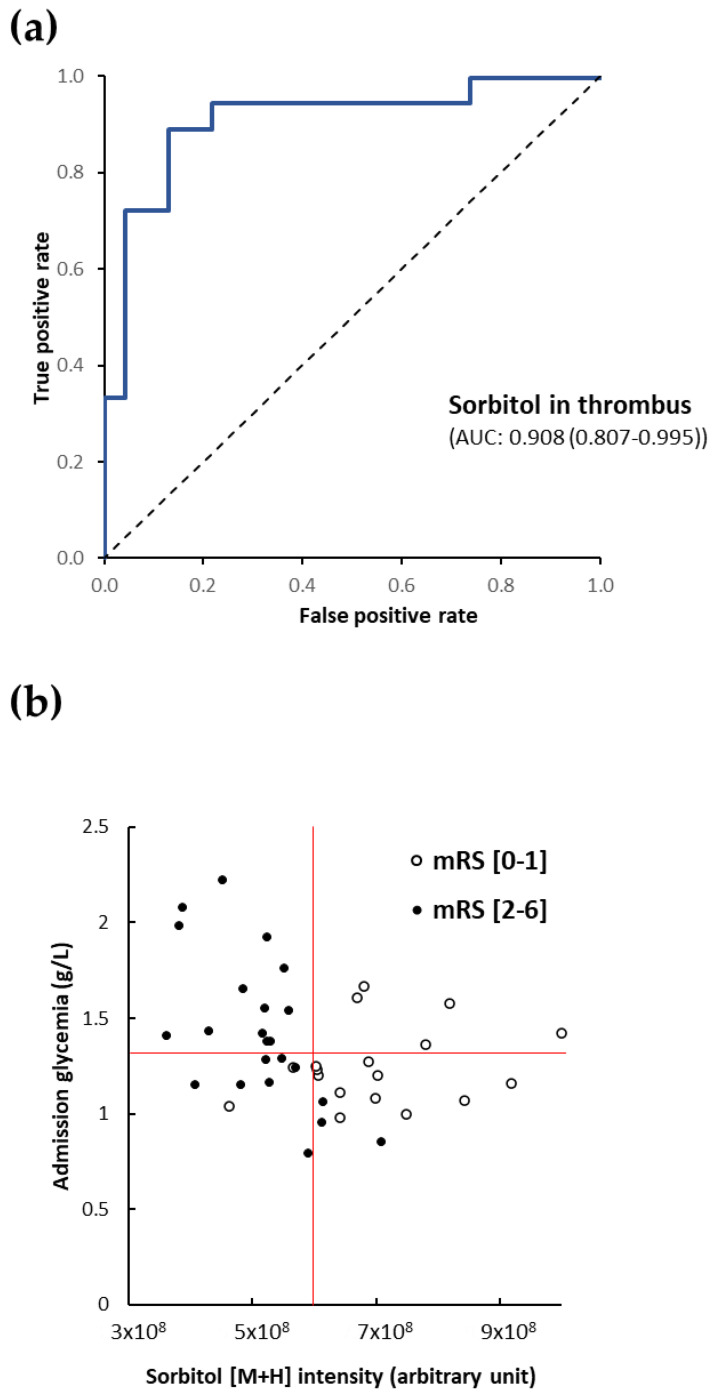
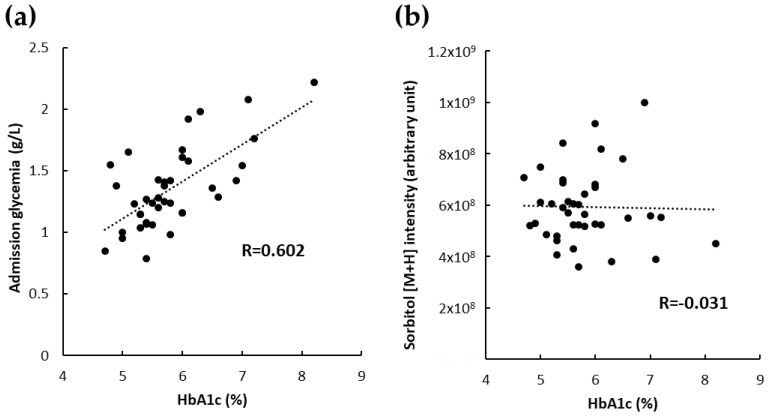
Despite the fact that glucose is the main fuel of the brain, hyperglycemia at hospital admission is generally associated with a poor functional outcome in stroke patients. This paradox may be explained by the lack of information about the blood glucose level at stroke onset. Here, we analyzed the metabolome of blood cells entrapped in cerebral thrombi to gain insight into their metabolism at stroke onset. Fourty-one consecutive stroke patients completely recanalized by mechanical thrombectomy within 6 h were included. The metabolome of retrieved thrombi was analyzed by liquid chromatography tandem with mass spectrometry. Discriminant Analysis (sparse Partial Least Squares Discriminant Analysis (sPLS-DA)) was performed to identify classification models and significant associated features of favorable clinical outcome at 3 months (modified Rankin Scale (mRS) < 2). sPLS-DA of the metabolomes of cerebral thrombi discriminated between stroke patients with a favorable or poor clinical outcome (Area Under the Curve (AUC) = 0.992 (0.931-1)). In addition, our results revealed that high sorbitol and glucose levels in the thrombi positively correlated with favorable clinical outcomes. Sorbitol, a short-term glycemic index reflecting a high blood glucose level at stroke onset, was found to be an independent predictor of good outcome (AUC = 0.908 (0.807-0.995)). This study demonstrates that a high blood glucose level at stroke onset is beneficial to the clinical outcome of the patient.
Keywords: glucose; metabolomics; sorbitol; stroke; thrombectomy; thrombosis.
Conflict of interest statement
The authors declare no conflict of interest.
Figures
References
-
- Goyal M., Menon B.K., Van Zwam W.H., Dippel D.W.J., Mitchell P.J., Demchuk A.M., Dávalos A., Majoie C.B.L.M., Van Der Lugt A., De Miquel M.A., et al. Endovascular thrombectomy after large-vessel ischaemic stroke: A meta-analysis of individual patient data from five randomised trials. Lancet. 2016;387:1723–1731. doi: 10.1016/S0140-6736(16)00163-X. - DOI - PubMed
-
- Powers W.J., Rabinstein A.A., Ackerson T., Adeoye O.M., Bambakidis N.C., Becker K., Biller J., Brown M., Demaerschalk B.M., Hoh B., et al. Guidelines for the early management of patients with acute ischemic stroke: 2019 update to the 2018 guidelines for the early management of acute ischemic stroke: A guideline for healthcare professionals from the american heart association/american stroke association. Stroke. 2019;50:e344–e418. - PubMed
-
- Wang H., Zhang M., Hao Y., Zi W., Yang N., Zhou Z., Geng Y., Wang Z., Li H., Xu G., et al. Early prediction of poor outcome despite successful recanalization after endovascular treatment for anterior large vessel occlusion stroke. World Neurosurg. 2018;115:e312–e321. doi: 10.1016/j.wneu.2018.04.042. - DOI - PubMed
LinkOut - more resources
Full Text Sources
