


Treatment Strategies and Metabolic Pathway Regulation in Urothelial Cell Carcinoma: A Comprehensive Review
- PMID: 33256165
- PMCID: PMC7730311
- DOI: 10.3390/ijms21238993
Treatment Strategies and Metabolic Pathway Regulation in Urothelial Cell Carcinoma: A Comprehensive Review
Abstract
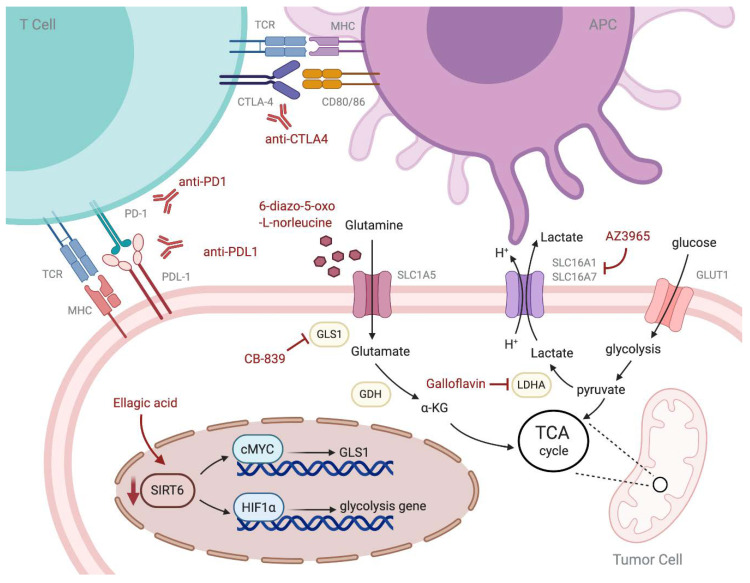
For a long time, cisplatin-based chemotherapy had been viewed as first-line chemotherapy for advanced and metastatic urothelial carcinoma (UC). However, many patients with UC had been classified as cisplatin-ineligible who can only receive alternative chemotherapy with poor treatment response, and the vast majority of the cisplatin-eligible patients eventually progressed, even those with objective response with cisplatin-based chemotherapy initially. By understanding tumor immunology in UC, immune checkpoint inhibitors, targeting on programmed death 1 (PD-1) and cytotoxic T lymphocyte-associated antigen 4 (CTLA-4) pathways, had been proven as first-line treatment for cisplatin-ineligible metastatic UC and as second-line treatment for patients with platinum-refractory metastatic UC by the U.S Food and Drug Administration (FDA). In 2020, JAVEIN bladder 100 further reported that PD-L1 inhibitors showed benefits on prolonged survival and progression-free survival as maintenance therapy. Besides targeting on immune checkpoint, manipulation of the tumor microenvironment by metabolic pathways intervention, including inhibition on tumor glycolysis, lactate accumulation and exogenous glutamine uptake, had been investigated in the past few years. In this comprehensive review, we start by introducing traditional chemotherapy of UC, and then we summarize current evidences supporting the use of immune checkpoint inhibitors and highlight ongoing clinical trials. Lastly, we reviewed the tumor metabolic characteristic and the anti-tumor treatments targeting on metabolic pathways.
Keywords: immune checkpoint inhibitors; immunotherapy; metabolic pathway; tumor microenvironment; urothelial carcinoma.
Conflict of interest statement
The authors declare no conflict of interest.
Figures
References
Publication types
MeSH terms
Grants and funding
LinkOut - more resources
Full Text Sources
Medical
Research Materials
Miscellaneous
