Non-sebaceous lymphadenoma of the submandibular gland: diagnostic challenges in the head and neck cancer pathway
- PMID: 33257384
- PMCID: PMC7705567
- DOI: 10.1136/bcr-2020-238099
Non-sebaceous lymphadenoma of the submandibular gland: diagnostic challenges in the head and neck cancer pathway
Abstract
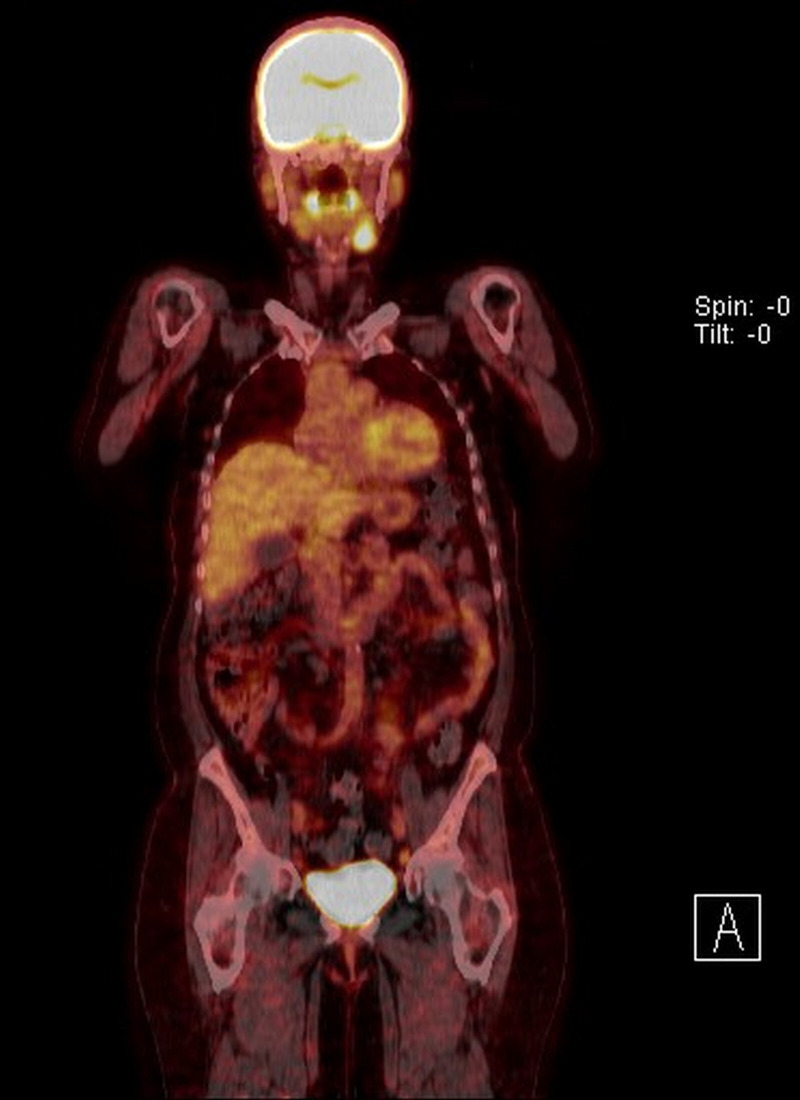
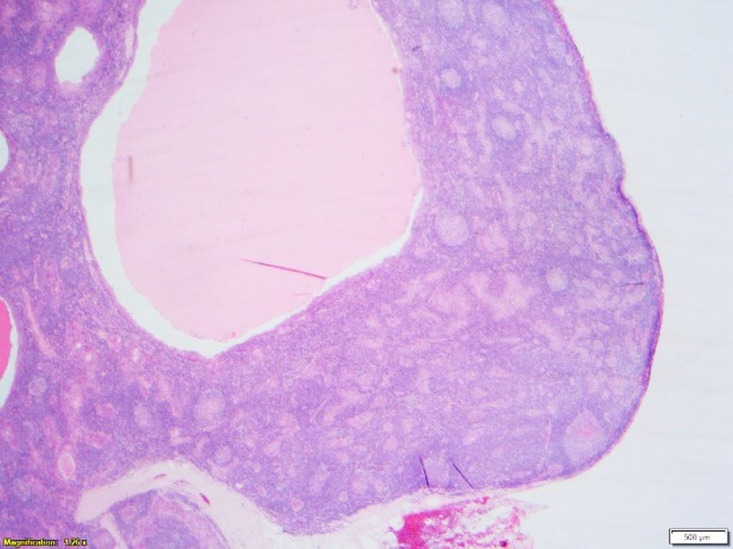
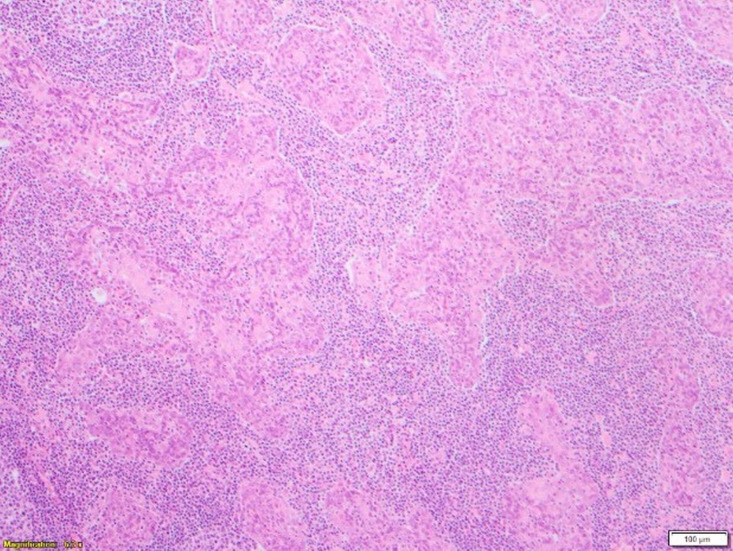
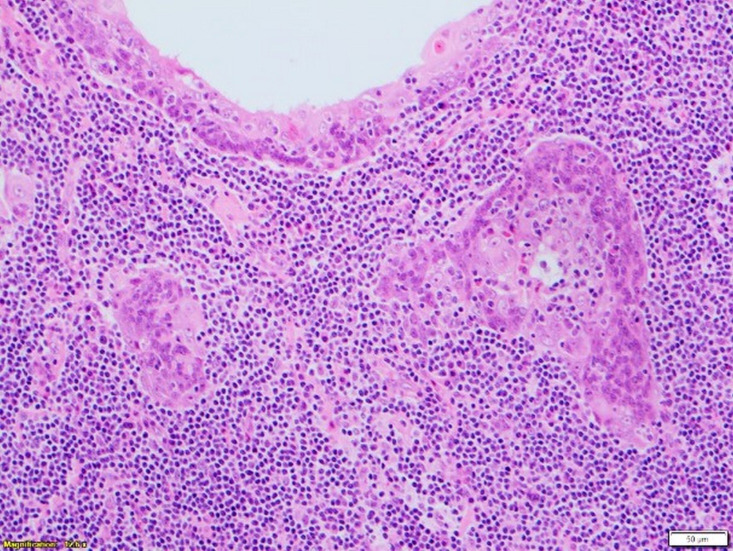
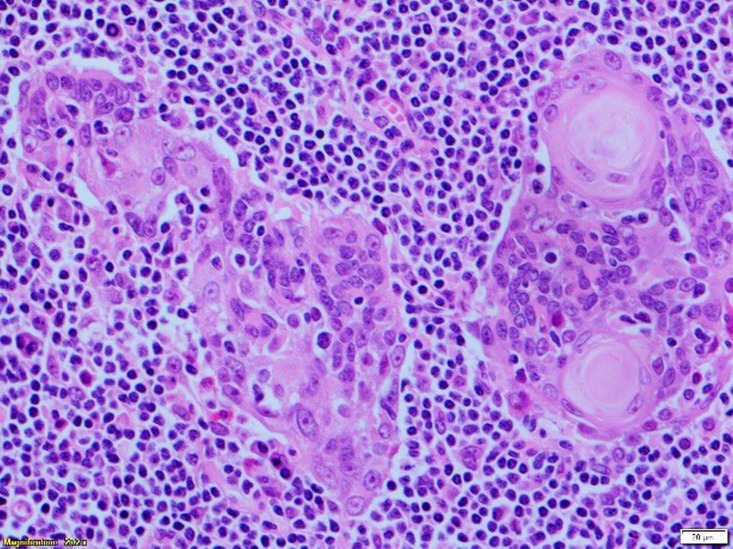
Non-sebaceous lymphadenoma (NSLA) is a rare benign salivary gland tumour with lymphoid and epithelial components and without sebaceous differentiation. The large majority of the reported cases arise within the parotid gland. We present an NSLA arising from the submandibular gland. The tumour presented as a painless longstanding neck lump. Ultrasound, fine needle aspiration, MRI and positron emission tomography found features supportive of squamous cell carcinoma. The patient was treated with surgery for oropharyngeal carcinoma of unknown origin, in accordance with local and national guidelines. The final histological assessment revealed the level Ib neck lesion to be NSLA. Although a rare occurrence, these lesions may pose a diagnostic challenge in the head and neck cancer pathway.
Keywords: otolaryngology / ENT; pathology.
© BMJ Publishing Group Limited 2020. No commercial re-use. See rights and permissions. Published by BMJ.
Conflict of interest statement
Competing interests: None declared.
Figures
References
-
- Auclair PL, Ellis GL, Gnepp DR. Other benign epithelial neoplasms : Ellis GL, Auclair PL, Gnepp DR, “Surgical pathology of the salivary glands”. Saunders, Philadelphia, PA, 1991.
-
- Barnes L, Eveson JW, Reichart P, et al. World Health organization classification of tumours—pathology and genetics of head and neck tumours. Iarc 2005.
Publication types
MeSH terms
LinkOut - more resources
Full Text Sources
Medical
Research Materials
Miscellaneous