


Recommendations for the use of long-term experience sampling in bipolar disorder care: a qualitative study of patient and clinician experiences
- PMID: 33258015
- PMCID: PMC7704990
- DOI: 10.1186/s40345-020-00201-5
Recommendations for the use of long-term experience sampling in bipolar disorder care: a qualitative study of patient and clinician experiences
Abstract
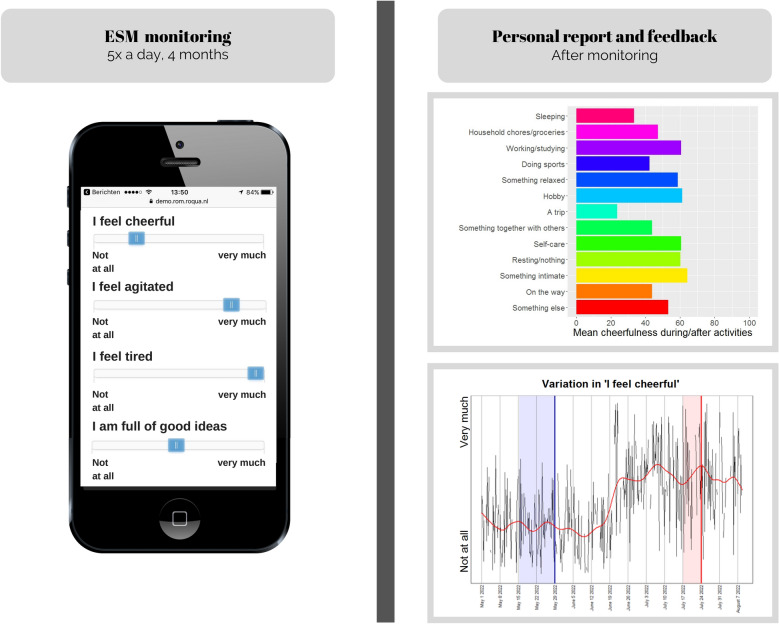
Background: Self-monitoring has been shown to improve the self-management and treatment of patients with bipolar disorder. However, current self-monitoring methods are limited to once-daily retrospectively assessed mood, which may not suit the rapid mood fluctuations in bipolar disorder. The experience sampling method (ESM), which assesses mood in real-time several times a day, may overcome these limitations. This study set out to assess the experiences of patients and clinicians with the addition of ESM monitoring, real-time alerts, and personalized feedback to clinical care. Participants were twenty patients with bipolar disorder type I/II and their clinicians. For four months, patients completed five ESM assessments per day on mood, symptoms, and activities. Weekly symptom questionnaires alerted patients and clinicians to potential episodes. After the monitoring, a personalized feedback report based on the patient's data was discussed between patient and clinician. Three months later, patient and clinician were both interviewed.
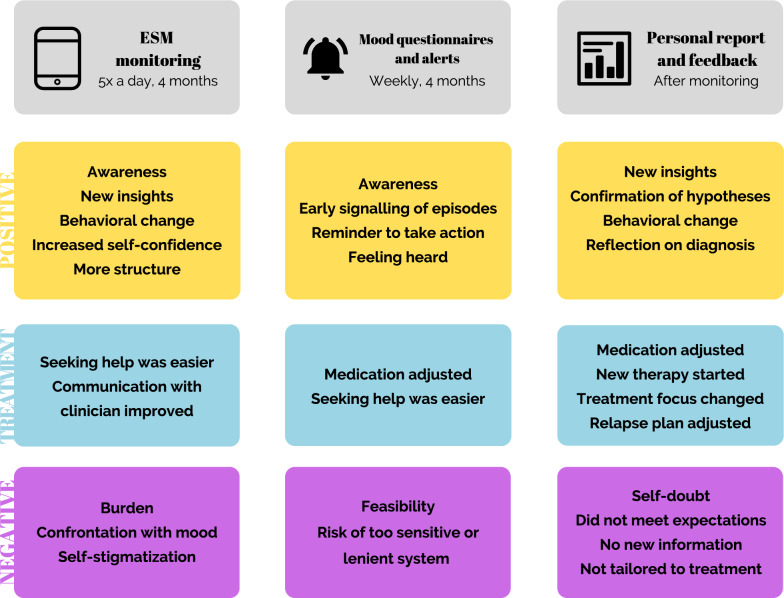
Results: Thematic analysis of the transcripts resulted in four themes: perceived effects of the monitoring, alerts, and feedback, and recommendations for implementation of ESM. ESM was perceived as helping patients to cope better with their disorder by increasing awareness, offering new insights, and encouraging life style adjustments. ESM was further believed to facilitate communication between patient and clinician and to lead to new treatment directions. However, high assessment burden and pre-occupation with negative mood and having a disorder were also described. Patients and clinicians advocated for increased personalization and embedding of ESM in care.
Conclusions: This study demonstrates that long-term ESM monitoring, alerts, and personalized feedback are perceived as beneficial to the treatment and self-management of patients with bipolar disorder. Future research should further test the clinical utility of ESM. Clinically relevant feedback and technology need to be developed to enable personalized integration of ESM in clinical care.
Keywords: Bipolar disorder; Ecological momentary assessment; Experience sampling method; Implementation; Personalized feedback; Qualitative research; Self-monitoring.
Conflict of interest statement
The authors have no conflicts of interest to declare.
Figures
References
-
- Altman E, Hedeker D, Peterson JL, Davis JM. A comparative evaluation of three self-rating scales for acute mania. BiolPsychiatry. 2001;50(6):468. - PubMed
-
- Bastiaansen JA, Kunkels YK, Blaauw FJ, Boker SM, Ceulemans E, Chen M, et al. Time to get personal? The impact of researchers choices on the selection of treatment targets using the experience sampling methodology. J Psychosom Res. 2020;89:110211. doi: 10.1016/j.jpsychores.2020.110211. - DOI - PMC - PubMed
-
- Baxter RJ, Hunton JE. Capturing affect via the experience sampling method: prospects for accounting information systems researchers. Int J Account Inform Syst. 2011;12(2):90–98. doi: 10.1016/j.accinf.2010.12.002. - DOI
Grants and funding
LinkOut - more resources
Full Text Sources
