


Validation of a prostate cancer polygenic risk score
- PMID: 33258481
- PMCID: PMC7590110
- DOI: 10.1002/pros.24058
Validation of a prostate cancer polygenic risk score
Abstract
Background: Genome-wide association studies have identified over 100 single-nucleotide polymorphisms (SNPs) associated with prostate cancer (PrCa), and polygenic risk scores (PRS) based on their combined genotypes have been developed for risk stratification. We aimed to assess the contribution of PRS to PrCa risk in a large multisite study.
Methods: The sample included 1972 PrCa cases and 1919 unaffected controls. Next-generation sequencing was used to assess pathogenic variants in 14 PrCa-susceptibility genes and 72 validated PrCa-associated SNPs. We constructed a population-standardized PRS and tested its association with PrCa using logistic regression adjusted for age and family history of PrCa.
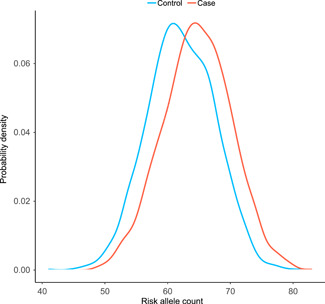
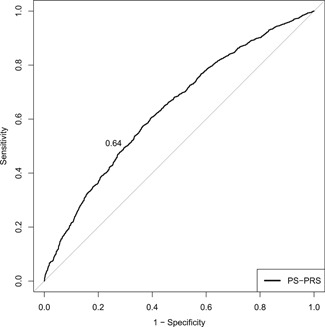
Results: The mean age of PrCa cases at diagnosis and age of controls at testing/last clinic visit was 59.5 ± 7.2 and 57.2 ± 13.0 years, respectively. Among 1740 cases with pathology data, 57.4% had Gleason score ≤ 6, while 42.6% had Gleason score ≥ 8. In addition, 39.6% cases and 20.1% controls had a family history of PrCa. The PRS was significantly higher in cases than controls (mean ± SD: 1.42 ± 1.11 vs 1.02 ± 0.76; P < .0001). Compared with men in the 1st quartile of age-adjusted PRS, those in the 2nd, 3rd, and 4th quartile were 1.58 (95% confidence interval [CI]: 1.31-1.90), 2.36 (95% CI: 1.96-2.84), and 3.98 (95% CI: 3.29-4.82) times as likely to have PrCa (all P < .0001). Adjustment for family history yielded similar results. PRS predictive performance was consistent with prior literature (area under the receiver operating curve = 0.64; 95% CI: 0.62-0.66).
Conclusions: These data suggest that a 72-SNP PRS is predictive of PrCa, supporting its potential use in clinical risk assessment.
Keywords: polygenic; prostate cancer.
© 2020 Ambry Genetics. The Prostate published by Wiley Periodicals LLC.
Conflict of interest statement
MG, KW, ZS, JW, SLZ, BTH, WI, and JX declare that there are no conflict of interests. All other authors are employed by and receive a salary from Ambry Genetics.
Figures
Comment in
-
Urological Oncology: Prostate Cancer.J Urol. 2021 May;205(5):1515-1517. doi: 10.1097/JU.0000000000001673. Epub 2021 Feb 24. J Urol. 2021. PMID: 33625902 No abstract available.
References
-
- Giri VN, Hegarty SE, Hyatt C, et al. Germline genetic testing for inherited prostate cancer in practice: implications for genetic testing, precision therapy, and cascade testing. Prostate. 2019;79:333‐339. - PubMed
MeSH terms
LinkOut - more resources
Full Text Sources
Other Literature Sources
Medical
