Review
. 2021 Jul 7;117(8):1859-1876.
doi: 10.1093/cvr/cvaa336.

Obesity, kidney dysfunction, and inflammation: interactions in hypertension

Affiliations
Review

Obesity, kidney dysfunction, and inflammation: interactions in hypertension

John E Hall et al. Cardiovasc Res. .

Abstract

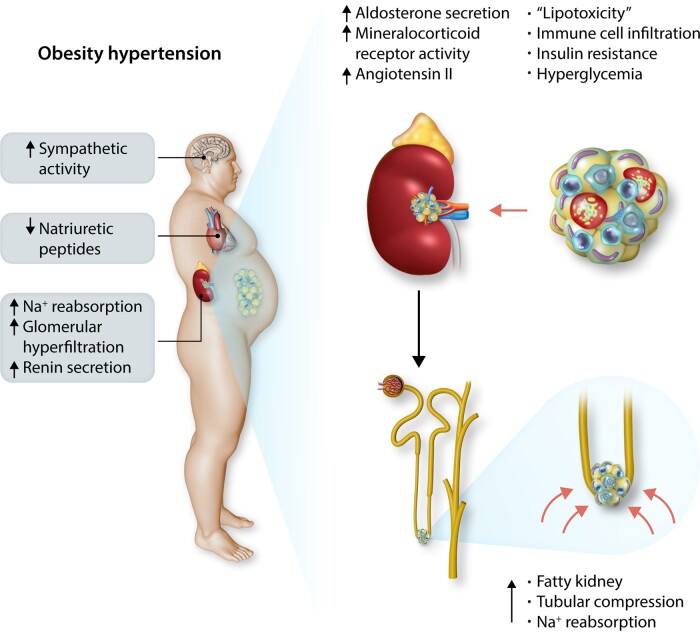
Obesity contributes 65-75% of the risk for human primary (essential) hypertension (HT) which is a major driver of cardiovascular and kidney diseases. Kidney dysfunction, associated with increased renal sodium reabsorption and compensatory glomerular hyperfiltration, plays a key role in initiating obesity-HT and target organ injury. Mediators of kidney dysfunction and increased blood pressure include (i) elevated renal sympathetic nerve activity (RSNA); (ii) increased antinatriuretic hormones such as angiotensin II and aldosterone; (iii) relative deficiency of natriuretic hormones; (iv) renal compression by fat in and around the kidneys; and (v) activation of innate and adaptive immune cells that invade tissues throughout the body, producing inflammatory cytokines/chemokines that contribute to vascular and target organ injury, and exacerbate HT. These neurohormonal, renal, and inflammatory mechanisms of obesity-HT are interdependent. For example, excess adiposity increases the adipocyte-derived cytokine leptin which increases RSNA by stimulating the central nervous system proopiomelanocortin-melanocortin 4 receptor pathway. Excess visceral, perirenal and renal sinus fat compress the kidneys which, along with increased RSNA, contribute to renin-angiotensin-aldosterone system activation, although obesity may also activate mineralocorticoid receptors independent of aldosterone. Prolonged obesity, HT, metabolic abnormalities, and inflammation cause progressive renal injury, making HT more resistant to therapy and often requiring multiple antihypertensive drugs and concurrent treatment of dyslipidaemia, insulin resistance, diabetes, and inflammation. More effective anti-obesity drugs are needed to prevent the cascade of cardiorenal, metabolic, and immune disorders that threaten to overwhelm health care systems as obesity prevalence continues to increase.

Keywords: Adipose; Blood pressure; Chronic kidney disease; Immune cells; Leptin; Melanocortins; Renin–angiotensin–aldosterone system; Sympathetic activity.


Figures

None
Graphical abstract
Figure 1
Figure 1
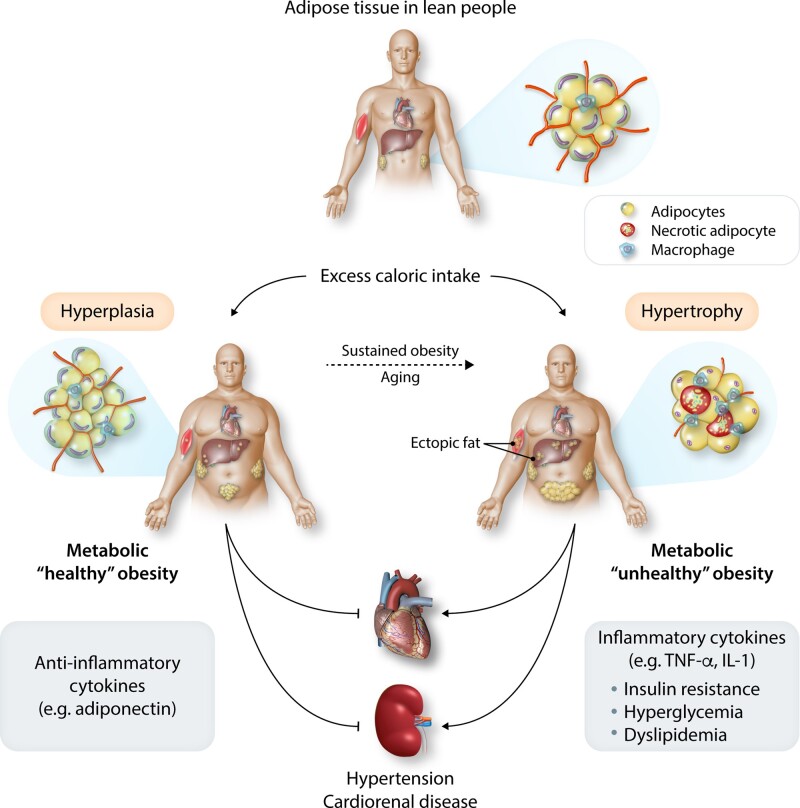
Possible mechanisms for metabolically healthy and unhealthy obesity. Storage of excess calories by adipocyte hyperplasia is considered to be healthy because the tissue maintains adequate vascularization and secretion of anti-inflammatory adipokines. Excessive hypertrophy of existing adipocytes is considered unhealthy since cells become inadequately vascularized, hypoxic, and dysfunctional, leading to macrophage invasion and secretion of inflammatory cytokines that may contribute to insulin resistance and other metabolic disorders, exacerbating hypertension, and cardiorenal disease.
Figure 2
Figure 2
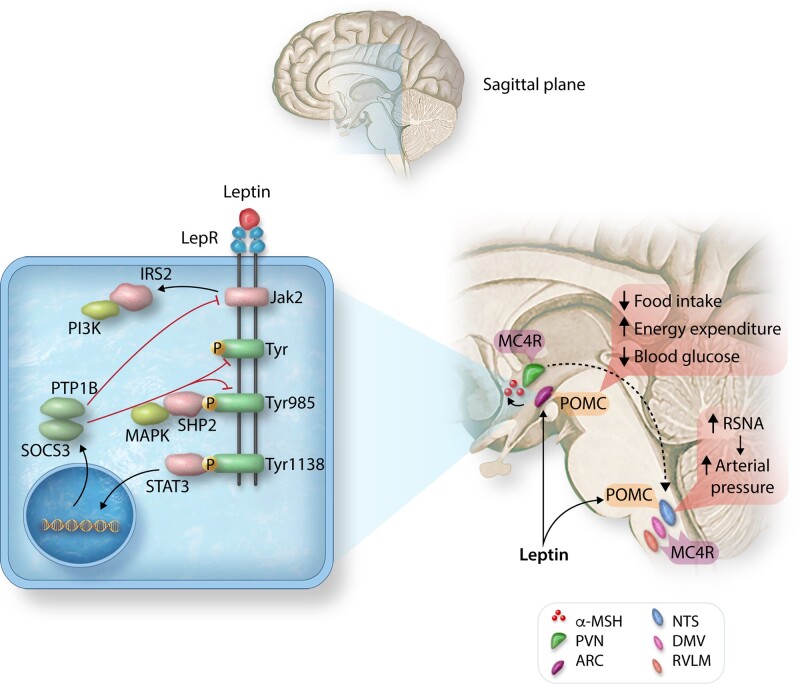
Activation of the CNS leptin-melanocortin system differentially controls food intake, energy expenditure, blood glucose, and arterial pressure by activating distinct signalling pathways in the hypothalamic arcuate nucleus (ARC) and brainstem. Stimulation of leptin receptors (LepR) activates JAK2 tyrosine (Tyr) kinase, causing autophosphorylation of tyrosine residues on JAK2 and phosphorylation of Tyr985 and Tyr1138. Phosphorylation of Tyr985 activates SHP2/MAPK and phosphorylation of Tyr1183 activates STAT3 which mediates several effects of leptin while increasing transcription of SOCS3, which attenuates LepR-mediated signalling. PTP1B is increased in obesity and reduces leptin signalling by dephosphorylation of JAK2. LepR activation of POMC neurons stimulates release of α-MSH, which activates MC4R in neurons in the paraventricular nucleus (PVN), and nucleus tractus solitaries (NTS) and dorsal motor nucleus of the vagus (DMV). ARC, arcuate nucleus; IRS2, insulin receptor substrate 2; RSNA, renal sympathetic nerve activity; and RVLM, rostral ventrolateral medulla.
Figure 3
Figure 3
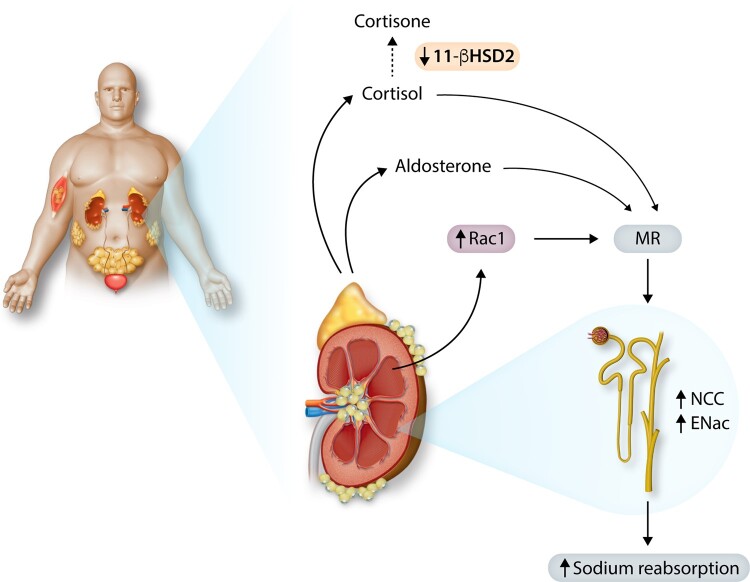
Possible mechanisms of renal tubular mineralocorticoid receptor (MR) activation, increased renal sodium reabsorption, and hypertension in obesity. Obesity increases angiotensin II which stimulates secretion of aldosterone, normally the primary agonist of renal tubular MR. Adipokines, such as leptin, may also stimulate aldosterone secretion and obesity may cause MR activation via aldosterone-independent mechanisms such as increased renal tubular expression of Rac 1, a small GTP-binding protein member of the Rho family of GTPases. Cortisol may also activate MR in obesity via down-regulation of 11β-HSD2, which normally converts cortisol to cortisone, a glucocorticoid that does not avidly bind MR.
Figure 4
Figure 4
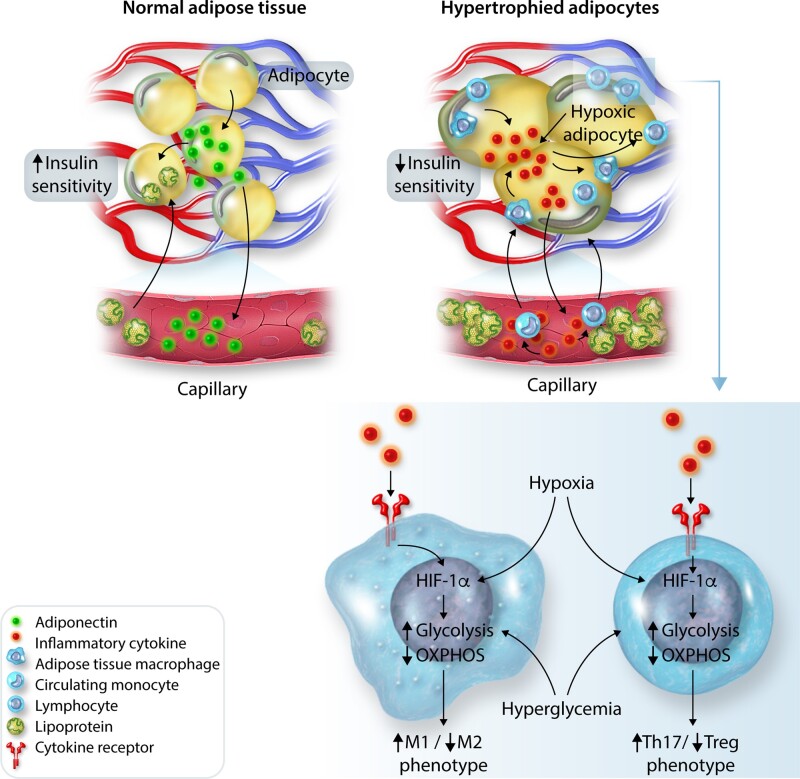
Possible mechanisms of inflammation and insulin resistance associated with excessive adipocyte hypertrophy. Small adipocytes secrete adiponectin locally and into the circulation, promoting insulin sensitivity and lipid storage. Hypertrophied adipocytes become hypoxic, leading to secretion of inflammatory cytokines and recruitment of circulating monocytes/lymphocytes into the tissue, which also secrete inflammatory cytokines. Within the microenvironment of hypertrophied adipocytes, immune cells are also hypoxic, leading to metabolic reprogramming that supports pro-inflammatory phenotypic switching and inflammation. This inflammation decreases insulin sensitivity, leading to hyperglycaemia and hyperlipidaemia. HIF-1α, hypoxia-inducible factor 1-alpha; OXPHOS, oxidative phosphorylation; Th17, T helper subset 17 lymphocyte; Treg, T regulatory lymphocyte.
Figure 5
Figure 5
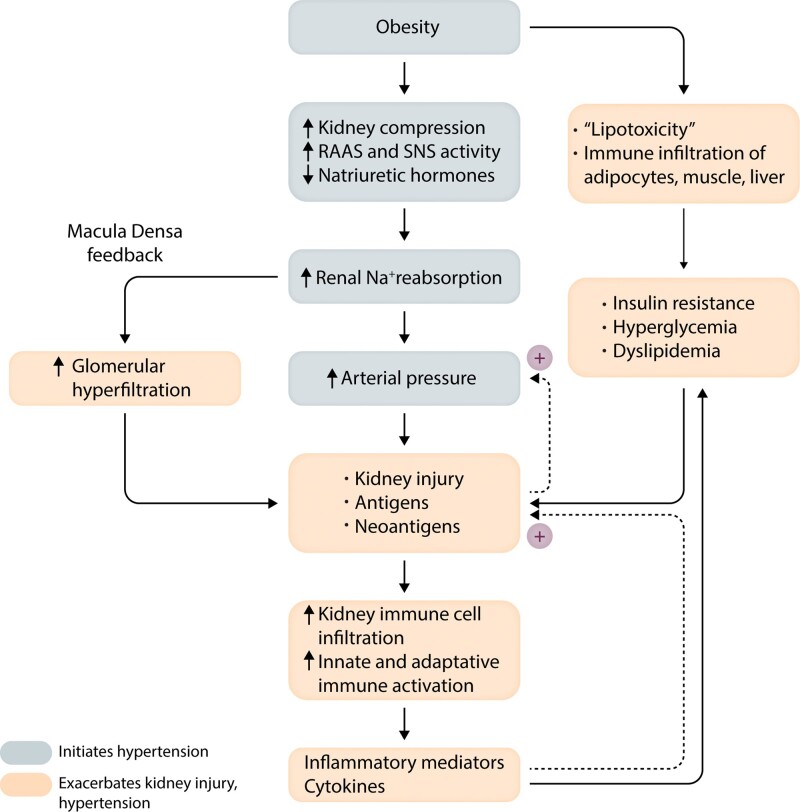
Summary of mechanisms by which obesity initiates development of hypertension and renal injury. Metabolic abnormalities interact synergistically with hypertension to cause renal injury which, in turn, may expose antigens/neoantigens and activate immune/inflammatory mechanisms that exacerbate kidney injury and hypertension. SNS, Sympathetic nervous system; RAAS, renin–angiotensin–aldosterone system.

References

    1. Afshin A, Reitsma MB, Murray CJL.. Health effects of overweight and obesity in 195 countries. N Engl J Med 2017;377:1496–1497. - PubMed
    1. Gregg EW, Shaw JE.. Global health effects of overweight and obesity. N Engl J Med 2017;377:80–81. - PubMed
    1. World Health Organization—Obesity and Overweight—Key Facts. https://www.who.int/news-room/fact-sheets/detail/obesity-and-overweight (30 September 2020, date last accessed).
    1. Ward ZJ, Bleich SN, Cradock AL, Barrett JL, Giles CM, Flax C, Long MW, Gortmaker SL.. Projected U.S. state-level prevalence of adult obesity and severe obesity. N Engl J Med 2019;381:2440–2450. - PubMed
    1. Garrison RJ, Kannel WB, Stokes J III, Castelli WP.. Incidence and precursors of hypertension in young adults: the Framingham Offspring Study. Prev Med 1987;16:235–251. - PubMed

Publication types

MeSH terms