Review
. 2021 May:221:107753.
doi: 10.1016/j.pharmthera.2020.107753. Epub 2020 Nov 28.

Tumor microenvironment as a therapeutic target in cancer

Affiliations
Review

Tumor microenvironment as a therapeutic target in cancer

Yi Xiao et al. Pharmacol Ther. 2021 May.

Abstract

Tumor microenvironment denotes the non-cancerous cells and components presented in the tumor, including molecules produced and released by them. The constant interactions between tumor cells and the tumor microenvironment play decisive roles in tumor initiation, progression, metastasis, and response to therapies. The tumor microenvironment as a therapeutic target in cancer has attracted great research and clinical interest. Here we summarize the current progress in targeting the tumor microenvironment in both drug development and clinical trials; highlight challenges in targeting the tumor microenvironment to achieve therapeutic efficacy; explore new technologies and approaches to better decipher the tumor microenvironment; and discuss strategies to intervene in the pro-tumor microenvironment and maximize therapeutic benefits.

Keywords: Drug; Resistance; Target; Therapy; Tumor microenvironment.


Conflict of interest statement

Conflict of Interest Statement:

The authors declare that there are no conflicts of interest.

Figures
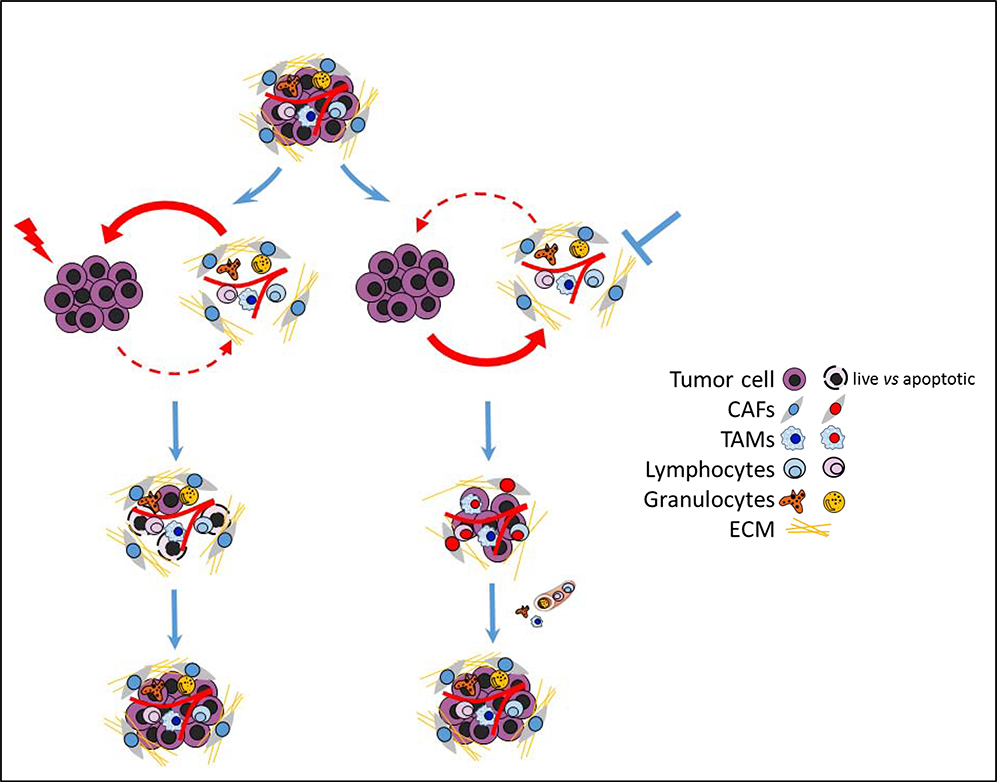
Fig.1
Fig.1
Schematic diagram of targeting tumor cell or TME only and their potential resistant mechanisms. Left: Targeting tumor cell only (such as chemotherapies) kills majority tumor cells. However, the residue tumor cells may survive with the help from TME, leading to tumor relapse. Right: Targeting TME can inhibit recruitment and activation of pro-tumor cells (stromal cells and immune cells) and enhance anti-tumor responses. However, the TME will be reconstituted by tumor cells via active recruitment and programming of bone marrow derived cells or local resident stromal/immune cells.

References

    1. Anand P et al. Cancer is a Preventable Disease that Requires Major Lifestyle Changes. Pharm Res-Dordr 25, 2097–2116, doi: 10.1007/s11095-008-9661-9 (2008). - DOI - PMC - PubMed
    1. Merlo LMF, Pepper JW, Reid BJ & Maley CC Cancer as an evolutionary and ecological process. Nature Reviews Cancer 6, 924–935, doi: 10.1038/nrc2013 (2006). - DOI - PubMed
    1. Savas P et al. Clinical relevance of host immunity in breast cancer: from TILs to the clinic. Nat Rev Clin Oncol 13, 228–241, doi: 10.1038/nrclinonc.2015.215 (2016). - DOI - PubMed
    1. Pardoll DM The blockade of immune checkpoints in cancer immunotherapy. Nature Reviews Cancer 12, 252–264, doi: 10.1038/nrc3239 (2012). - DOI - PMC - PubMed
    1. Gentles AJ et al. The prognostic landscape of genes and infiltrating immune cells across human cancers. Cancer Research 75, doi: 10.1158/1538-7445.Transcagen-Pr09 (2015). - DOI - PMC - PubMed

Publication types

MeSH terms

Substances
