


Comparative Analysis of Complete Chloroplast Genome Sequences of Wild and Cultivated Bougainvillea (Nyctaginaceae)
- PMID: 33260641
- PMCID: PMC7760935
- DOI: 10.3390/plants9121671
Comparative Analysis of Complete Chloroplast Genome Sequences of Wild and Cultivated Bougainvillea (Nyctaginaceae)
Abstract
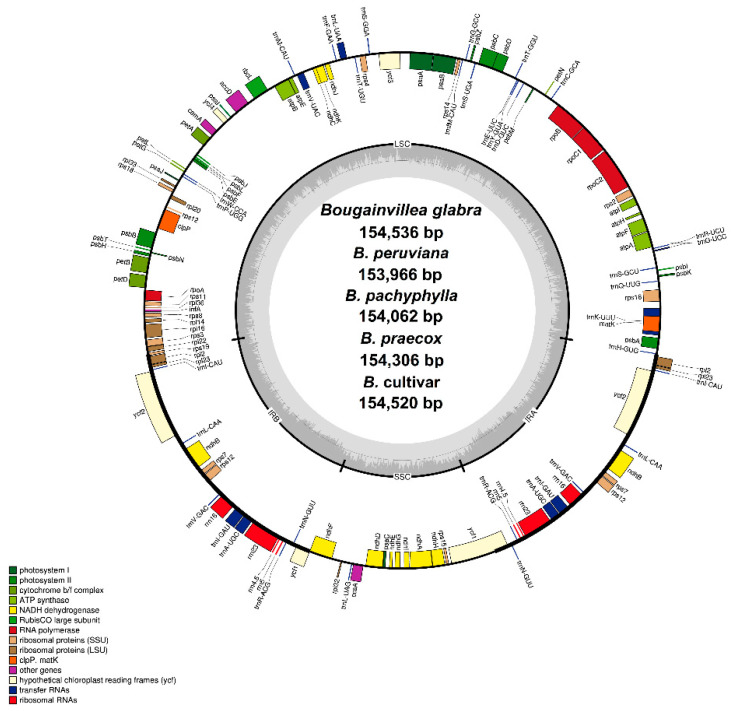
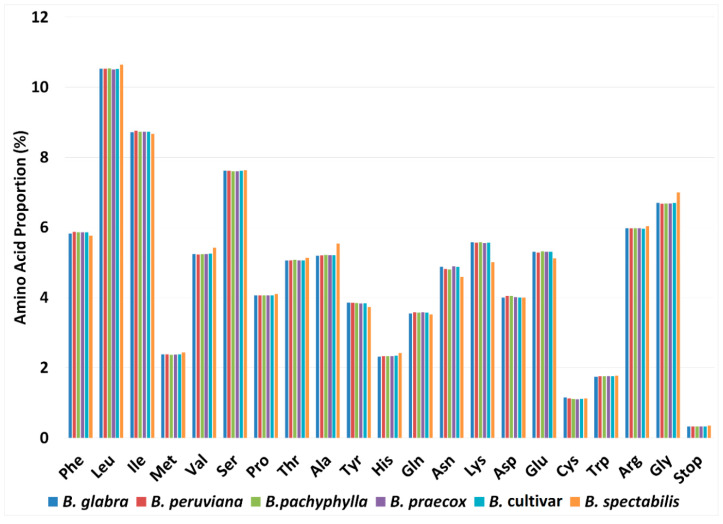
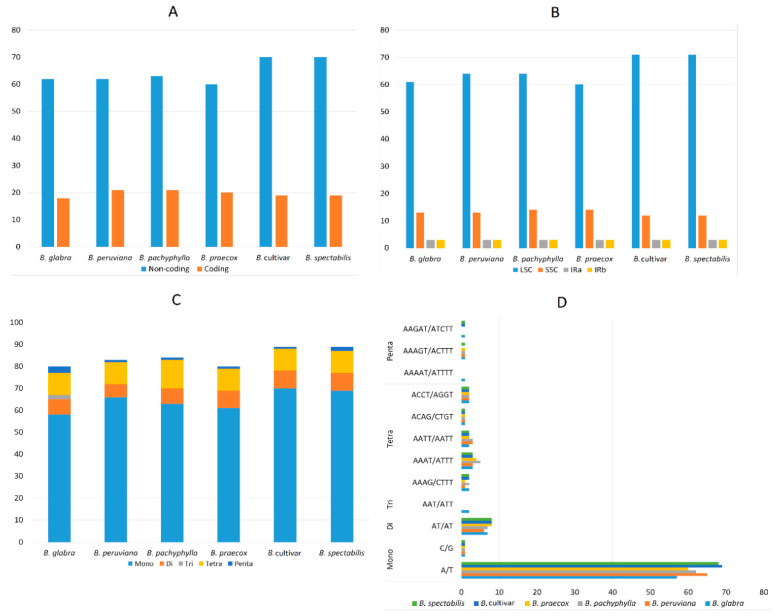
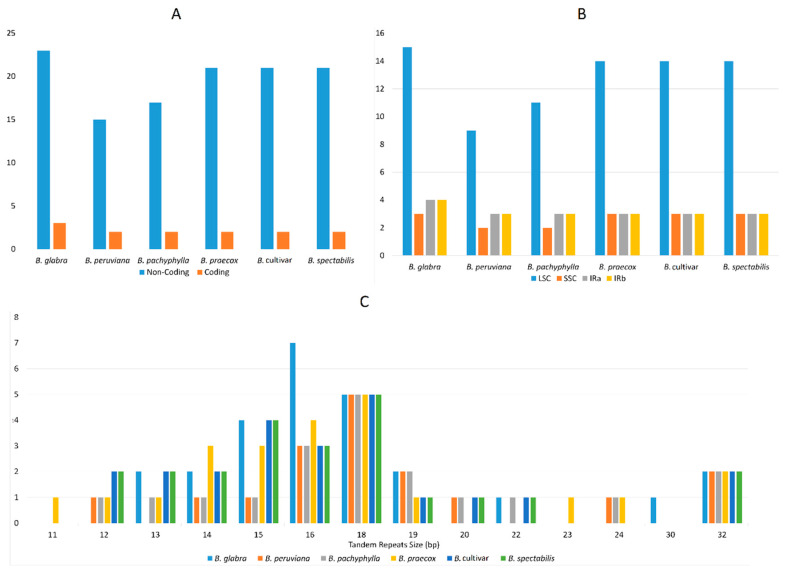
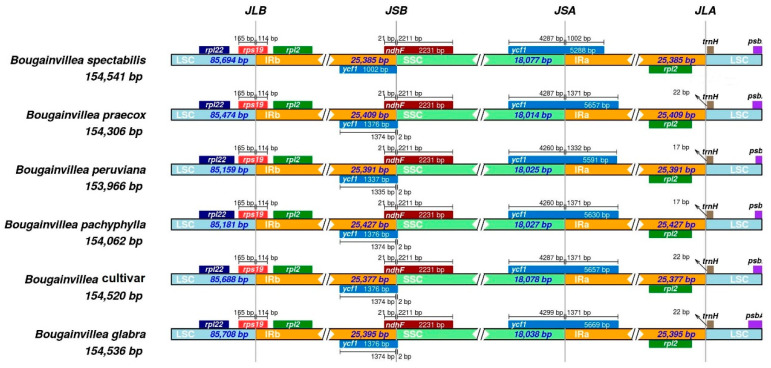
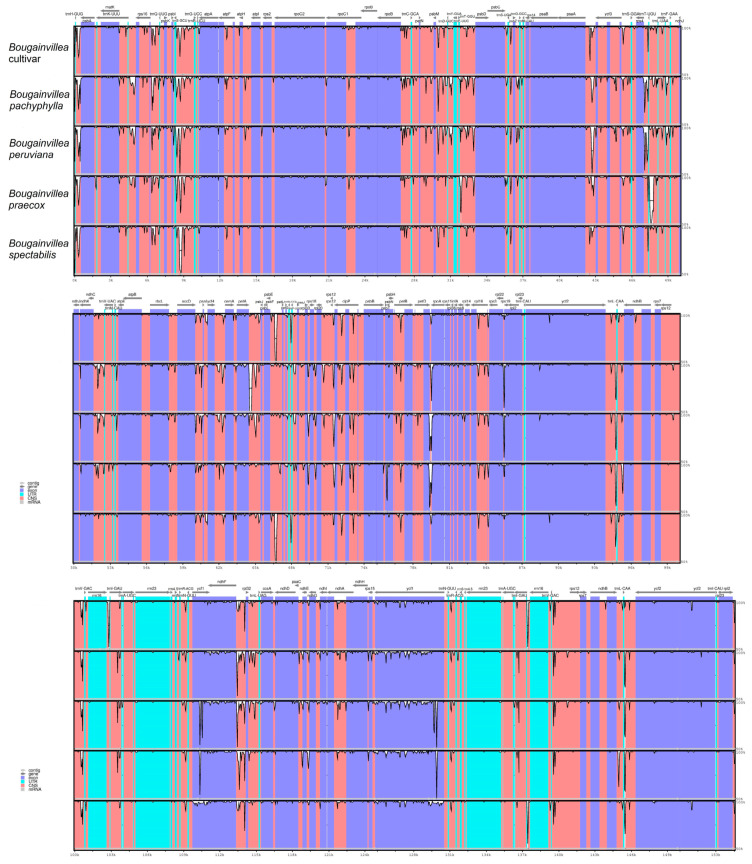
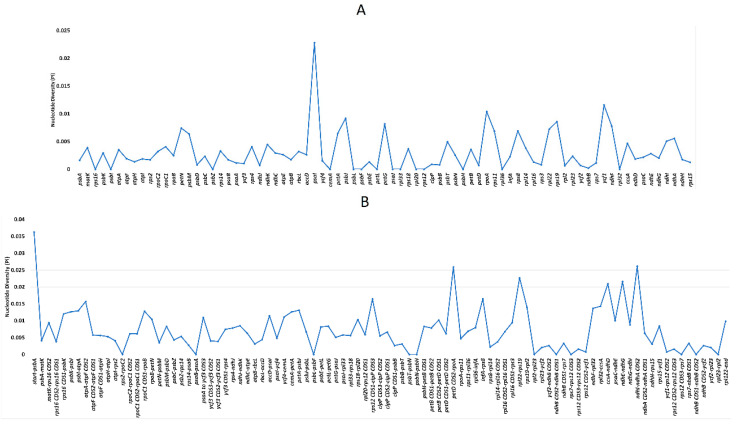
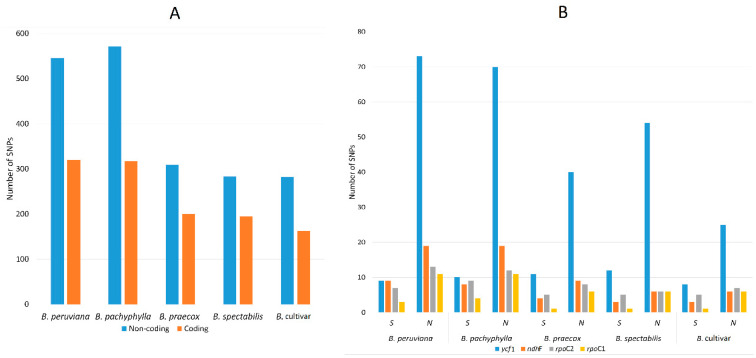
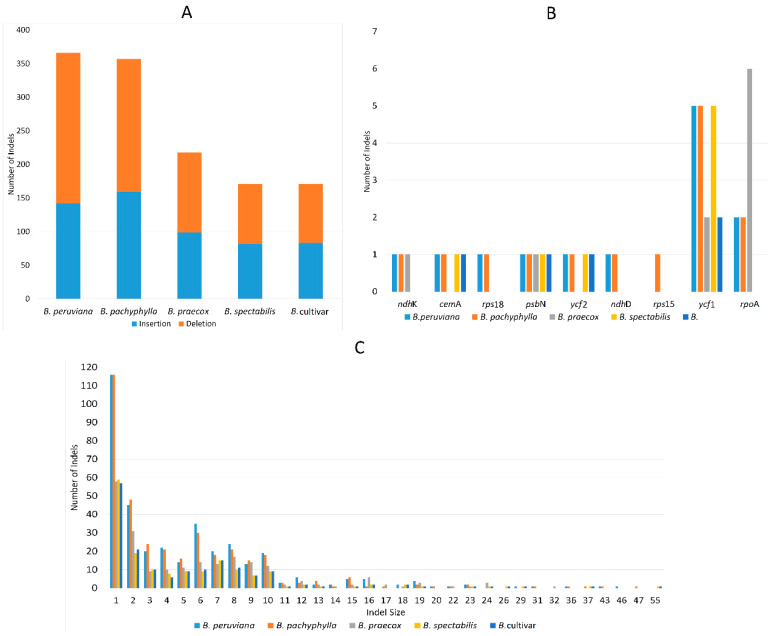
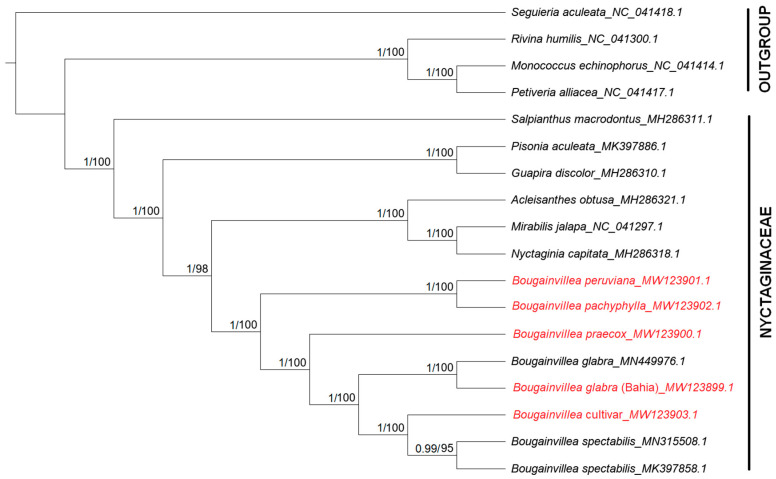
Bougainvillea (Nyctaginaceae) is a popular ornamental plant group primarily grown for its striking colorful bracts. However, despite its established horticultural value, limited genomic resources and molecular studies have been reported for this genus. Thus, to address this existing gap, complete chloroplast genomes of four species (Bougainvillea glabra, Bougainvillea peruviana, Bougainvillea pachyphylla, Bougainvillea praecox) and one Bougainvillea cultivar were sequenced and characterized. The Bougainvillea cp genomes range from 153,966 bp to 154,541 bp in length, comprising a large single-copy region (85,159 bp-85,708 bp) and a small single-copy region (18,014 bp-18,078 bp) separated by a pair of inverted repeats (25,377-25,427 bp). All sequenced plastomes have 131 annotated genes, including 86 protein-coding, eight rRNA, and 37 tRNA genes. These five newly sequenced Bougainvillea cp genomes were compared to the Bougainvillea spectabilis cp genome deposited in GeBank. The results showed that all cp genomes have highly similar structures, contents, and organization. They all exhibit quadripartite structures and all have the same numbers of genes and introns. Codon usage, RNA editing sites, and repeat analyses also revealed highly similar results for the six cp genomes. The amino acid leucine has the highest proportion and almost all favored synonymous codons have either an A or U ending. Likewise, out of the 42 predicted RNA sites, most conversions were from serine (S) to leucine (L). The majority of the simple sequence repeats detected were A/T mononucleotides, making the cp genomes A/T-rich. The contractions and expansions of the IR boundaries were very minimal as well, hence contributing very little to the differences in genome size. In addition, sequence variation analyses showed that Bougainvillea cp genomes share nearly identical genomic profiles though several potential barcodes, such as ycf1, ndhF, and rpoA were identified. Higher variation was observed in both B. peruviana and B. pachyphylla cp sequences based on SNPs and indels analysis. Phylogenetic reconstructions further showed that these two species appear to be the basal taxa of Bougainvillea. The rarely cultivated and wild species of Bougainvillea (B. pachyphylla, B. peruviana, B. praecox) diverged earlier than the commonly cultivated species and cultivar (B. spectabilis, B. glabra, B. cv.). Overall, the results of this study provide additional genetic resources that can aid in further phylogenetic and evolutionary studies in Bougainvillea. Moreover, genetic information from this study is potentially useful in identifying Bougainvillea species and cultivars, which is essential for both taxonomic and plant breeding studies.
Keywords: Bougainvillea; Nyctaginaceae; chloroplast genome; phylogeny.
Conflict of interest statement
The authors declare no conflict of interest.
Figures
References
-
- Mabberley D.J. The Plant Book. Cambridge Univercity Press; Cambridge, UK: 1987. pp. 1–706.
-
- Bittrich V., Kühn U. Nyctaginaceae. In: Kubitzki K., Rohwer J.G., Bittrich V., editors. The Families and Genera of Flowering Plants. Volume 2. Springer; Berlin, Germany: 1993. pp. 473–486.
-
- Bremer B., Bremer K., Chase M.W., Fay M.F., Reveal J.L., Soltis D.E., Soltis P.S., Stevens P.F., Anderberg A.A., Moore M.J., et al. An update of the Angiosperm Phylogeny Group classification for the orders and families of flowering plants: APG II. Bot. J. Linn. Soc. 2003;141:399–436.
-
- Kobayashi K.D., McConnell J., Griffis J. Ornamentals and Flowers. Volume OF-38. College of Tropical Agriculture and Human Resources, University of Hawaii; Honolulu, HI, USA: 2007. Bougainvillea; pp. 1–12.
-
- Plants of the World Online. Facilitated by the Royal Botanic Gardens, Kew. [(accessed on 10 October 2020)]; Available online: http://www.plantsoftheworldonline.org/
Grants and funding
LinkOut - more resources
Full Text Sources
Miscellaneous
