


Icare Home Tonometer: A Review of Characteristics and Clinical Utility
- PMID: 33262568
- PMCID: PMC7695605
- DOI: 10.2147/OPTH.S284844
Icare Home Tonometer: A Review of Characteristics and Clinical Utility
Abstract
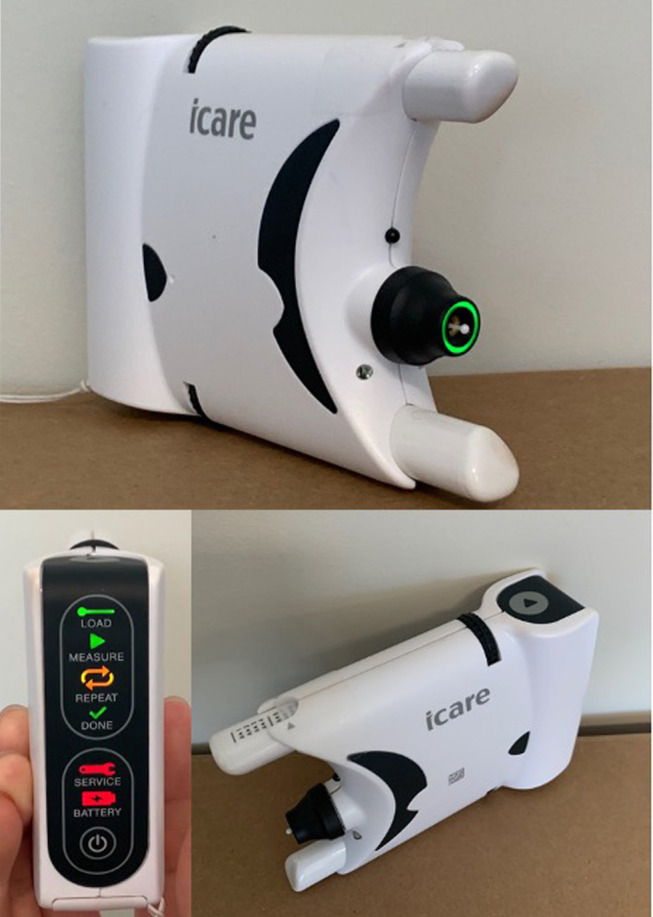
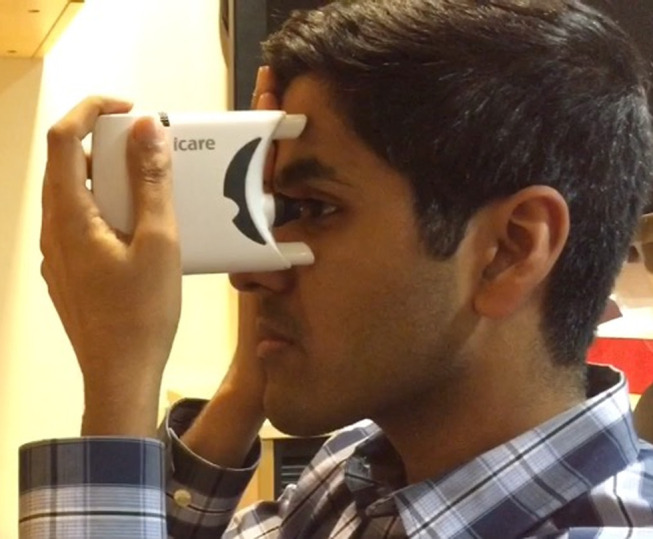
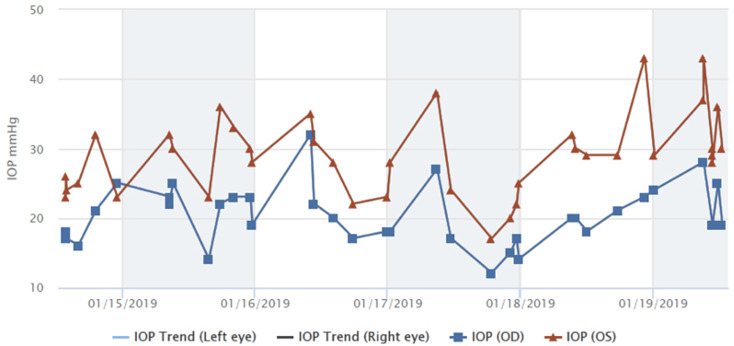
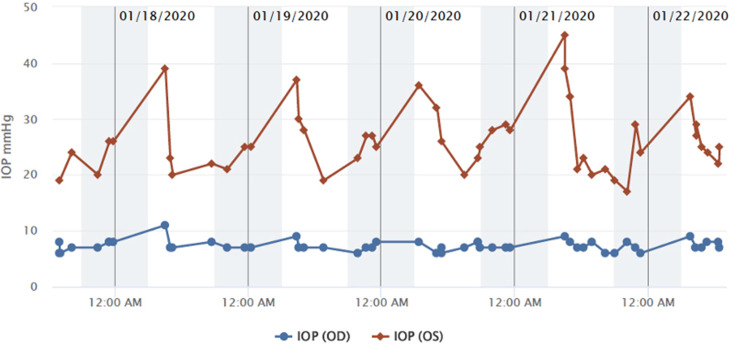
The Icare HOME (TA022, Icare Oy, Vanda, Finland) is rebound tonometer recently approved by the US Food and Drug Administration in March 2017 designed for self-measurement of intraocular pressure (IOP). IOP remains a major modifiable risk factor for glaucoma progression; however, IOP measurements typically occur through single office measurements on Goldmann applanation tonometry (GAT) and do not always reveal the complete picture of patient's IOP patterns and daily fluctuations, which are important for accurate diagnosis and evaluation. Numerous studies have now compared the efficacy of the Icare HOME to that of GAT. The objective of this article is to review the existing literature surrounding the Icare HOME tonometer and its efficacy as a self-tonometer in comparison to GAT. The available literature has shown promising results in its accuracy of measuring IOP but suggests cautious usage in patients with central corneal thicknesses or IOP ranges that are outside of a certain range. This article will also provide details and example cases for when the Icare HOME may be most clinically useful.
Keywords: Icare; Icare HOME; glaucoma; self-tonometry.
© 2020 Liu et al.
Conflict of interest statement
Dr John Liu reports grants from iCare USA Inc., during the conduct of the study. Dr Ticiana De Francesco reports grants from iCare USA Inc., during the conduct of the study. Dr Matthew Schlenker reports grants from iCare USA Inc., during the conduct of the study; personal fees from Abbvie, Thea-Labtician, Santen, and Zeiss, grants and personal fees from Alcon, Bausch Health, and J&J, outside the submitted work. Dr Iqbal (Ike) Ahmed reports personal fees from Aequus, grants from Aerie Pharmaceuticals, Camras Vision, Glaukos, Ivantis, New World Medical, and Santen, grants and speakers honoraria from Alcon, Allergan, and Johnson and Johnson, speakers honoraria for Carl Zeiss Meditec, MST Surgical, and MundiPharma, consulting from Akorn, consulting from ArcScan, consulting from Bausch Health, consulting from Beaver Visitec, consulting from Beyeonics, consulting from CorNeat Vision, consulting from Ellex, consulting from ELT Sight, consulting from Elutimed, consulting from Equinox, consulting from Genentech, consulting from Gore, consulting from InjectSense, consulting from Iridex, consulting from iStar, consulting from KeLoTec, consulting from LayerBio, consulting from Leica Microsystems, consulting from Long Bridge Medical, consulting from MicroOptx, consulting from Mynosys, consulting from Ocular Instruments, consulting from Ocular Therapeutix, consulting from Omega Ophthalmics, consulting from PolyActiva, consulting from Sanoculis, consulting from Science Based Health, consulting from Sight Sciences, consulting from Smartlens, consulting from Stroma, consulting from Thea Pharma, consulting from ViaLase, consulting from Vizzario, outside the submitted work. The authors report no other potential conflicts of interest for this work.
Figures
References
Publication types
LinkOut - more resources
Full Text Sources
Other Literature Sources
