Review
. 2021 Jan 24:16:167-198.
doi: 10.1146/annurev-pathol-031920-093932. Epub 2020 Dec 2.

Opposing Roles of Type I Interferons in Cancer Immunity

Affiliations
Review

Opposing Roles of Type I Interferons in Cancer Immunity

Giselle M Boukhaled et al. Annu Rev Pathol. .

Abstract

The immune system is tasked with identifying malignant cells to eliminate or prevent cancer spread. This involves a complex orchestration of many immune cell types that together recognize different aspects of tumor transformation and growth. In response, tumors have developed mechanisms to circumvent immune attack. Type I interferons (IFN-Is) are a class of proinflammatory cytokines produced in response to viruses and other environmental stressors. IFN-Is are also emerging as essential drivers of antitumor immunity, potently stimulating the ability of immune cells to eliminate tumor cells. However, a more complicated role for IFN-Is has arisen, as prolonged stimulation can promote feedback inhibitory mechanisms that contribute to immune exhaustion and other deleterious effects that directly or indirectly permit cancer cells to escape immune clearance. We review the fundamental and opposing functions of IFN-Is that modulate tumor growth and impact immune function and ultimately how these functions can be harnessed for the design of new cancer therapies.

Keywords: IFN-I; IFN-stimulated gene; ISG; cancer immunology; hallmarks of cancer; immunotherapy; type I interferon.


Figures
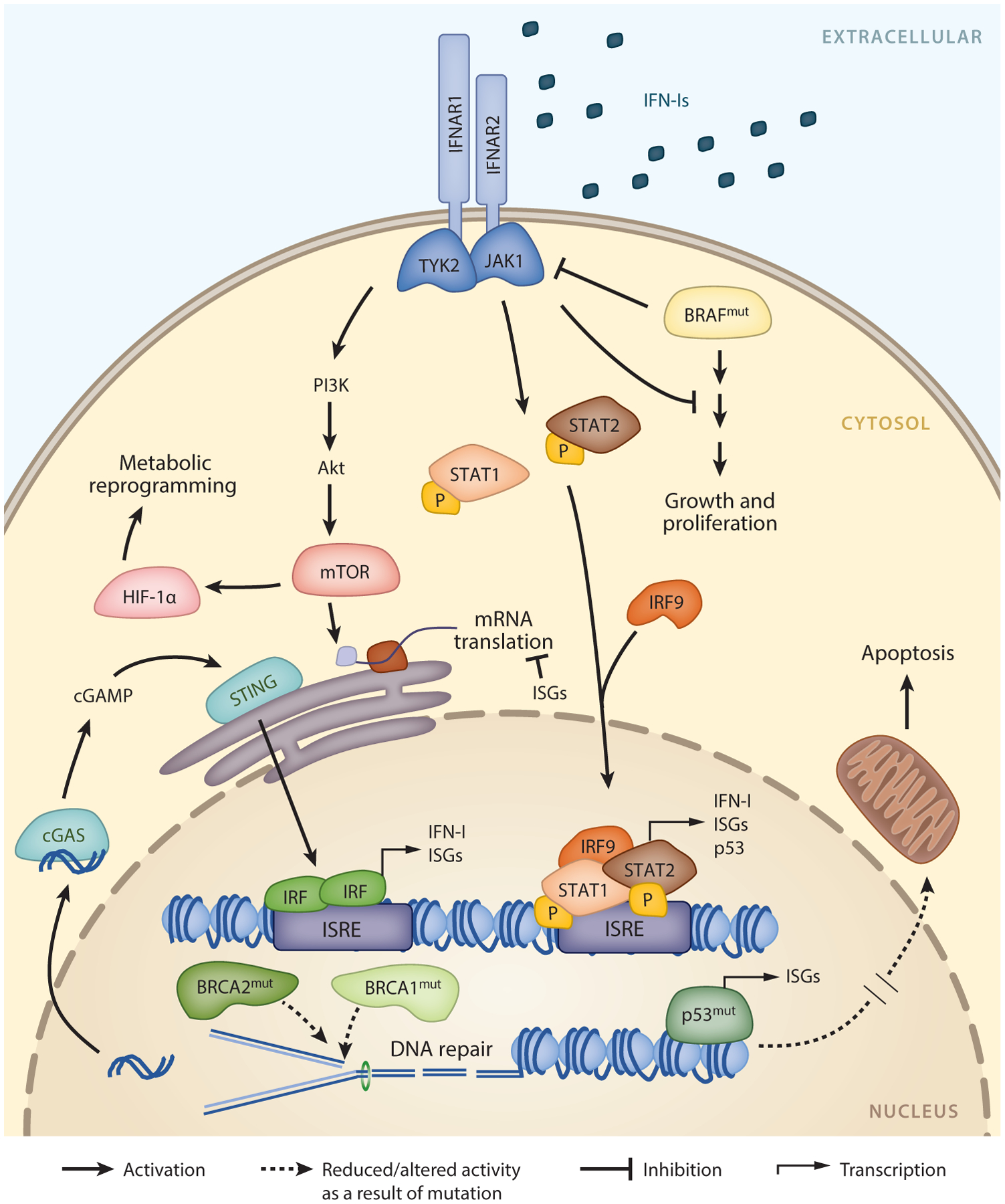
Figure 1
Figure 1
IFN-I signaling in cancer. IFN-Is signal through the IFNAR, which is composed of IFNAR1 and IFNAR2 subunits. Activation of IFNAR triggers a signaling cascade through JAK-STAT, leading to the formation of the ISGF3 complex containing STAT1, STAT2, and IRF9. ISGF3 binds to ISREs, which induces the expression of hundreds of ISGs and other key genes such as TP53. Additional pathways downstream of IFNAR include PI3K/Akt signaling, resulting in the activation of mTOR and leading to HIF-1α stabilization and subsequent metabolic reprogramming. Tumor driver mutations in molecules such as BRAF and p53 can attenuate IFN-I signaling while promoting tumor growth and survival. Gain-of-function BRAF mutation leads to downregulation of IFNAR, and mutations in p53 can blunt the production of ISGs. Dysregulation of the DNA damage response and repair mechanisms, for example, through mutation of BRCA1 or BRCA2, leads to the accumulation of mutations and genomic instability. Resulting cytosolic DNA extruded in response to this replication stress is sensed by cGAS, which activates STING, ultimately initiating and amplifying IFN-I and ISG production. Abbreviations: IFN-I, type I interferon; IFNAR, IFN-α/β receptor; ISG, IFN-stimulated gene; ISRE, IFN-stimulated response element.
Figure 2
Figure 2
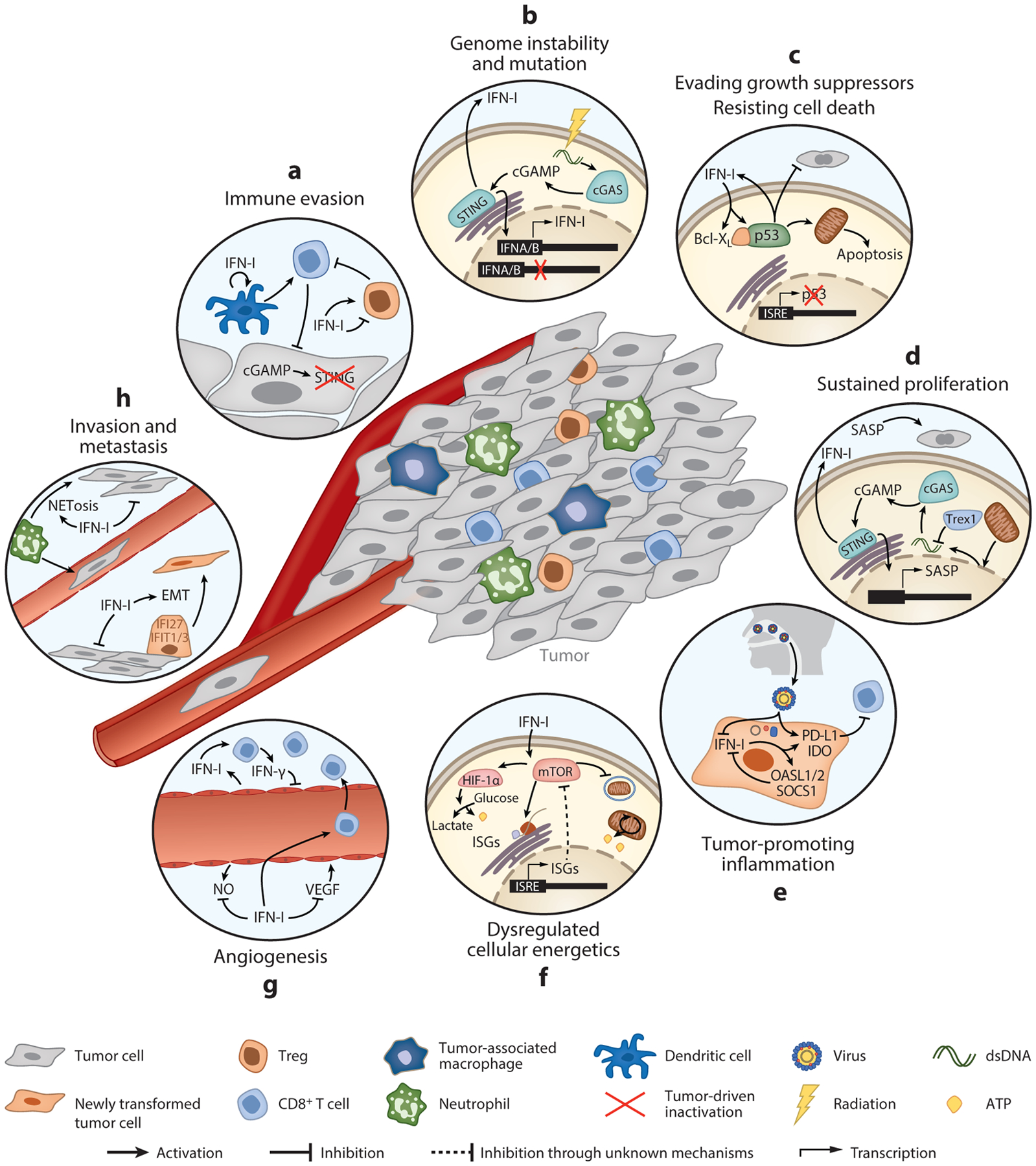
IFN-I-mediated regulation of the hallmarks of cancer. Key pathways highlighting examples of the opposing roles in IFN-Is in different pathological processes during cancer development. (a) Immune evasion. Inactivation of STING or IFNAR blunts IFN-I production, limiting the ability of dendritic cells to prime T cell responses and enhancing Treg infiltration. Cancer cells can also co-opt IFN-Is to promote Treg function in the tumor microenvironment. (b) Genome instability and mutation. DNA damage induced by accumulated mutations or by radiation therapy stimulates IFN-I responses through cGAS-STING-mediated expression of ISGs. IFN-Is are also commonly mutated in cancer. (c) Evading growth suppressors/resisting cell death. Mutual activation of IFN-Is and p53 inhibits tumor cell proliferation and promotes apoptosis. Tumors can overcome these effects by mutating p53. (d) Sustained proliferation. STING activated in senescent cells upregulates IFN-I and SASP. While senescent cells are replicatively paralyzed, SASP can promote tumor growth. (e) Tumor-promoting inflammation. Chronic inflammation caused, for example, by viral infection induces a skewed IFN-I response, favoring the expression of negative regulatory ISGs that facilitate continued tumor growth. (f) Dysregulated cellular energetics. Through regulation of mTORC1, IFN-Is activate glycolysis or autophagy, either of which promotes tumor cell growth and survival. (g) Angiogenesis. IFN-Is inhibit VEGF and promote vascular normalization, allowing T cell infiltration and antitumor immunity. (h) Invasion and metastasis. IFN-Is can facilitate EMT and also promote inflammation at distal sites that enhance metastasis. Abbreviations: EMT, epithelial-to-mesenchymal transition; IFNAR, IFN-α/β receptor; ISG, IFN-stimulated gene; mTORC1, mammalian target of rapamycin complex 1; SASP, senescence-associated secretory phenotype; VEGF, vascular endothelial growth factor.

References

    1. Hanahan D, Weinberg RA. 2011. Hallmarks of cancer: the next generation. Cell 144(5):646–74 - PubMed
    1. Pitroda SP, Chmura SJ, Weichselbaum RR. 2019. Integration of radiotherapy and immunotherapy for treatment of oligometastases. Lancet Oncol. 20:e434–42 - PubMed
    1. Zappasodi R, Merghoub T, Wolchok JD. 2018. Emerging concepts for immune checkpoint blockade-based combination therapies. Cancer Cell 33:581–98 - PMC - PubMed
    1. Topalian SL, Taube JM, Anders RA, Pardoll DM. 2016. Mechanism-driven biomarkers to guide immune checkpoint blockade in cancer therapy. Nat. Rev. Cancer 16:275–87 - PMC - PubMed
    1. Formenti SC, Rudqvist NP, Golden E, Cooper B, Wennerberg E, et al. 2018. Radiotherapy induces responses of lung cancer to CTLA-4 blockade. Nat. Med 24:1845–51 - PMC - PubMed

Publication types

Substances