


Sample Entropy of the Heart Rate Reflects Properties of the System Organization of Behaviour
- PMID: 33265539
- PMCID: PMC7512967
- DOI: 10.3390/e20060449
Sample Entropy of the Heart Rate Reflects Properties of the System Organization of Behaviour
Abstract
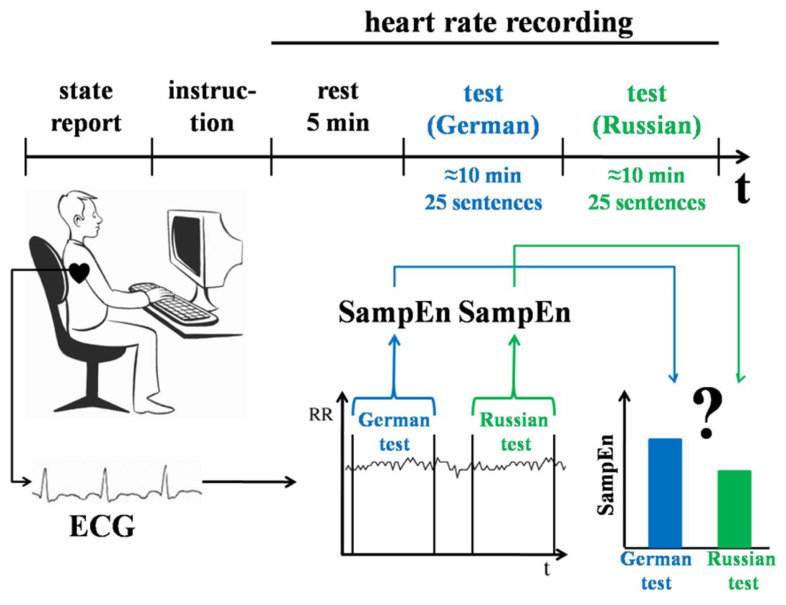
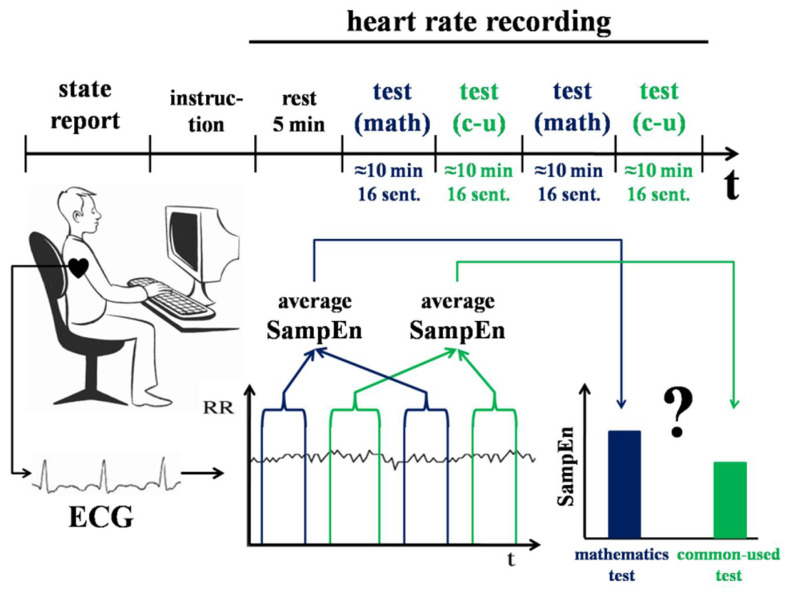
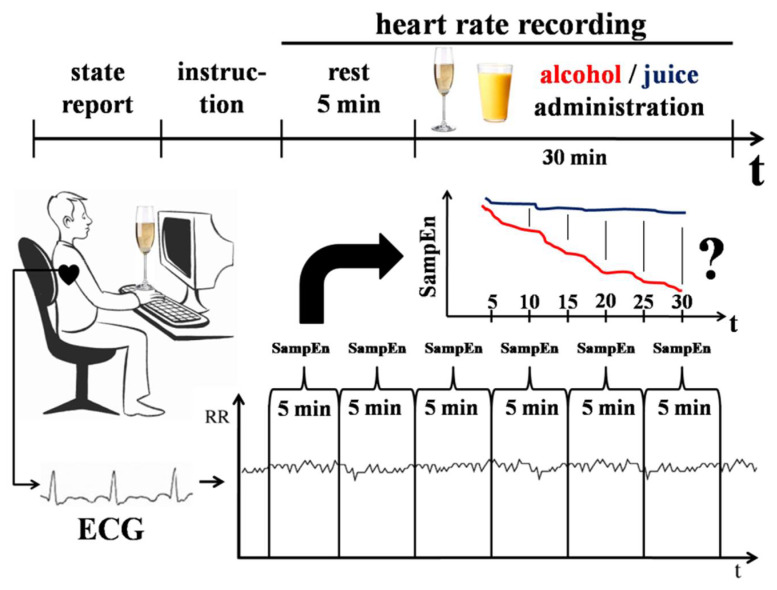
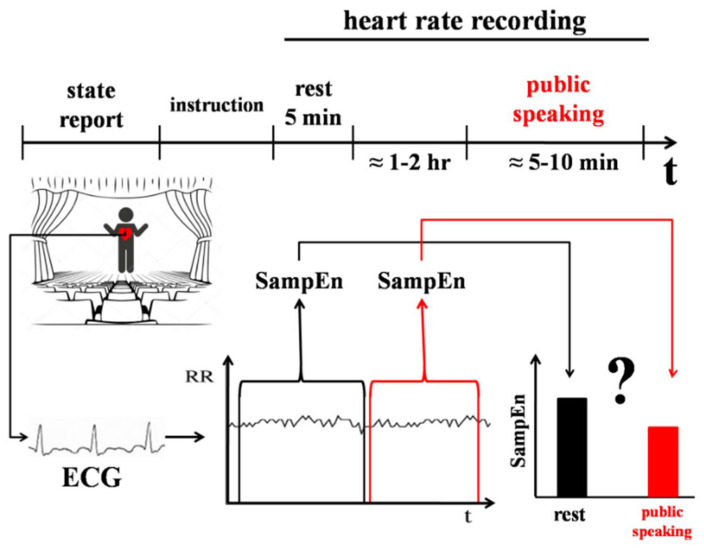
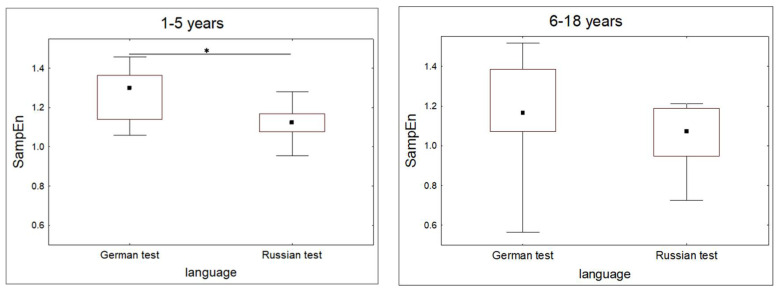
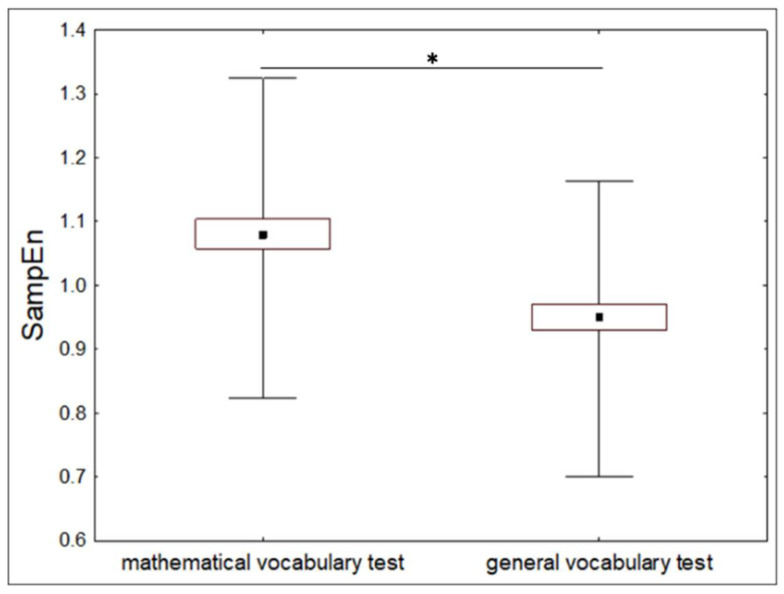
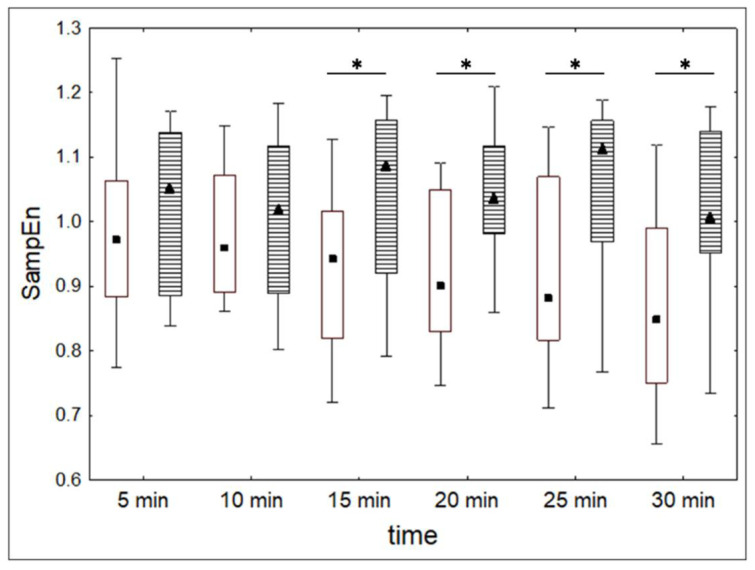
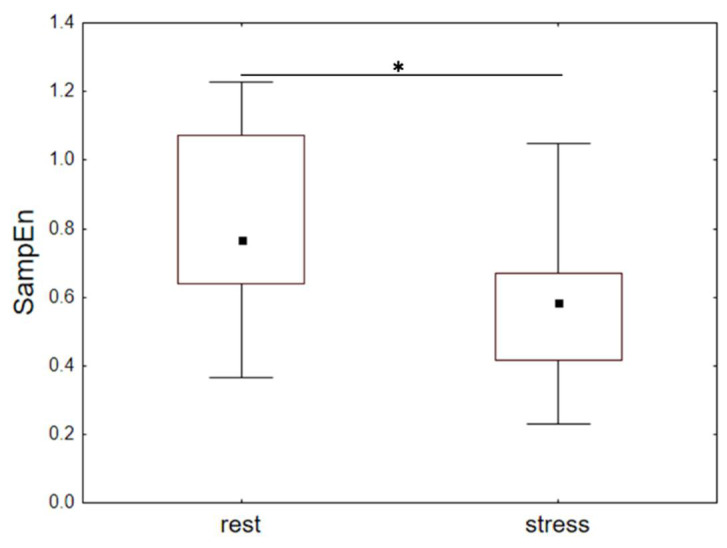
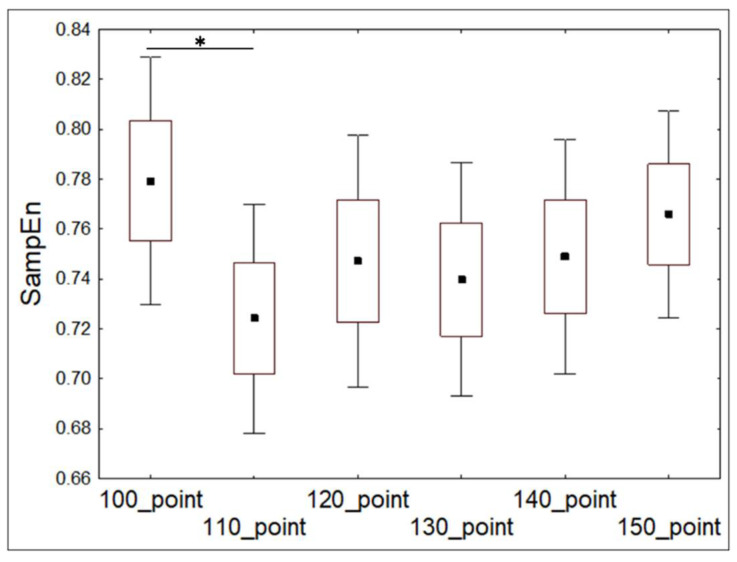
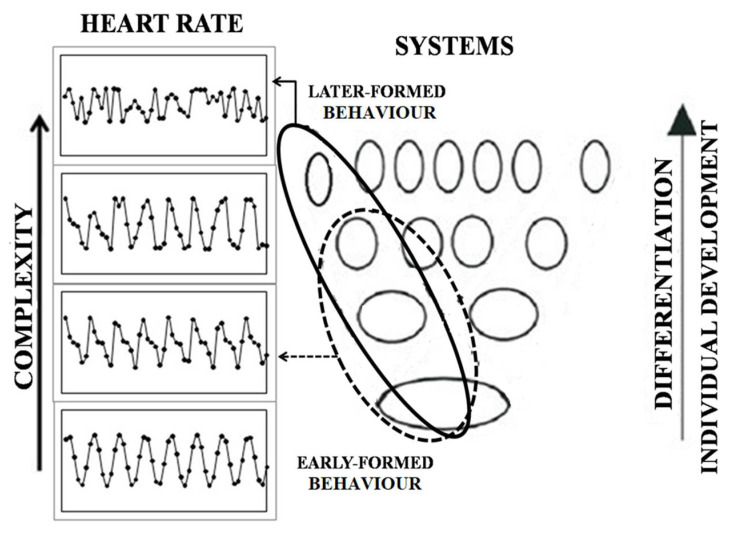
Cardiac activity is involved in the processes of organization of goal-directed behaviour. Each behavioural act is aimed at achieving an adaptive outcome and it is subserved by the actualization of functional systems consisting of elements distributed across the brain and the rest of the body. This paper proposes a system-evolutionary view on the activity of the heart and its variability. We have compared the irregularity of the heart rate, as measured by sample entropy (SampEn), in behaviours that are subserved by functional systems formed at different stages of individual development, which implement organism-environment interactions with different degrees of differentiation. The results have shown that SampEn of the heart rate was higher during performing tasks that included later acquired knowledge (foreign language vs. native language; mathematical vocabulary vs. general vocabulary) and decreased in the stress and alcohol conditions, as well as at the beginning of learning. These results are in line with the hypothesis that irregularity of the heart rate reflects the properties of a set of functional systems subserving current behaviour, with higher irregularity corresponding to later acquired and more complex behaviour.
Keywords: alcohol administration; functional systems; heart rate variability; individual development; irregularity; learning; sample entropy; stress.
Conflict of interest statement
The authors declare no conflict of interest.
Figures
References
-
- Matheson H.E., Barsalou L.W. Embodiment and Grounding in Cognitive Neuroscience. In: Wixted J.T., Thompson-Schill S.L., editors. Stevens’ Handbook of Experimental Psychology and Cognitive Neuroscience. 4th ed. Volume 3. John Wiley & Sons; Hoboken, NJ, USA: 2018. pp. 1–27.
-
- Alexandrov Y.I., Grechenko T.N., Gavrilov V.V., Gorkin A.G., Shevchenko D.G., Grinchenko Y.V., Aleksandrov I.O., Maksimova N.E., Bezdenezhnych B.N., Bodunov M.V. Formation and realization of individual experience: A psychophysiological approach. In: Miller R., Ivanitsky A.M., Balaban P.V., editors. Conceptual Advances in Brain Research. Conceptual Advances in Russian Neuroscience: Complex Brain Functions. Volume 2. Harwood Academic Publishers; Amsterdam, The Netherlands: 2000. pp. 181–200.
-
- Shvyrkov V.B. Neurophysiological study of animals’ subjective experience. In: John R., Harmony T., editors. Machinery of the Mind. Birkhäuser; Boston, MA, USA: 1990. pp. 337–350.
-
- Alexandrov Y.I. Comparative description of consciousness and emotions in the framework of systemic understanding of behavioural continuum and individual development. In: Teddei-Ferretti C., Musio C., editors. Neuronal Bases and Psychological Aspects of Consciousness, Proceedings of the International School of Biocybernetics, Casamicciola, Napoli, Italy, 13–18 October 1997. Volume 8. World Scientific; New York, NY, USA: 1999. pp. 220–235.
Grants and funding
LinkOut - more resources
Full Text Sources
