Review
. 2020 Nov 30;12(12):2877.
doi: 10.3390/polym12122877.

Polymerization Reactions and Modifications of Polymers by Ionizing Radiation

Affiliations
Review

Polymerization Reactions and Modifications of Polymers by Ionizing Radiation

Aiysha Ashfaq et al. Polymers (Basel). .

Abstract

Ionizing radiation has become the most effective way to modify natural and synthetic polymers through crosslinking, degradation, and graft polymerization. This review will include an in-depth analysis of radiation chemistry mechanisms and the kinetics of the radiation-induced C-centered free radical, anion, and cation polymerization, and grafting. It also presents sections on radiation modifications of synthetic and natural polymers. For decades, low linear energy transfer (LLET) ionizing radiation, such as gamma rays, X-rays, and up to 10 MeV electron beams, has been the primary tool to produce many products through polymerization reactions. Photons and electrons interaction with polymers display various mechanisms. While the interactions of gamma ray and X-ray photons are mainly through the photoelectric effect, Compton scattering, and pair-production, the interactions of the high-energy electrons take place through coulombic interactions. Despite the type of radiation used on materials, photons or high energy electrons, in both cases ions and electrons are produced. The interactions between electrons and monomers takes place within less than a nanosecond. Depending on the dose rate (dose is defined as the absorbed radiation energy per unit mass), the kinetic chain length of the propagation can be controlled, hence allowing for some control over the degree of polymerization. When polymers are submitted to high-energy radiation in the bulk, contrasting behaviors are observed with a dominant effect of cross-linking or chain scission, depending on the chemical nature and physical characteristics of the material. Polymers in solution are subject to indirect effects resulting from the radiolysis of the medium. Likewise, for radiation-induced polymerization, depending on the dose rate, the free radicals generated on polymer chains can undergo various reactions, such as inter/intramolecular combination or inter/intramolecular disproportionation, b-scission. These reactions lead to structural or functional polymer modifications. In the presence of oxygen, playing on irradiation dose-rates, one can favor crosslinking reactions or promotes degradations through oxidations. The competition between the crosslinking reactions of C-centered free radicals and their reactions with oxygen is described through fundamental mechanism formalisms. The fundamentals of polymerization reactions are herein presented to meet industrial needs for various polymer materials produced or degraded by irradiation. Notably, the medical and industrial applications of polymers are endless and thus it is vital to investigate the effects of sterilization dose and dose rate on various polymers and copolymers with different molecular structures and morphologies. The presence or absence of various functional groups, degree of crystallinity, irradiation temperature, etc. all greatly affect the radiation chemistry of the irradiated polymers. Over the past decade, grafting new chemical functionalities on solid polymers by radiation-induced polymerization (also called RIG for Radiation-Induced Grafting) has been widely exploited to develop innovative materials in coherence with actual societal expectations. These novel materials respond not only to health emergencies but also to carbon-free energy needs (e.g., hydrogen fuel cells, piezoelectricity, etc.) and environmental concerns with the development of numerous specific adsorbents of chemical hazards and pollutants. The modification of polymers through RIG is durable as it covalently bonds the functional monomers. As radiation penetration depths can be varied, this technique can be used to modify polymer surface or bulk. The many parameters influencing RIG that control the yield of the grafting process are discussed in this review. These include monomer reactivity, irradiation dose, solvent, presence of inhibitor of homopolymerization, grafting temperature, etc. Today, the general knowledge of RIG can be applied to any solid polymer and may predict, to some extent, the grafting location. A special focus is on how ionizing radiation sources (ion and electron beams, UVs) may be chosen or mixed to combine both solid polymer nanostructuration and RIG. LLET ionizing radiation has also been extensively used to synthesize hydrogel and nanogel for drug delivery systems and other advanced applications. In particular, nanogels can either be produced by radiation-induced polymerization and simultaneous crosslinking of hydrophilic monomers in "nanocompartments", i.e., within the aqueous phase of inverse micelles, or by intramolecular crosslinking of suitable water-soluble polymers. The radiolytically produced oxidizing species from water, •OH radicals, can easily abstract H-atoms from the backbone of the dissolved polymers (or can add to the unsaturated bonds) leading to the formation of C-centered radicals. These C-centered free radicals can undergo two main competitive reactions; intramolecular and intermolecular crosslinking. When produced by electron beam irradiation, higher temperatures, dose rates within the pulse, and pulse repetition rates favour intramolecular crosslinking over intermolecular crosslinking, thus enabling a better control of particle size and size distribution. For other water-soluble biopolymers such as polysaccharides, proteins, DNA and RNA, the abstraction of H atoms or the addition to the unsaturation by •OH can lead to the direct scission of the backbone, double, or single strand breaks of these polymers.

Keywords: ionizing radiation; radiation induced grafting; radiation induced polymerization; radiation of natural polymers; radiation synthesis nanogels.


Conflict of interest statement

The authors declare no conflict of interest.

Figures
Scheme 1
Scheme 1
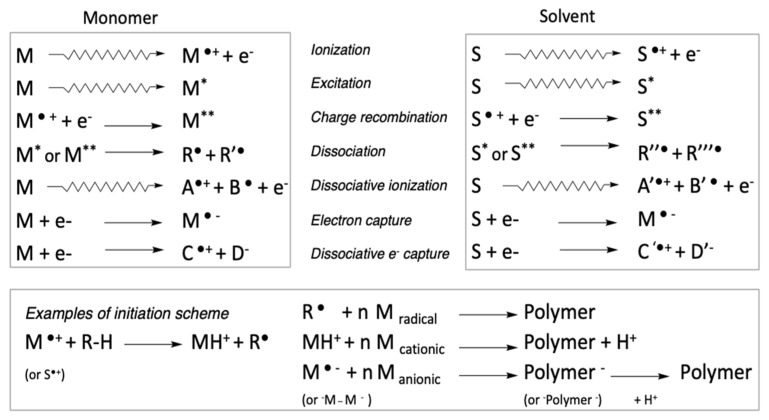
Simplified description of radiation-initiated polymerization for monomer M in the bulk or dissolved in solvent S. Depending on the chemical nature of the monomer, the purity of the medium and on the reaction conditions, chain propagation is initiated by appropriate free radical or ionic active centers.
Figure 1
Figure 1
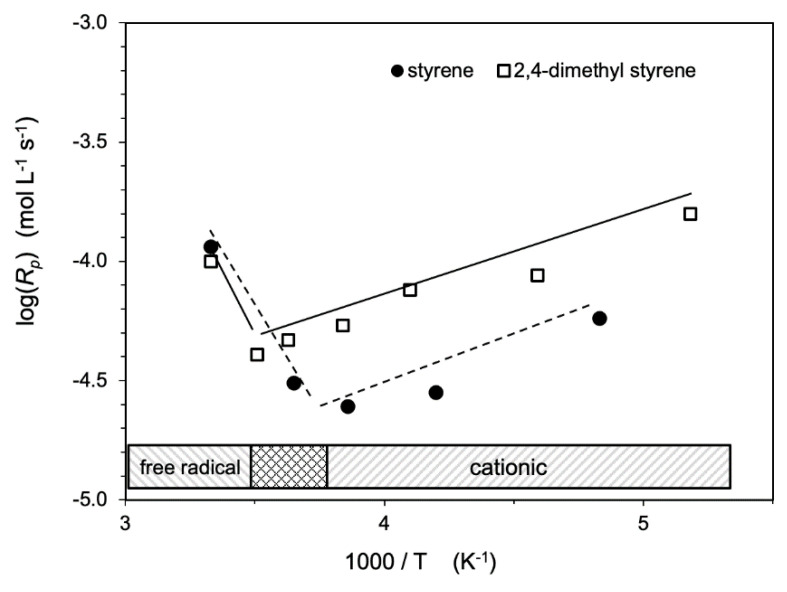
Temperature-dependence of the radiation induced polymerization of styrene and 2,4-dimethylstyrene revealing the temperature ranges favoring the occurrence of a cationic or of free radical mechanism (after [64]).
Scheme 2
Scheme 2
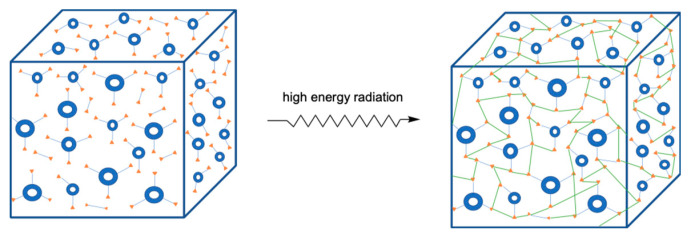
Radiation-induced cross-linking polymerization of blends based on reactive prepolymers and multifunctional monomers.
Scheme 3
Scheme 3
Generic structures of monomers and prepolymers with soft or rigid segments used in radiation-curable blends.
Scheme 4
Scheme 4
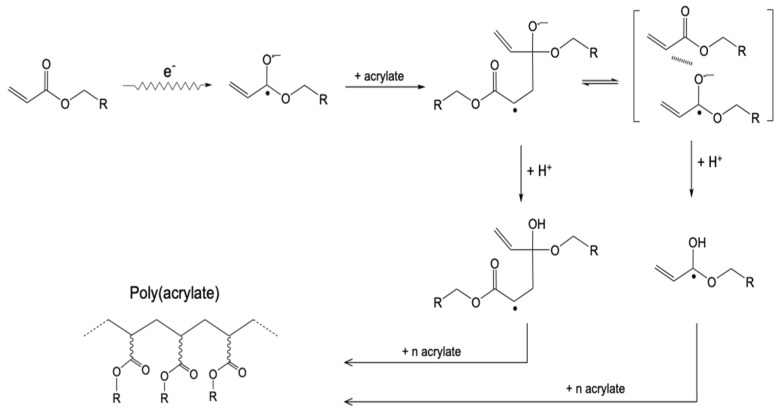
Proposed mechanism for the initiation of acrylate polymerization upon exposure to high energy radiation [122].
Scheme 5
Scheme 5
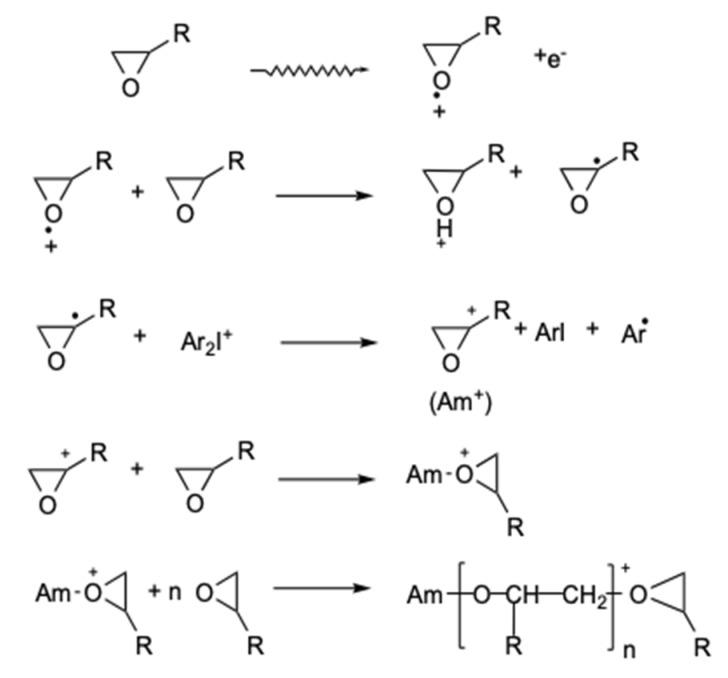
Simplified mechanism for the formation of the initiating species for epoxy monomers in presence of diaryliodonium salt upon exposure to high energy radiation (counter-anions of the onium salt are omitted in this scheme for the sake of simplicity).
Scheme 6
Scheme 6
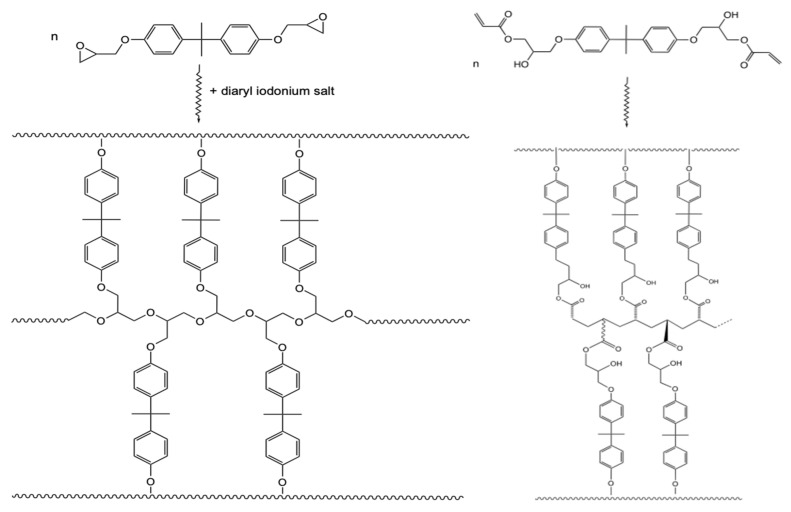
Molecular structure of bis-phenol A diglycidyl ether (DGEBA), of bis-phenol A epoxy acrylate (EPAC) and of the networks resulting from their radiation-initiated crosslinking polymerization.
Figure 2
Figure 2
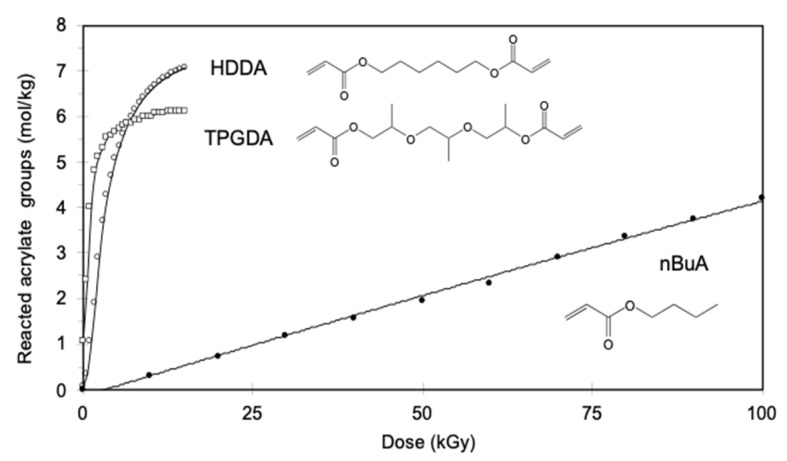
Kinetic profiles of acrylate consumption in monomer films as a function of EB radiation dose (nBuA (●), tripropyleneglycol diacrylate (TPGDA) (☐) and hexanediol diacrylate (HDDA) (○).
Figure 3
Figure 3
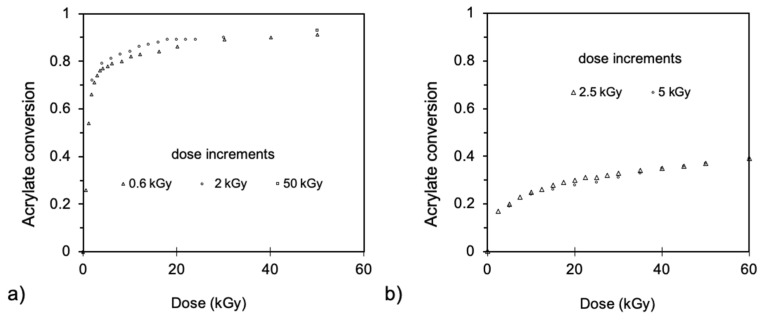
Kinetic profiles of acrylate consumption in prepolymer films as a function of EB-radiation dose: (a) APU and (b) EPAC.
Figure 4
Figure 4
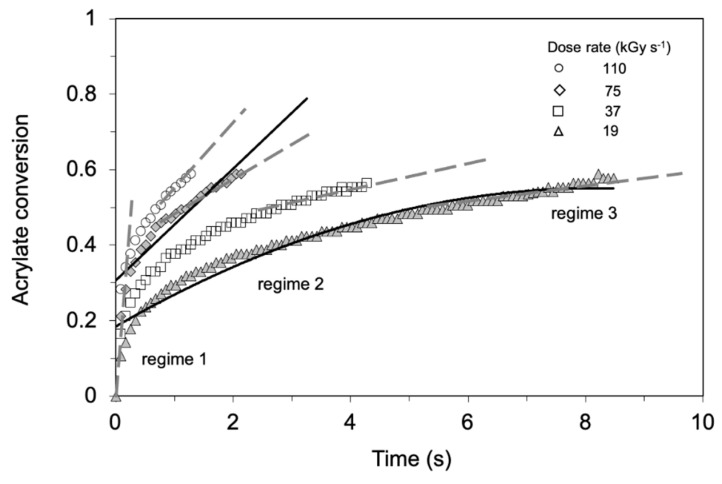
Kinetic profiles of acrylate consumption for EPAC prepolymer processed at different dose rates.
Figure 5
Figure 5
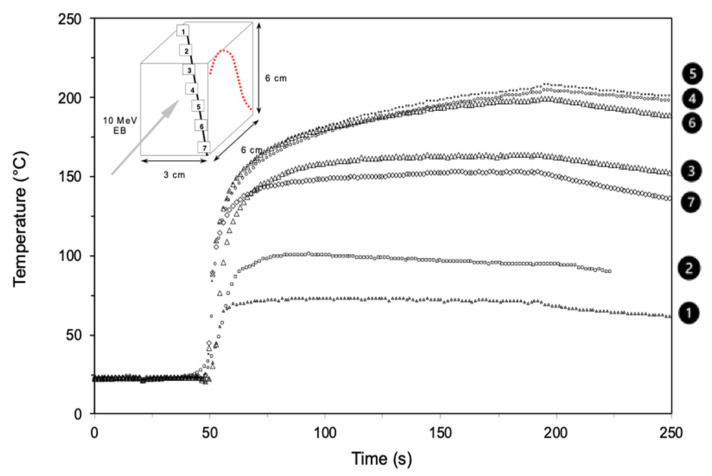
Position of thermocouples in a 125 g EPAC resin sample contained in a thin-walled aluminum box to (dotted line indicating the dose-depth deposition profile) and plots of the variations of the temperature in the sample submitted to a 50 kGy dose of 10 MeV electrons.
Figure 6
Figure 6
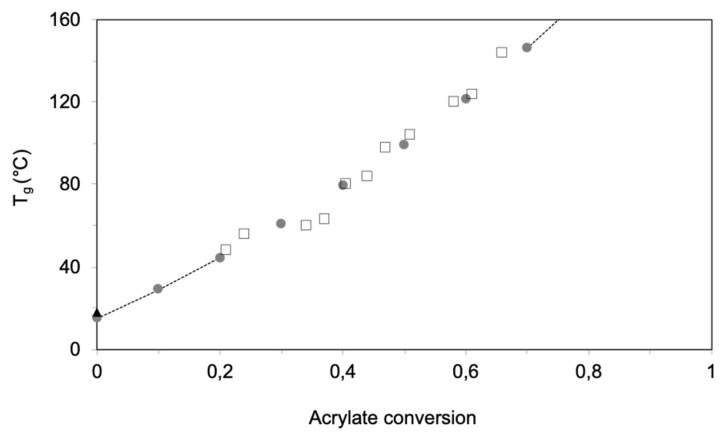
Plot of the Tg (tanδ maximum in DMA spectrogram) as a function of acrylate conversion for EB-cured EPAC materials (for various EB doses, dose rates, and dose increments). The dotted line corresponds the simulation based on DiBenedetto’s model.
Figure 7
Figure 7
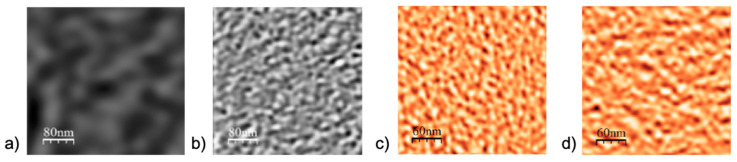
Height (a) and phase contrast (bd) AFM images recorded in tapping mode of EB-cured epoxy diacrylate (EPAC) samples at conversion levels x = 0.41 (a,b), 0.46 (c), and 0.59 (d).
Scheme 7
Scheme 7
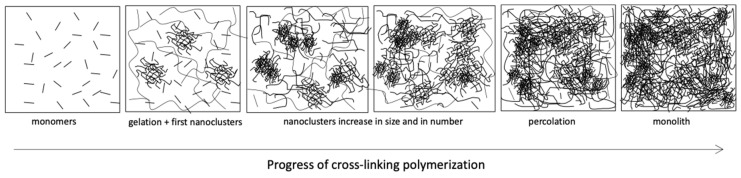
Sketch representing the heterogeneous build-up of networks prepared by radiation-induced chain polymerization of epoxy-diacrylate EPAC.
Scheme 8
Scheme 8
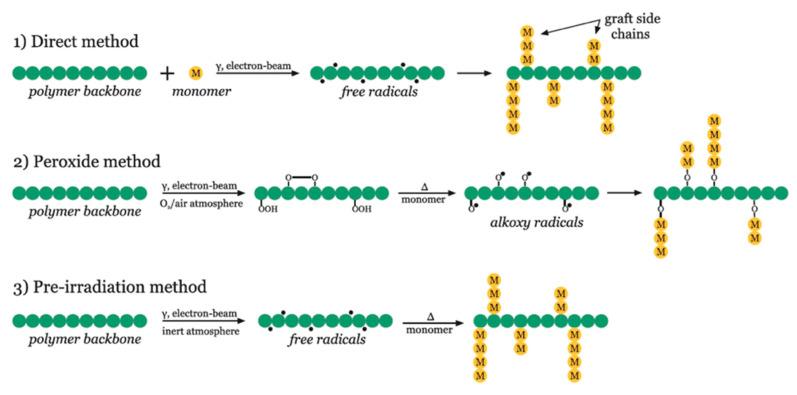
Scheme of radiation-induced grafting methods for polymers.
Figure 8
Figure 8
Possible chemical reactions between fluorinated ethylene propylene (FEP) and styrene during direct and indirect irradiation. The radicals produced will undergo propagation resulting in the polymerization of styrene. Undesired homopolymerization and FEP crosslinking may also take place [165].
Figure 9
Figure 9
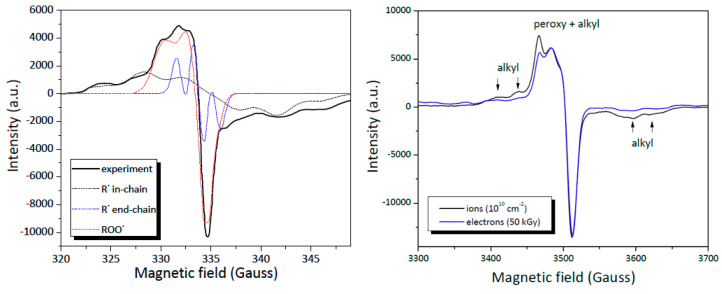
EPR spectra of 9 µm β-PVDF films irradiated by (left) e-beam (1.25 MGy); (right) Swift Heavy Ions (krypton of 10MeV/amu, fluence of 1010 cm−2 corresponding to 76 kGy) and e-beam (50 kGy).
Figure 10
Figure 10
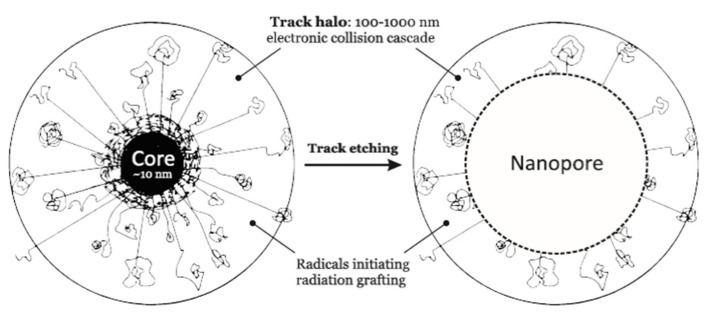
Schematic image of swift heavy ions (SHI) irradiated polymer film before and after etching.
Figure 11
Figure 11
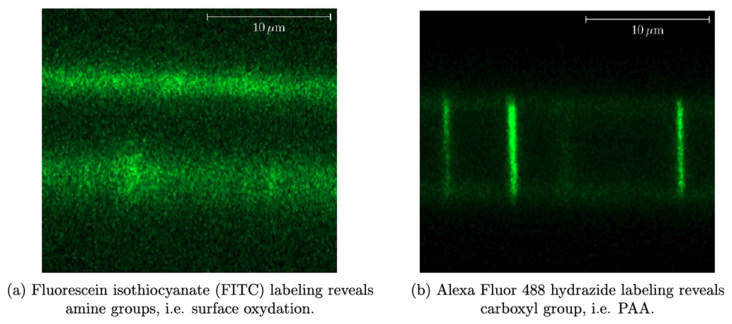
Confocal Laser Scanning Microscopy (CLSM) images of labeled PAA-g-PVDF membranes from ref [215].
Figure 12
Figure 12
Small Angle Neutron Scattering (SANS) spectra obtained at LLB CEA Saclay, France (PACE spectrometer) for track-etched PVDF membranes exhibiting nanopores of 50 nm of initial radius (green circles), radiation grafted with PAA: (a) [AA] = 75% in water; (b) [AA] = 75% in water in presence of transfer agent, the thiolactic acid ([TLA] = 2.10−3 M) (c) [AA] = 25% in THF.
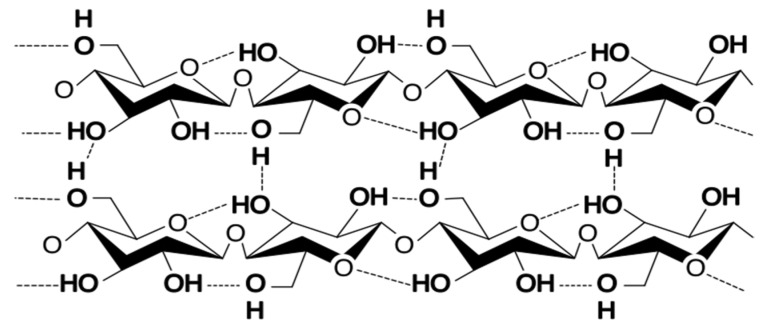
Figure 13
Figure 13
Nanogels as internally crosslinked polymer coils: (a) linear macromolecule in a stretched conformation, (b) linear macromolecule in a coiled conformation, (c) internally cross-linked polymer coil—a nanogel.
Figure 14
Figure 14
Intermolecular crosslinking of a macromolecule using a chemical cross-linking agent. For details see e.g., [259].
Figure 15
Figure 15
Formation of randomly-located carbon-centered polymer radical as a result of hydrogen abstraction by hydroxyl radicals or hydrogen atoms from a polymer chain.
Figure 16
Figure 16
Addition of oxygen molecule to a carbon-centered polymer radical leading to the formation of a peroxyl radical.
Figure 17
Figure 17
H-transfer leading to a shift in location of the radical along a polymer chain.
Figure 18
Figure 18
Degradation (chain scission) of a radical-bearing macromolecule.
Figure 19
Figure 19
Intermolecular addition of a polymer radical to a pre-existing double bond, resulting in crosslinking and re-creation of a radical site.
Figure 20
Figure 20
Intermolecular disproportionation of two carbon-centered polymer radicals.
Figure 21
Figure 21
Crosslinking by recombination of two polymer radicals: (a) intermolecular, (b) intramolecular.
Figure 22
Figure 22
Controlling the dominating crosslinking process: (a) high polymer concentration and low dose rate—n average less than one radical present simultaneously on each chain—domination of intermolecular crosslinking, (b) low polymer concentration and high-dose pulse irradiation—many radicals present simultaneously on each chain—domination of intramolecular crosslinking.
Figure 23
Figure 23
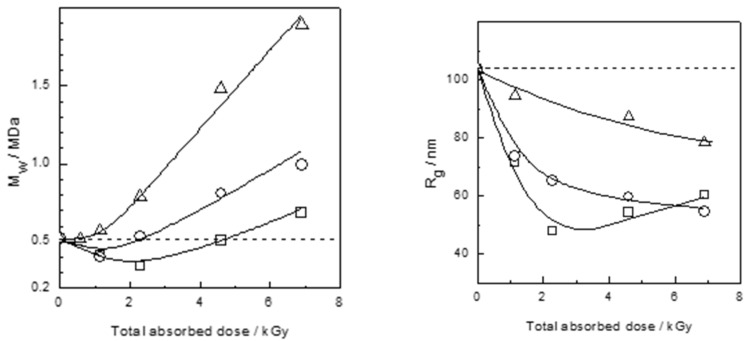
Radiation synthesis of poly(acrylic acid)—PAA nanogels. Weight-average molecular weight (Mw—left panel) and radius of gyration (Rg—right panel) of PAA macromolecules in the course of nanogel synthesis as a function of total absorbed dose (1.15 kGy corresponds to a single pulse) for samples of various PAA concentrations: ◻—10 mM, ○—17.5 mM, △—25 mM, irradiated in Ar-saturated aqueous solutions, pH 2. Radii of gyration measured at 25.0 °C in aqueous 0.5 M NaClO4, pH 10. Reprinted with permission from [240]. Copyright (2003) American Chemical Society.
Figure 24
Figure 24
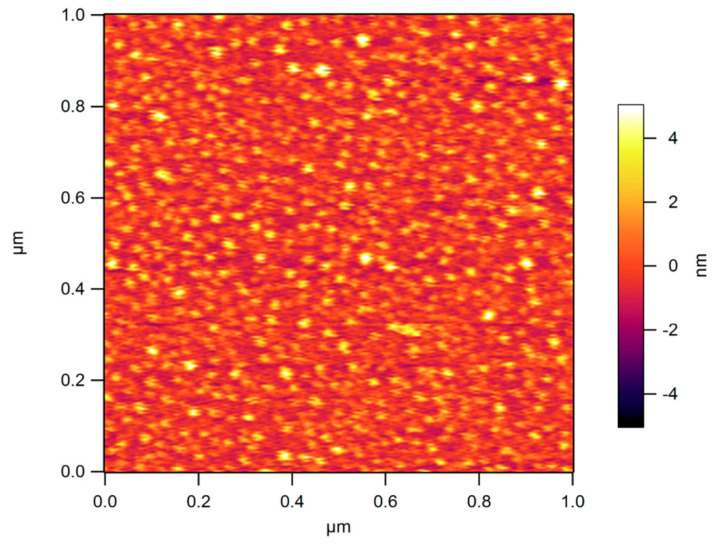
Height profile from tapping mode AFM under water for radiation-synthesized PVP nanogels modified with acrylic acid. The color scale represents a maximum height of 8 nm. Reproduced from [292].
Figure 25
Figure 25
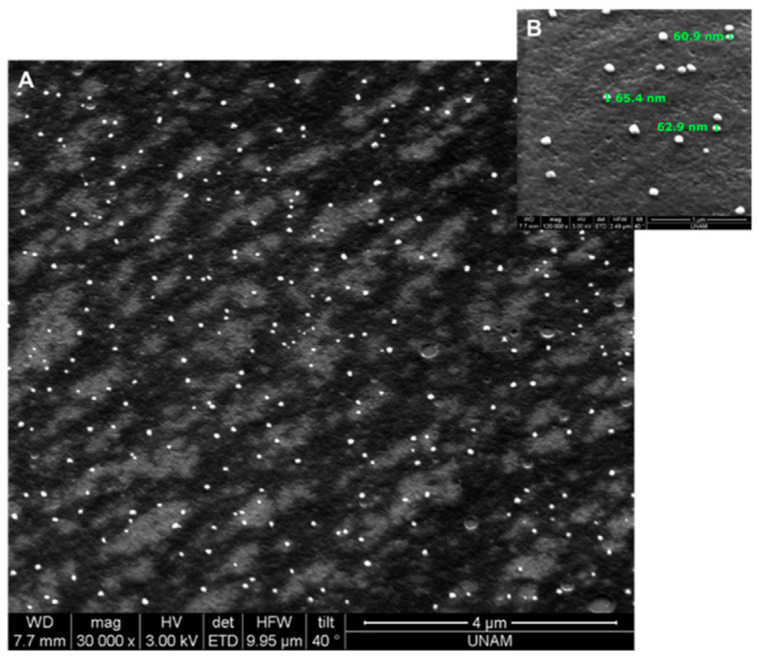
The scanning electron micrographs of PVP nanogels at two different magnifications (A,B). Reproduced from [291]. License obtained from Elsevier.
Figure 26
Figure 26
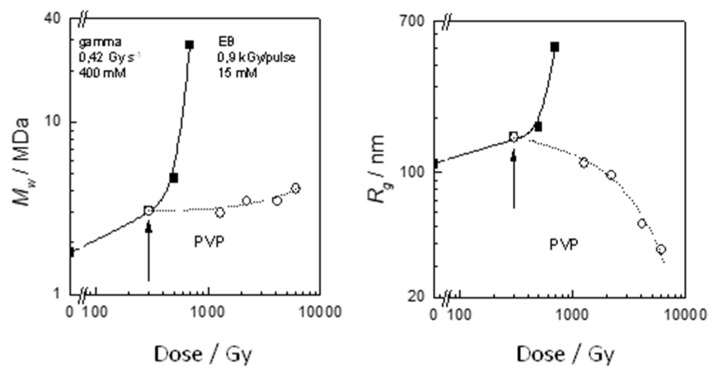
Two-step synthesis of PVP nanogels. Mw and Rg as a function of total absorbed dose. Black symbols denote continuous low-dose-rate gamma irradiation at a polymer concentration of 400 mM. In the two-step procedure, at the point marked by an arrow, irradiation conditions are changed—the second step (open symbols) is pulsed EB irradiation at the PVP concentration of 15 mM. Based on [305].
Figure 27
Figure 27
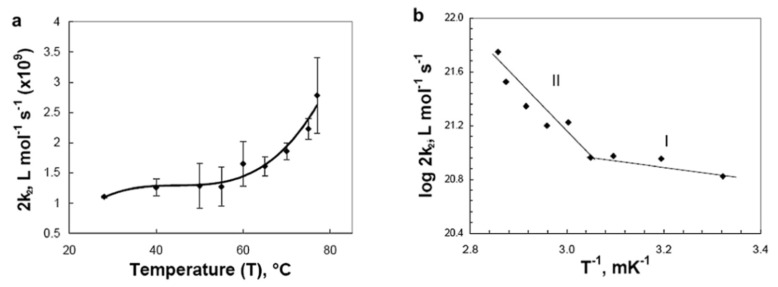
(a) Second-order reaction decay rate constant (2k2) as a function of temperature; (b) Arrhenius plot of 2k2 showing how the average activation energies were derived from two different temperature regions (I and II) in N2O-saturated PVP aqueous solutions [289].
Figure 28
Figure 28
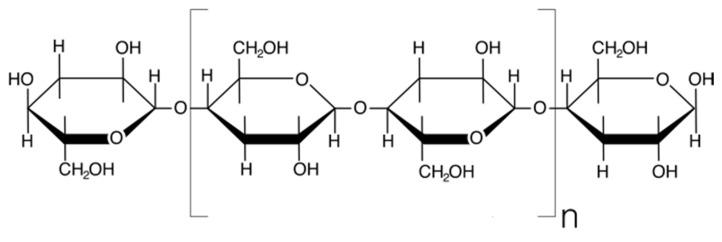
Chemical structure of the polysaccharide cellulose, note the glycosidic linkages between the glucose repeating units.
Figure 29
Figure 29
Crystalline structure of cellulose, note the inter and intra hydrogen bonding (dashed lines denote hydrogen bonds).
Figure 30
Figure 30
Model structure of lignin [428].

References

    1. Charlesby A. Atomic Radiation and Polymers. Pergamon Press; Oxford, UK: 1960.
    1. Chapiro A. Radiation Chemistry of Polymeric Systems. Interscience; New York, NY, USA: 1962.
    1. Dole M. The Radiation Chemistry of Macromolecules. Academic Press; New York, NY, USA: 1972.
    1. Schnabel W. Polymer Degradation. Principles and Practical Applications. Hanser; Muenchen, Germany: 1981.
    1. Rosiak J.M. Radiation Effects of Polymers. In: Clough R.L., Shalaby S.W., editors. ACS Symposium Series. Volume 475 American Chemical Society; Washington, DC, USA: 1991. ACS Symposium, Series.