


On the Robustness of Multiscale Indices for Long-Term Monitoring in Cardiac Signals
- PMID: 33267308
- PMCID: PMC7515083
- DOI: 10.3390/e21060594
On the Robustness of Multiscale Indices for Long-Term Monitoring in Cardiac Signals
Abstract
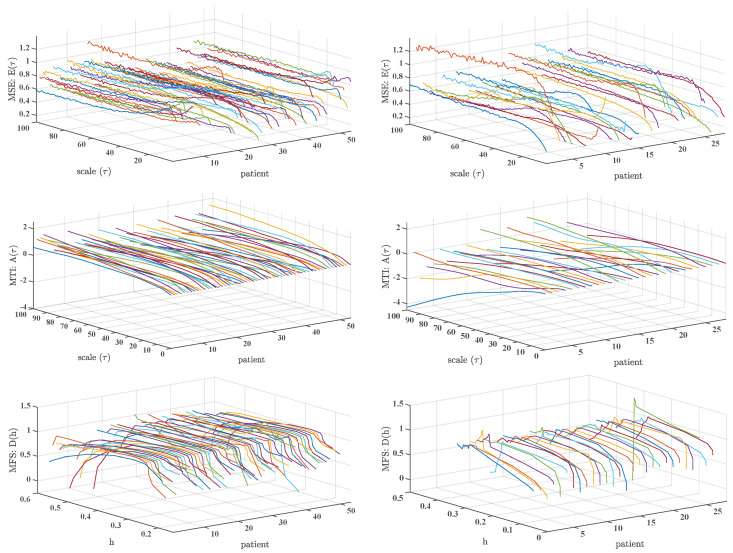
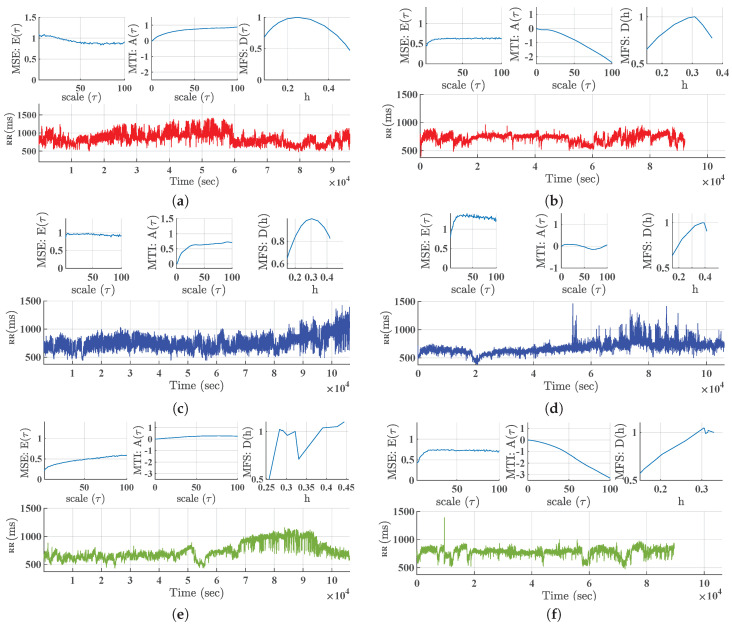
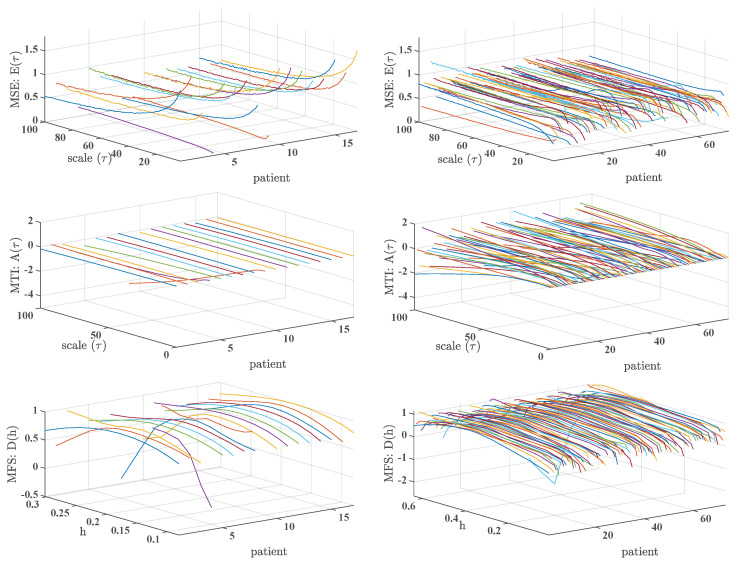
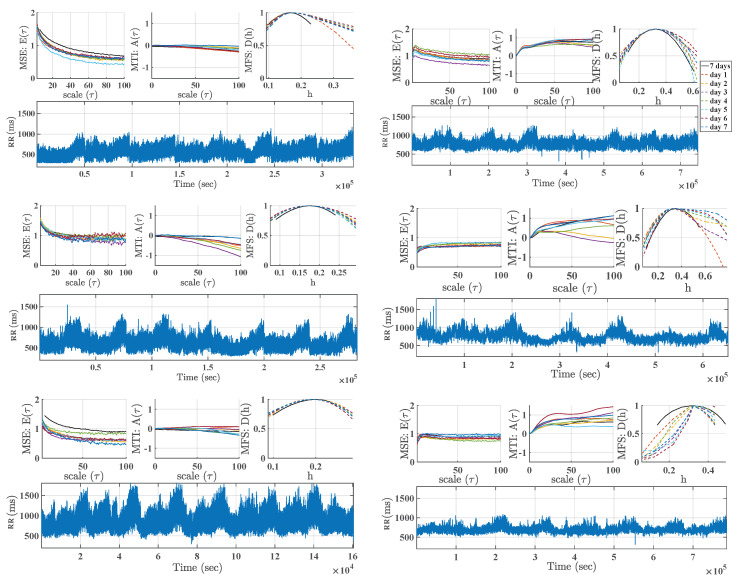
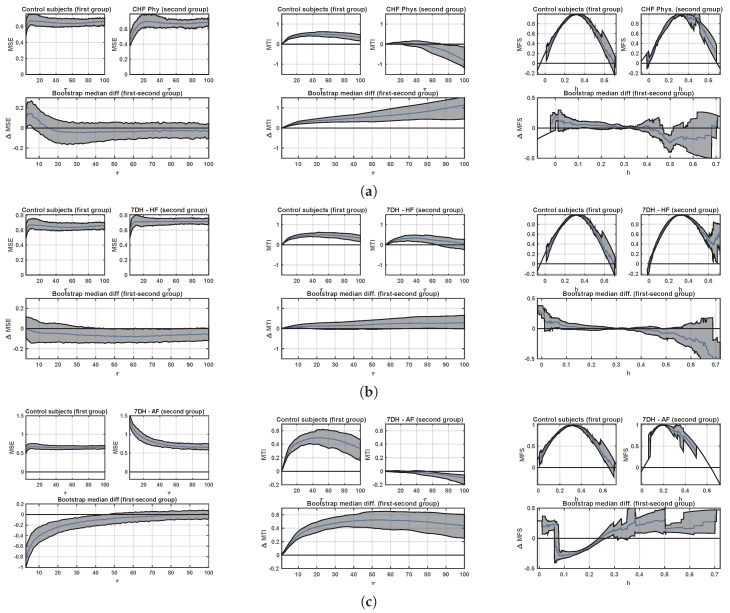
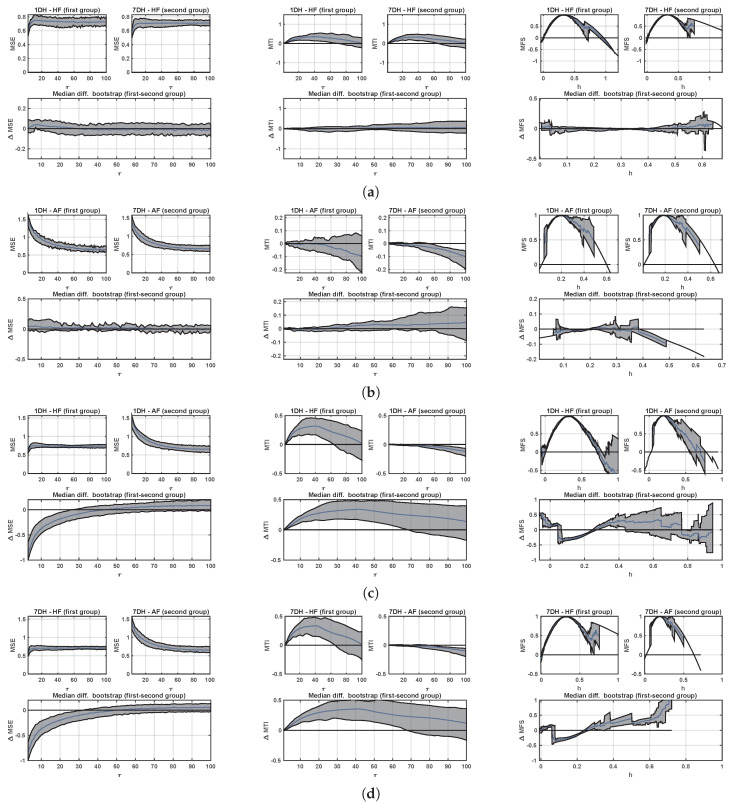
The identification of patients with increased risk of Sudden Cardiac Death (SCD) has been widely studied during recent decades, and several quantitative measurements have been proposed from the analysis of the electrocardiogram (ECG) stored in 1-day Holter recordings. Indices based on nonlinear dynamics of Heart Rate Variability (HRV) have shown to convey predictive information in terms of factors related with the cardiac regulation by the autonomous nervous system, and among them, multiscale methods aim to provide more complete descriptions than single-scale based measures. However, there is limited knowledge on the suitability of nonlinear measurements to characterize the cardiac dynamics in current long-term monitoring scenarios of several days. Here, we scrutinized the long-term robustness properties of three nonlinear methods for HRV characterization, namely, the Multiscale Entropy (MSE), the Multiscale Time Irreversibility (MTI), and the Multifractal Spectrum (MFS). These indices were selected because all of them have been theoretically designed to take into account the multiple time scales inherent in healthy and pathological cardiac dynamics, and they have been analyzed so far when monitoring up to 24 h of ECG signals, corresponding to about 20 time scales. We analyzed them in 7-day Holter recordings from two data sets, namely, patients with Atrial Fibrillation and with Congestive Heart Failure, by reaching up to 100 time scales. In addition, a new comparison procedure is proposed to statistically compare the poblational multiscale representations in different patient or processing conditions, in terms of the non-parametric estimation of confidence intervals for the averaged median differences. Our results show that variance reduction is actually obtained in the multiscale estimators. The MSE (MTI) exhibited the lowest (largest) bias and variance at large scales, whereas all the methods exhibited a consistent description of the large-scale processes in terms of multiscale index robustness. In all the methods, the used algorithms could turn to give some inconsistency in the multiscale profile, which was checked not to be due to the presence of artifacts, but rather with unclear origin. The reduction in standard error for several-day recordings compared to one-day recordings was more evident in MSE, whereas bias was more patently present in MFS. Our results pave the way of these techniques towards their use, with improved algorithmic implementations and nonparametric statistical tests, in long-term cardiac Holter monitoring scenarios.
Keywords: Holter; cardiac risk stratification; long term monitoring; multifractal spectrum; multiscale entropy; multiscale indices; multiscale time irreversibility; nonlinear dynamics.
Conflict of interest statement
The authors declare no conflict of interest.
Figures
References
-
- WHO . International Classification of Diseases. Health Care Financing Administration. US Department of Health and Human Services, Centers for Disease Control and Prevention; Geneve, Switzerland: 2005. Technical Report.
-
- WHO Cardiovascular Disease, 2016. [(accessed on 8 July 2018)]; Available online: http://www.who.int/topics/cardiovascular_diseases/en/
-
- Zipes D.P., Camm A.J., Borggrefe M., Buxton A.E., Chaitman B., Fromer M., Gregoratos G., Klein G., Moss A.J., Myerburg R.J., et al. Guidelines for Management of Patients With Ventricular Arrhythmias and the Prevention of Sudden Cardiac Death: A Report of the American College of Cardiology/American Heart Association Task Force and the European Society of Cardiology Committee for Practice Guidelines (Writing Committee to Develop Guidelines for Management of Patients With Ventricular Arrhythmias and the Prevention of Sudden Cardiac Death) J. Am. Coll. Cardiol. 2006;48:247–346. doi: 10.1016/j.jacc.2006.07.010. - DOI - PubMed
-
- Soguero-Ruiz C., Mora-Jiménez I., Ramos-López J., Fernández T.Q., García-García A., Díez-Mazuela D., García-Alberola A., Rojo-Álvarez J.L. An Interoperable System toward Cardiac Risk Stratification from ECG Monitoring. Int. J. Environ. Res. Public Health. 2018;15:428. doi: 10.3390/ijerph15030428. - DOI - PMC - PubMed
LinkOut - more resources
Full Text Sources
