


Heterogeneity of T Cells in Atherosclerosis Defined by Single-Cell RNA-Sequencing and Cytometry by Time of Flight
- PMID: 33267666
- PMCID: PMC7837690
- DOI: 10.1161/ATVBAHA.120.312137
Heterogeneity of T Cells in Atherosclerosis Defined by Single-Cell RNA-Sequencing and Cytometry by Time of Flight
Abstract
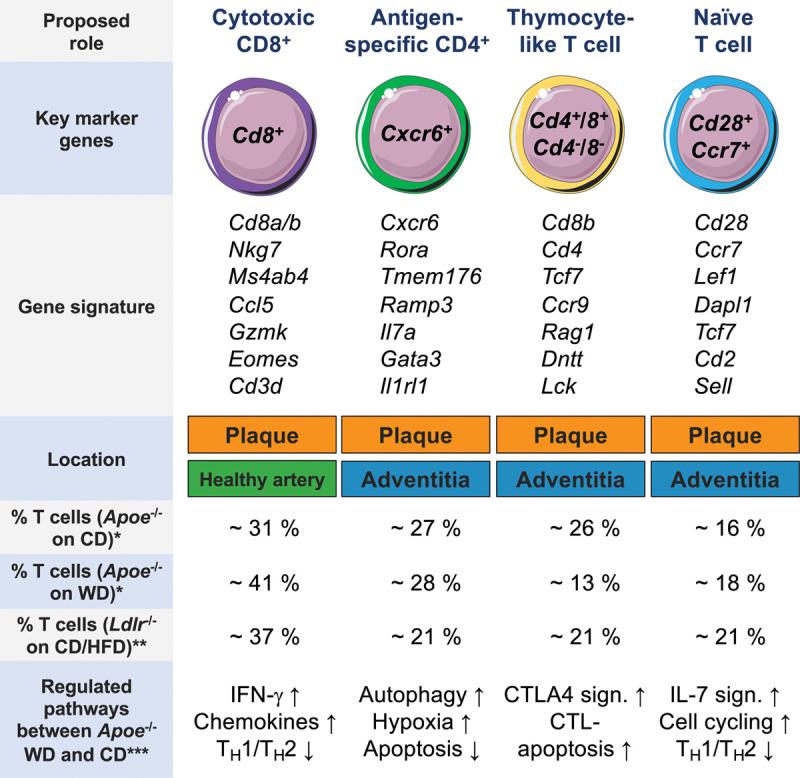
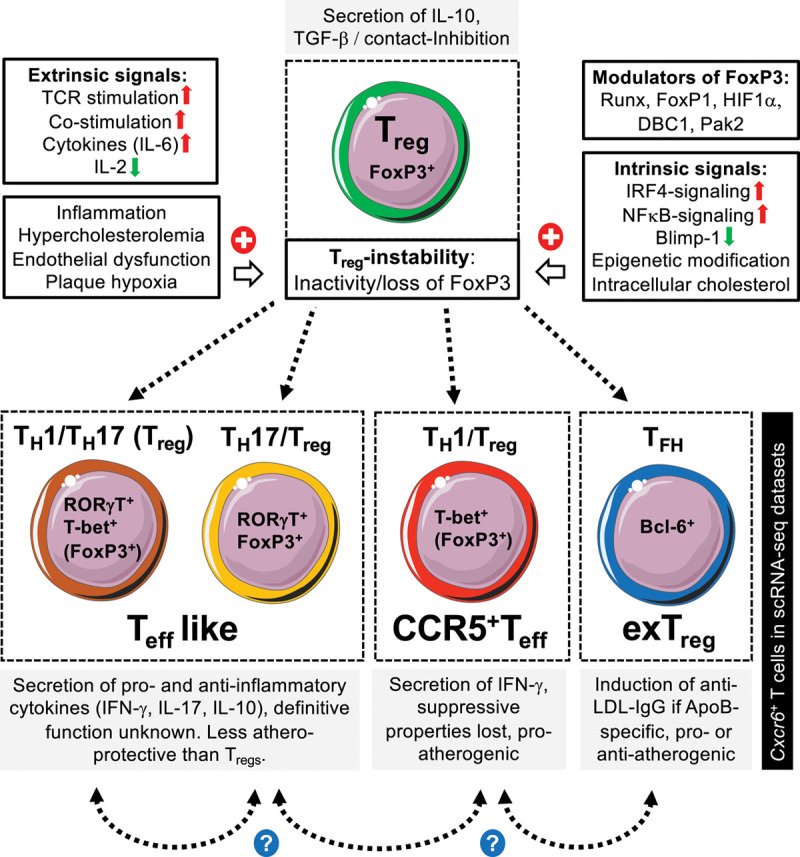
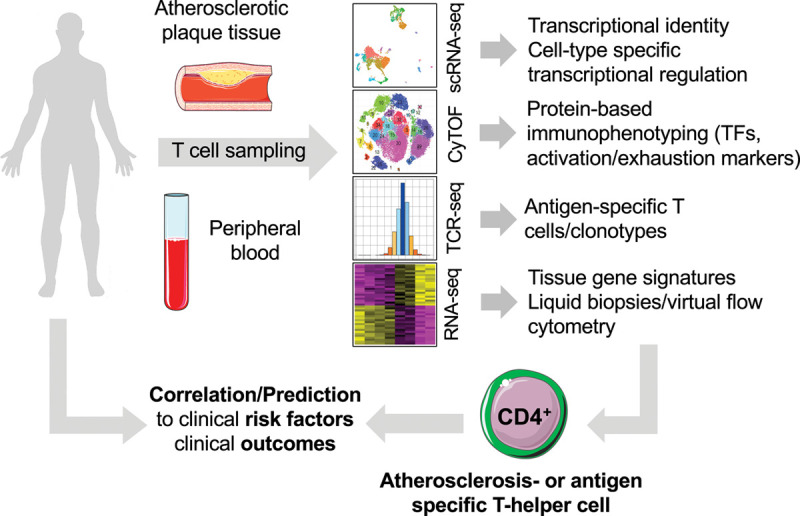
The infiltration and accumulation of pro- and anti-inflammatory leukocytes within the intimal layer of the arterial wall is a hallmark of developing and progressing atherosclerosis. While traditionally perceived as macrophage- and foam cell-dominated disease, it is now established that atherosclerosis is a partial autoimmune disease that involves the recognition of peptides from ApoB (apolipoprotein B), the core protein of LDL (low-density lipoprotein) cholesterol particles, by CD4+ T-helper cells and autoantibodies against LDL and ApoB. Autoimmunity in the atherosclerotic plaque has long been understood as a pathogenic T-helper type-1 driven response with proinflammatory cytokine secretion. Recent developments in high-parametric cell immunophenotyping by mass cytometry, single-cell RNA-sequencing, and in tools exploring antigen-specificity have established the existence of several unforeseen layers of T-cell diversity with mixed TH1 and T regulatory cells transcriptional programs and unpredicted fates. These findings suggest that pathogenic ApoB-reactive T cells evolve from atheroprotective and immunosuppressive CD4+ T regulatory cells that lose their protective properties over time. Here, we discuss T-cell heterogeneity in atherosclerosis with a focus on plasticity, antigen-specificity, exhaustion, maturation, tissue residency, and its potential use in clinical prediction.
Keywords: atherosclerosis; autoantibodies; autoimmunity; immunophenotyping; peptide.
Conflict of interest statement
None.
Figures
References
-
- Taniuchi I. CD4 helper and CD8 cytotoxic T cell differentiation. Annu Rev Immunol. 2018;36:579–601. doi: 10.1146/annurev-immunol-042617-053411 - PubMed
-
- DuPage M, Bluestone JA. Harnessing the plasticity of CD4(+) T cells to treat immune-mediated disease. Nat Rev Immunol. 2016;16:149–163. doi: 10.1038/nri.2015.18 - PubMed
-
- Kimura T, Kobiyama K, Winkels H, Tse K, Miller J, Vassallo M, Wolf D, Ryden C, Orecchioni M, Dileepan T, et al. Regulatory CD4+ T cells recognize major histocompatibility complex class II molecule-restricted peptide epitopes of apolipoprotein B. Circulation. 2018;138:1130–1143. doi: 10.1161/CIRCULATIONAHA.117.031420 - PMC - PubMed
-
- Wolf D, Gerhardt T, Winkels H, Michel NA, Pramod AB, Ghosheh Y, Brunel S, Buscher K, Miller J, McArdle S, et al. Pathogenic autoimmunity in atherosclerosis evolves from initially protective apolipoprotein B100-reactive CD4+ T-regulatory cells. Circulation. 2020;142:1279–1293. doi: 10.1161/CIRCULATIONAHA.119.042863 - PMC - PubMed
Publication types
MeSH terms
Substances
LinkOut - more resources
Full Text Sources
Other Literature Sources
Medical
Research Materials
Miscellaneous
