


Clinical profiles of subclinical disease among pulmonary tuberculosis patients: a prospective cohort study in South Korea
- PMID: 33267859
- PMCID: PMC7709260
- DOI: 10.1186/s12890-020-01351-z
Clinical profiles of subclinical disease among pulmonary tuberculosis patients: a prospective cohort study in South Korea
Abstract
Background: Subclinical tuberculosis (TB) is a potential target for public health intervention because its early identification may reduce TB transmission. We aimed to describe the clinical and laboratory findings of subclinical disease among pulmonary TB patients and compared treatment outcomes for subclinical and active diseases.
Methods: In this prospective cohort study, we enrolled adult patients aged ≥ 19 years with pulmonary TB between 2016 and 2018. Subclinical TB was defined as radiographic or microbiologic test results consistent with TB without clinical symptoms. We implemented a two-stage symptom assessment using a predefined TB symptom checklist. Demographic, clinical, and laboratory data were compared between subclinical and active diseases using multivariable binary logistic regression analysis. We evaluated treatment outcomes in the drug-susceptible cohort.
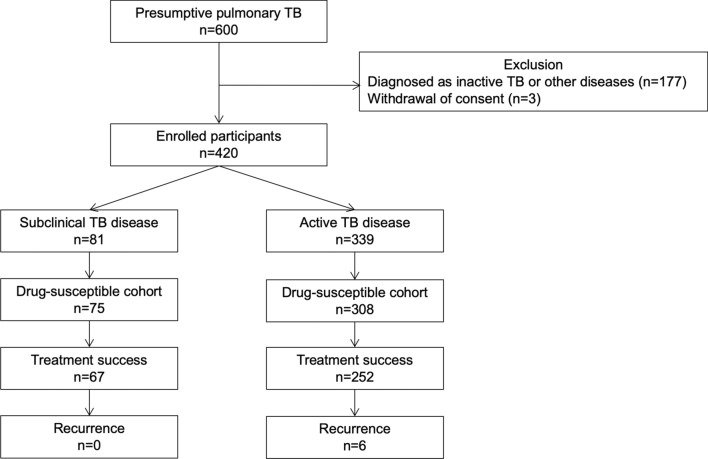
Results: Among 420 enrolled patients, 81 (19.3%) had subclinical TB. Multivariable analysis showed that age < 65 years was the only variable significantly associated with subclinical disease. Subclinical disease had a significantly lower proportion of acid-fast bacilli smear and culture positivity and multiple lobe involvement compared to active disease. The white blood cell counts, platelet counts, and C-reactive protein levels were significantly higher among patients with active disease than among those with subclinical disease. Among 319 patients with treatment success in the drug-susceptible cohort, six (1.9%) recurrent cases were identified, and all were active disease. Patients with subclinical disease had a higher proportion of favourable outcomes; however, its odds ratio was insignificant.
Conclusions: Nearly one-fifth of tuberculosis cases were subclinical in South Korea. Despite its milder clinical presentation and lower level of inflammatory markers, the treatment outcomes of subclinical TB were not significantly different from that of active disease.
Keywords: Bronchoscopy; Computed tomography; Pulmonary tuberculosis; Subclinical disease; Symptom.
Conflict of interest statement
The authors have declared that no competing interests exist.
Figures
References
-
- Global Tuberculosis Report. Geneva, Switzerland: World Health Organization; 2018.
Publication types
MeSH terms
Substances
LinkOut - more resources
Full Text Sources
Research Materials
