


Risk factors for melanoma by anatomical site: an evaluation of aetiological heterogeneity
- PMID: 33270213
- PMCID: PMC9969114
- DOI: 10.1111/bjd.19705
Risk factors for melanoma by anatomical site: an evaluation of aetiological heterogeneity
Abstract
Background: Melanoma aetiology has been proposed to have two pathways, which are determined by naevi and type of sun exposure and related to the anatomical site where melanoma develops.
Objectives: We examined associations with melanoma by anatomical site for a comprehensive set of risk factors including pigmentary and naevus phenotypes, ultraviolet radiation exposure and polygenic risk.
Methods: We analysed harmonized data from 2617 people with incident first invasive melanoma and 975 healthy controls recruited through two population-based case-control studies in Australia and the UK. Questionnaire data were collected by interview using a single protocol, and pathway-specific polygenic risk scores were derived from DNA samples. We estimated adjusted odds ratios using unconditional logistic regression that compared melanoma cases at each anatomical site with all controls.
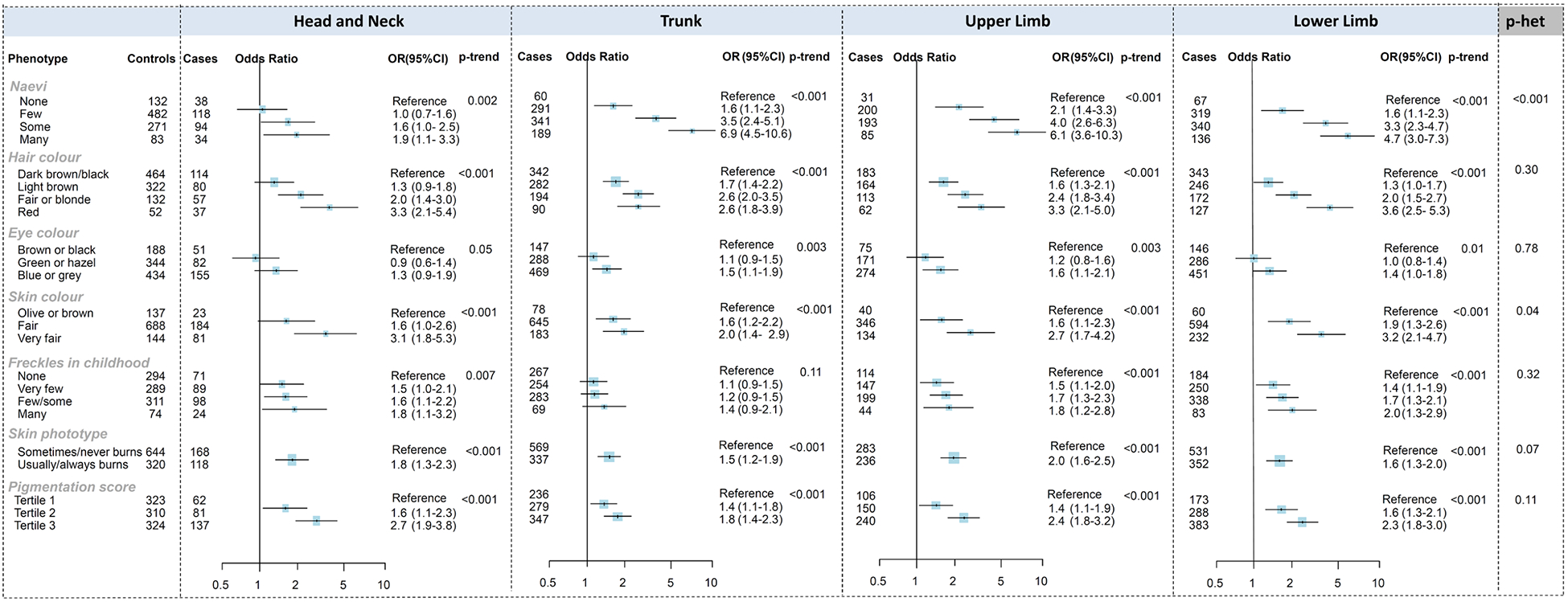
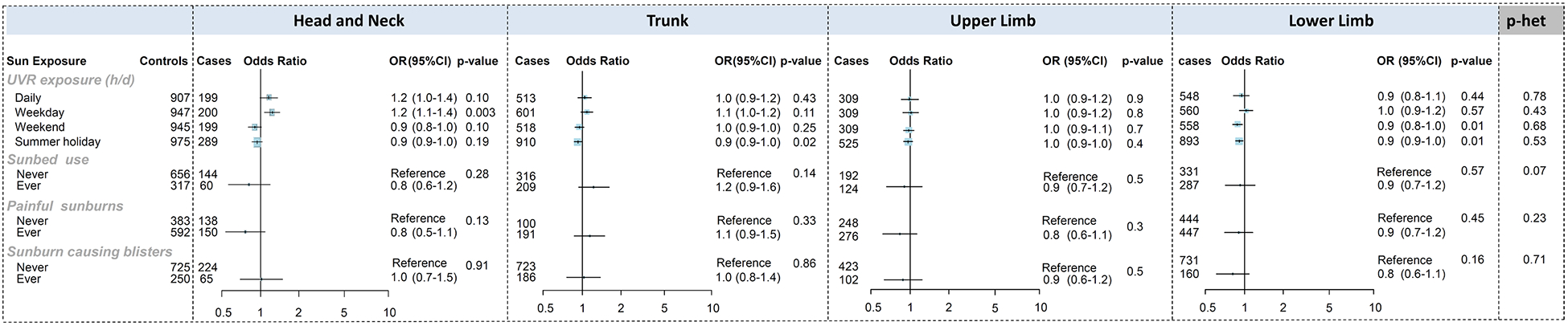
Results: When cases were compared with control participants, there were stronger associations for many naevi vs. no naevi for melanomas on the trunk, and upper and lower limbs than on the head and neck (P-heterogeneity < 0·001). Very fair skin (vs. olive/brown skin) was more weakly related to melanoma on the trunk than to melanomas at other sites (P-heterogeneity = 0·04). There was no significant difference by anatomical site for polygenic risk. Increased weekday sun exposure was positively associated with melanoma on the head and neck but not on other sites.
Conclusions: We found evidence of aetiological heterogeneity for melanoma, supporting the dual pathway hypothesis. These findings enhance understanding of risk factors for melanoma and can guide prevention and skin examination education and practices.
© 2020 The Authors. British Journal of Dermatology published by John Wiley & Sons Ltd on behalf of British Association of Dermatologists.
Conflict of interest statement
Figures

Comment in
-
Divergent pathways for melanoma: what is the role of genetics?Br J Dermatol. 2021 Jun;184(6):995-996. doi: 10.1111/bjd.19887. Epub 2021 Mar 25. Br J Dermatol. 2021. PMID: 33764528 No abstract available.
References
-
- Glazer AM, Winkelmann RR, Farberg AS et al. Analysis of Trends in US Melanoma Incidence and Mortality. JAMA Dermatol 2017; 153:225–6. - PubMed
-
- Gandini S, Sera F, Cattaruzza MS et al. Meta-analysis of risk factors for cutaneous melanoma: III. Family history, actinic damage and phenotypic factors. Eur J Cancer 2005; 41:2040–59. - PubMed
-
- Gandini S, Sera F, Cattaruzza MS et al. Meta-analysis of risk factors for cutaneous melanoma: II. Sun exposure. Eur J Cancer 2005; 41:45–60. - PubMed
-
- Gandini S, Sera F, Cattaruzza MS et al. Meta-analysis of risk factors for cutaneous melanoma: I. Common and atypical naevi. Eur J Cancer 2005; 41:28–44. - PubMed
Publication types
MeSH terms
Grants and funding
LinkOut - more resources
Full Text Sources
Other Literature Sources
Medical
