


High-throughput glycomic analyses reveal unique oligosaccharide profiles of canine and feline milk samples
- PMID: 33270789
- PMCID: PMC7714234
- DOI: 10.1371/journal.pone.0243323
High-throughput glycomic analyses reveal unique oligosaccharide profiles of canine and feline milk samples
Abstract
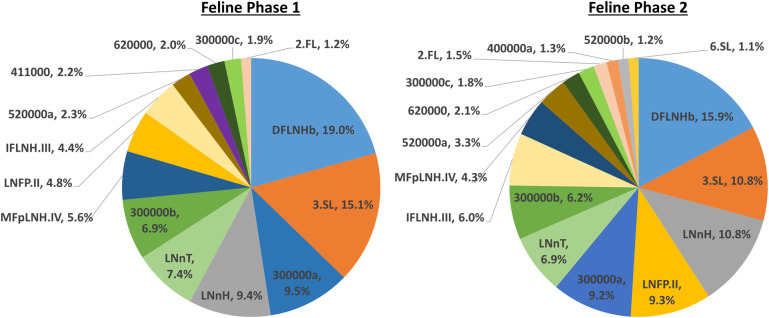
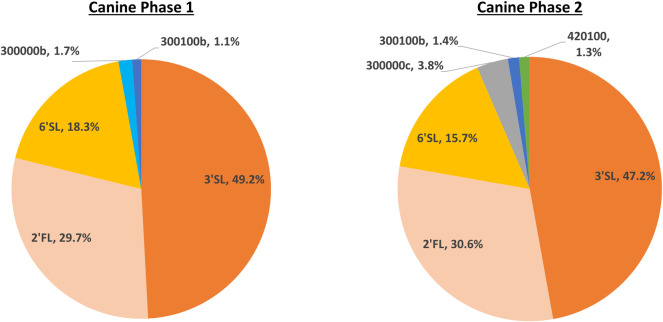
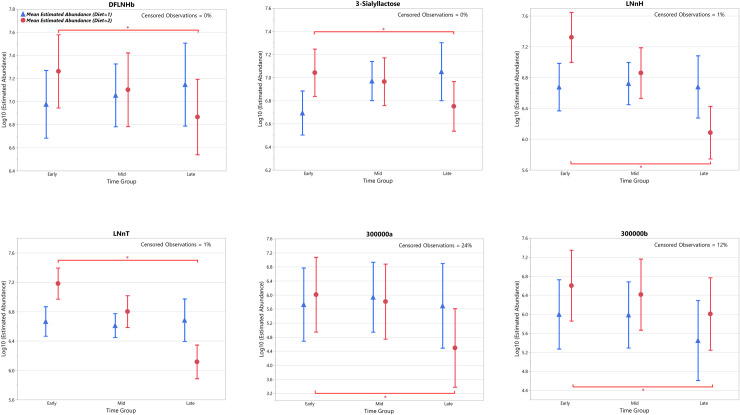
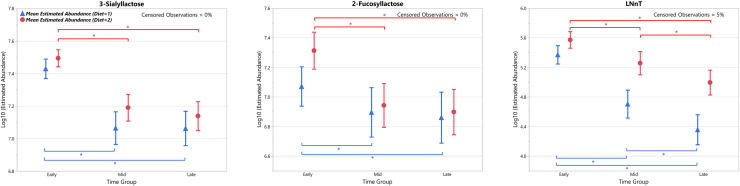
Oligosaccharides are important components of milk, serving as substrates for the intestinal microbiota, acting as antimicrobials that prevent pathogen colonization, and supporting the developing gastrointestinal immune system of neonates. Nutrient composition of canine and feline milk samples has been described previously, but little is known about the oligosaccharide content. Therefore, the objective of this study was to characterize canine and feline milk samples using a high-throughput glycomics approach. 23 dogs (9 Labrador retriever and 14 Labrador retriever x golden retriever crossbreed) and 6 domestic shorthair cats were recruited to the study. Milk samples were collected by manual expression at time points after parturition. Samples were collected across 2 phases per species, differentiated by maternal diet. Following extraction, oligosaccharide content was determined by liquid chromatography-mass spectrometry (LC-MS). In canine milk samples, 3 structures accounted for over 90% of all oligosaccharides detected across two diet groups. These were 3'-sialyllactose, 6'-sialyllactose, and 2'-fucosyllactose. In feline samples, a more diverse range of oligosaccharides was detected, with up to 16 structures present at relative abundance >1% of the total. Difucosyllactose-N-hexaose b, 3'-sialyllactose and lacto-N-neohexaose were all detected at abundances >10% in feline milk samples. Statistically significant differences (p<0.05) in oligosaccharide abundances were observed between collection time points and between diet groups within species. These data explore the oligosaccharide content of canine and feline maternal milk, representing an opportunity to generate a fundamental understanding of the nutritional needs of new-born puppies and kittens.
Conflict of interest statement
This work was funded by Mars, Incorporated, the employer of DW, RH, KH, PJ and PW. This does not alter our adherence to PLOS ONE policies on sharing data and materials.
Figures
References
-
- Zivkovic AM, Zachary TL, German JB, Mills DA. Establishment of a Milk-Oriented Microbiota (MOM) in Early Life: How Babies Meet Their MOMs. Functional Food Reviews. 2013;5(1):3–12.
Publication types
MeSH terms
Substances
LinkOut - more resources
Full Text Sources
Miscellaneous
