


Complement Activation in the Treatment of B-Cell Malignancies
- PMID: 33271825
- PMCID: PMC7709106
- DOI: 10.3390/antib9040068
Complement Activation in the Treatment of B-Cell Malignancies
Abstract
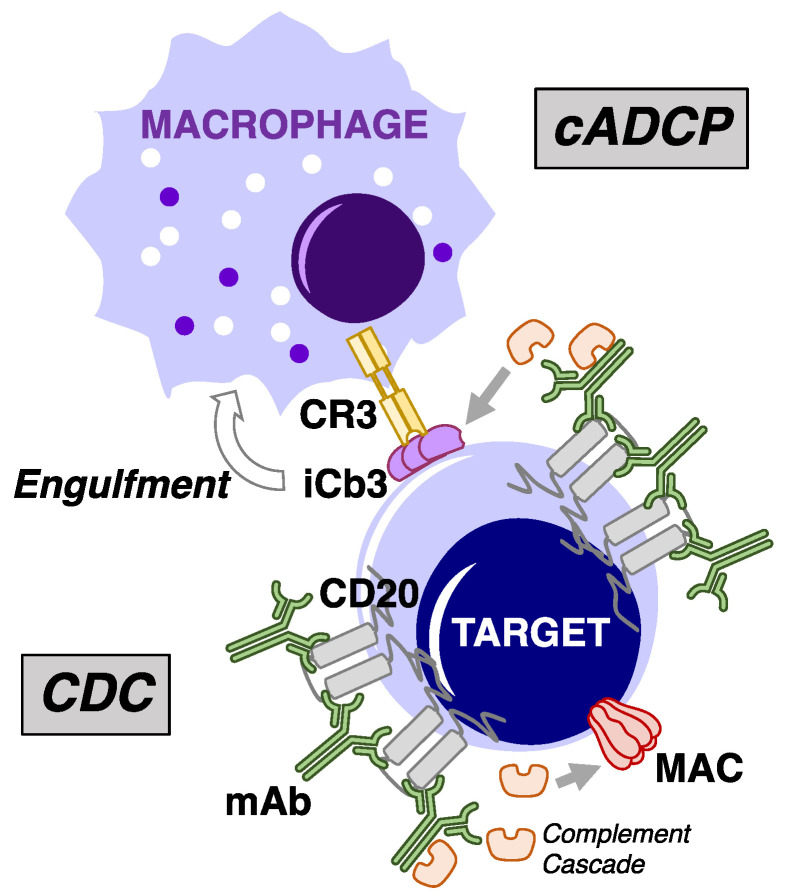
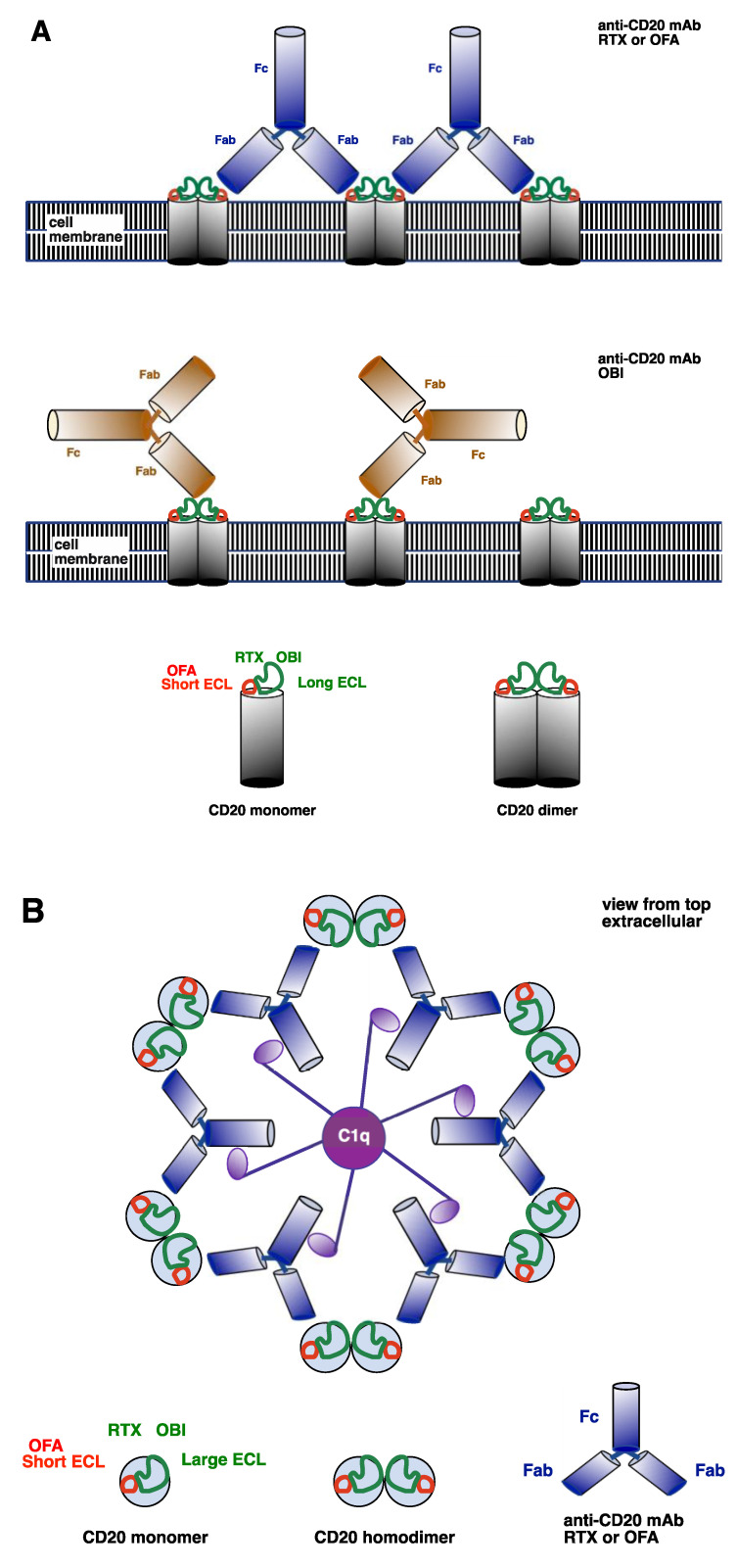
Unconjugated monoclonal antibodies (mAb) have revolutionized the treatment of B-cell malignancies. These targeted drugs can activate innate immune cytotoxicity for therapeutic benefit. mAb activation of the complement cascade results in complement-dependent cytotoxicity (CDC) and complement receptor-mediated antibody-dependent cellular phagocytosis (cADCP). Clinical and laboratory studies have showed that CDC is therapeutically important. In contrast, the biological role and clinical effects of cADCP are less well understood. This review summarizes the available data on the role of complement activation in the treatment of mature B-cell malignancies and proposes future research directions that could be useful in optimizing the efficacy of this important class of drugs.
Keywords: B-cell lymphoma; chronic lymphocytic leukemia (CLL); complement; cytotoxicity; monoclonal antibody; phagocytosis.
Conflict of interest statement
C.S.Z. and C.C.C.: research funding from Acerta/AstraZeneca and TG Therapeutics.
Figures
References
-
- Coiffier B., Lepage E., Brière J., Herbrecht R., Tilly H., Bouabdallah R., Morel P., Neste E.V.D., Salles G., Gaulard P., et al. CHOP Chemotherapy plus Rituximab Compared with CHOP Alone in Elderly Patients with Diffuse Large-B-Cell Lymphoma. N. Engl. J. Med. 2002;346:235–242. doi: 10.1056/NEJMoa011795. - DOI - PubMed
-
- Habermann T.M., Weller E.A., Morrison V.A., Gascoyne R.D., Cassileth P.A., Cohn J.B., Dakhil S.R., Woda B., Fisher R.I., Peterson B.A., et al. Rituximab-CHOP Versus CHOP Alone or with Maintenance Rituximab in Older Patients with Diffuse Large B-Cell Lymphoma. J. Clin. Oncol. 2006;24:3121–3127. doi: 10.1200/JCO.2005.05.1003. - DOI - PubMed
-
- Marcus R., Imrie K., Belch A., Cunningham D., Flores E., Catalano J., Solal-Celigny P., Offner F., Walewski J., Raposo J., et al. CVP chemotherapy plus rituximab compared with CVP as first-line treatment for advanced follicular lymphoma. Blood. 2005;105:1417–1423. doi: 10.1182/blood-2004-08-3175. - DOI - PubMed
-
- Schulz H., Bohlius J.F., Trelle S., Skoetz N., Reiser M., Kober T., Schwarzer G., Herold M., Dreyling M., Hallek M., et al. Immunochemotherapy with Rituximab and Overall Survival in Patients with Indolent or Mantle Cell Lymphoma: A Systematic Review and Meta-analysis. J. Natl. Cancer Inst. 2007;99:706–714. doi: 10.1093/jnci/djk152. - DOI - PubMed
-
- Hallek M., Fischer K., Fingerle-Rowson G., Fink A.M., Busch R., Mayer J., Hensel M., Hopfinger G., Hess G., Von Grünhagen U., et al. Addition of rituximab to fludarabine and cyclophosphamide in patients with chronic lymphocytic leukaemia: A randomised, open-label, phase 3 trial. Lancet. 2010;376:1164–1174. doi: 10.1016/S0140-6736(10)61381-5. - DOI - PubMed
Publication types
Grants and funding
LinkOut - more resources
Full Text Sources
Other Literature Sources
