. 2020 Dec 1;12(12):1376.
doi: 10.3390/v12121376.

Soybean Thrips (Thysanoptera: Thripidae) Harbor Highly Diverse Populations of Arthropod, Fungal and Plant Viruses

Affiliations

Soybean Thrips (Thysanoptera: Thripidae) Harbor Highly Diverse Populations of Arthropod, Fungal and Plant Viruses

Thanuja Thekke-Veetil et al. Viruses. .

Abstract

Soybean thrips (Neohydatothrips variabilis) are one of the most efficient vectors of soybean vein necrosis virus, which can cause severe necrotic symptoms in sensitive soybean plants. To determine which other viruses are associated with soybean thrips, the metatranscriptome of soybean thrips, collected by the Midwest Suction Trap Network during 2018, was analyzed. Contigs assembled from the data revealed a remarkable diversity of virus-like sequences. Of the 181 virus-like sequences identified, 155 were novel and associated primarily with taxa of arthropod-infecting viruses, but sequences similar to plant and fungus-infecting viruses were also identified. The novel viruses were predicted to have positive-sense RNA, negative-stranded RNA, double-stranded RNA, and single-stranded DNA genomes. The assembled sequences included 100 contigs that represented at least 95% coverage of a virus genome or genome segment. Sequences represented 12 previously described arthropod viruses including eight viruses reported from Hubei Province in China, and 12 plant virus sequences of which six have been previously described. The presence of diverse populations of plant viruses within soybean thrips suggests they feed on and acquire viruses from multiple host plant species that could be transmitted to soybean. Assessment of the virome of soybean thrips provides, for the first time, information on the diversity of viruses present in thrips.

Keywords: Neohydatothrips variabilis; soybean thrips; vector-enabled transcriptomics; viral metatranscriptomics.


Conflict of interest statement

The authors declare no conflict of interest.

Figures
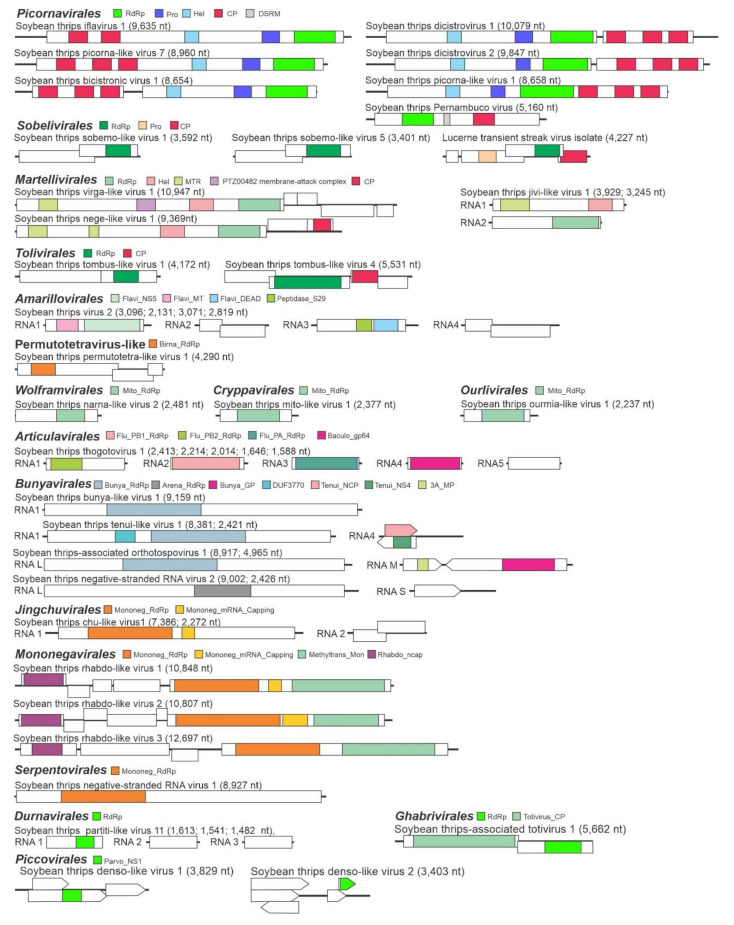
Figure 1
Figure 1
Examples of genome organizations of virus-like sequences recovered from soybean thrips transcriptome assembly. Open reading frames are represented by boxes that are staggered to indicate the different reading frames occupied. Colored boxes indicate conserved domains: RdRp = RNA-dependent RNA polymerase; Pro = protease; DSRM = double-stranded RNA binding motif (PF00035); Hel = helicase; MTR = methyltransferase; CP = capsid protein; Flavi_NS3 = Flavivirus RdRp subunit NS3 (PF00972); Flavi_NS5 = Flavivius NS5 motif; Flavi_MT FtsJ-like methyltransferase (PF01728); Flavi_DEAD = Flavivirus DEAD domain helicase (PF07652); Peptidase_S29 = Hepatitis C virus NS3 protease (PF02907); Mito_RdRp = Mitovirus RdRp (PF05919); Mononeg_RdRp = Mononegavirales RdRp (PF00946); Mononeg_mRNA= Mononegavirales mRNA-capping region V; Methyltrans_Mon = Virus-capping methyltransferase (PF14314); Parvo_NS1 = Parvovirus nonstructural protein NS1 (PF01057); Flu_PB1_RdRp = Influenza RdRp subunit PB1 (PF00602); Flu_PB2_RdRp = Influenza RdRp subunit PB2 (PF00604); Flu_PA_RdRp = Influenza RdRp subunit PA (PF00603); Baculo_gp64 = Baculovirus gp64 envelope glycoprotein (PF03273); Arena_RdRp = Arenavirus RdRp (PF06317); Totivirus_CP = Totivirus CP (PF05518); Rhabdo_ncap = Rhabdovirus nucleocapsid protein (PF00945); Birna_RdRp = Birnavirus RdRp (PF04197); Bunya_RdRp = Bunyavirus RNA dependent RNA polymerase (PF04196); Bunya_GP = Bunyavirus glycoprotein G1 (PF03557); DUF3770 Protein of unknown function (DUF3770); Tenui_NCP = Tenuivirus major non-capsid protein (PF04876); Tenui_NS4 = Tenuivirus movement protein, NS4 (PF03300); 3A_MP = 3A/RNA2 movement protein family (PF00803).
Figure 2
Figure 2
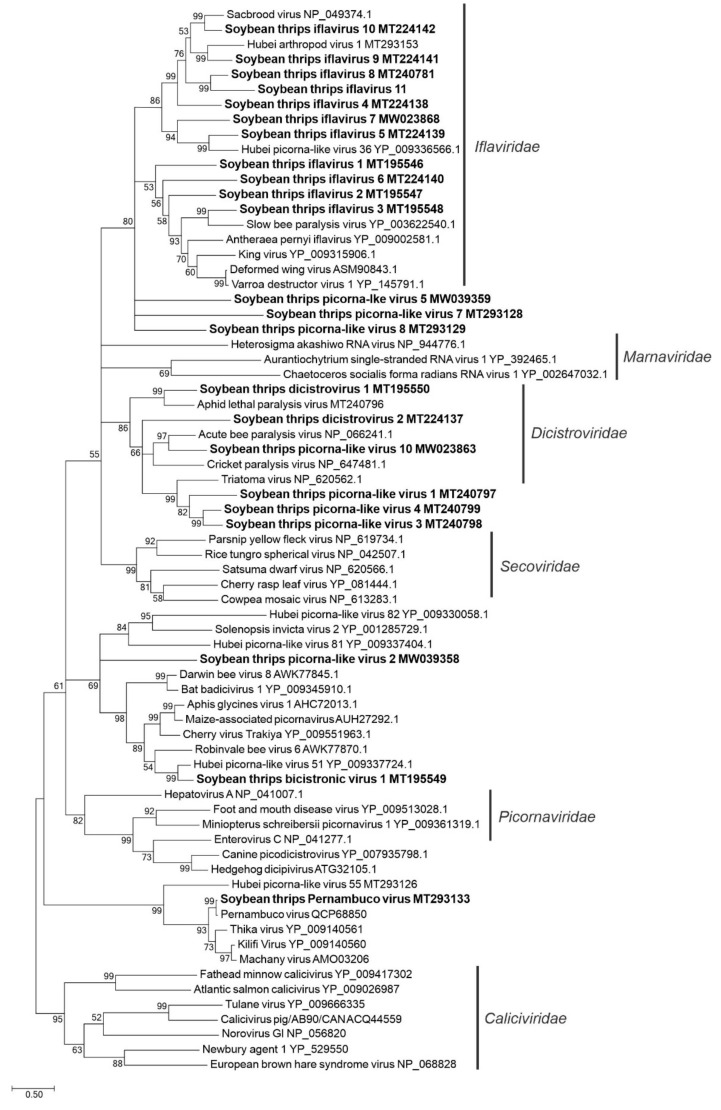
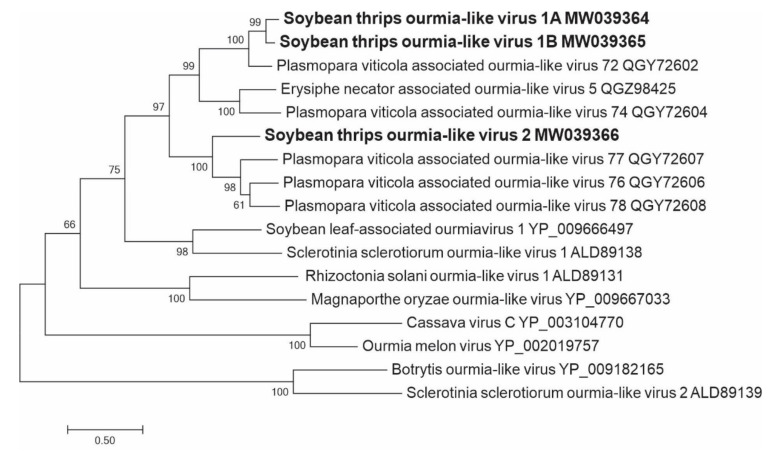
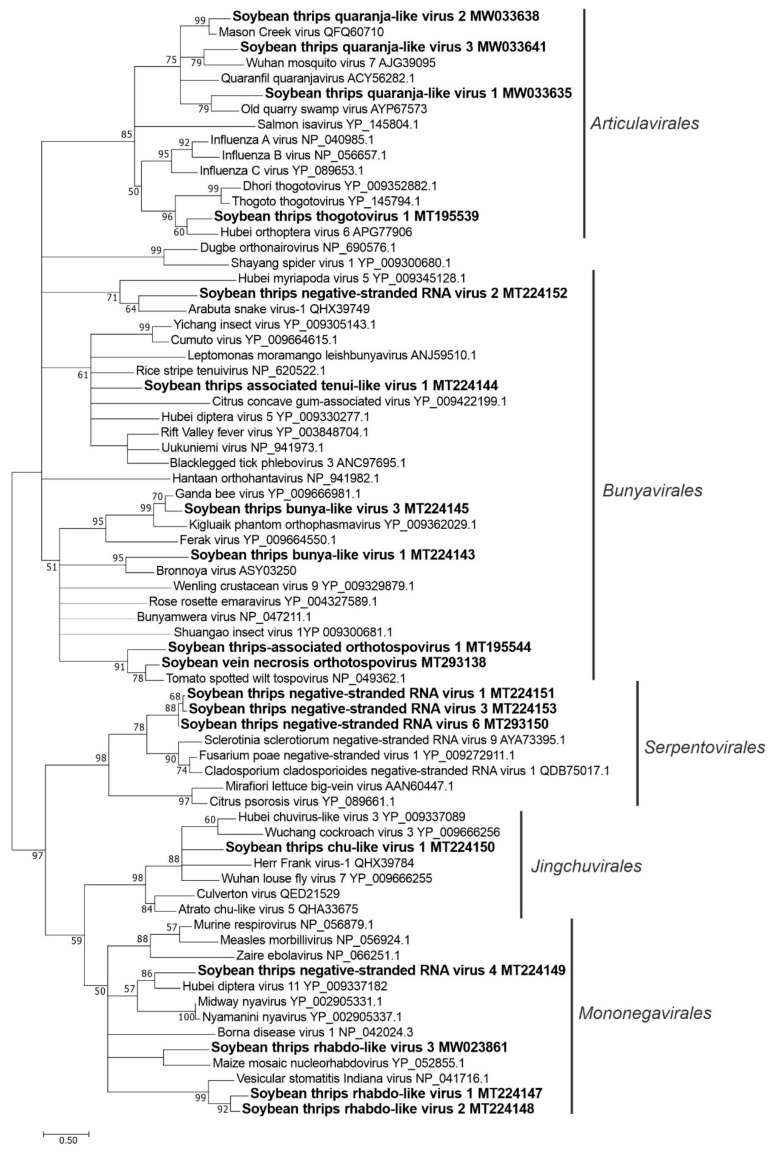
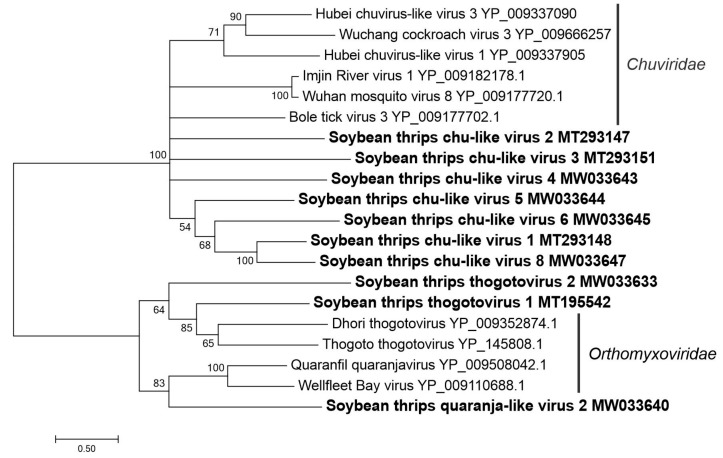
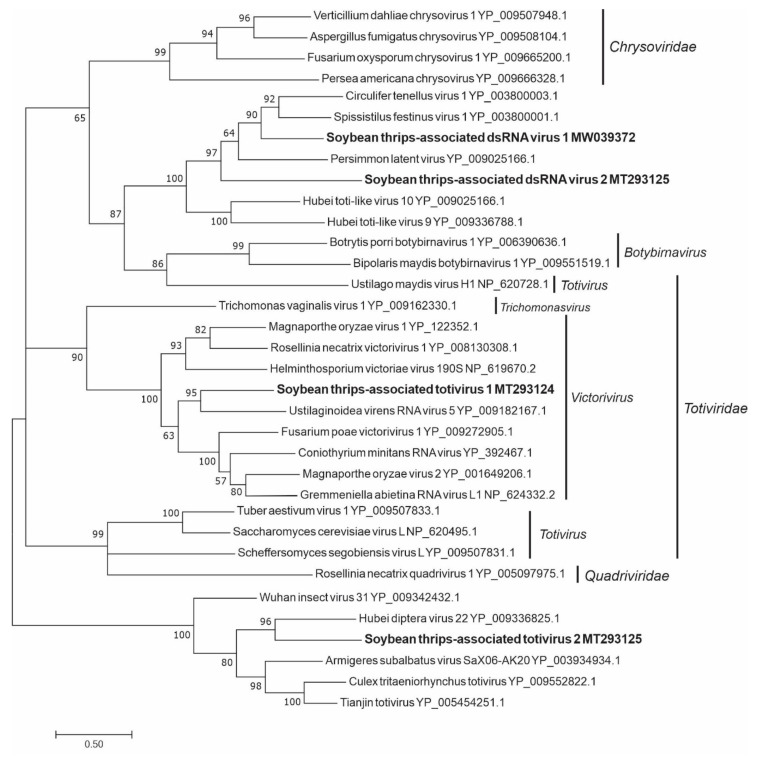
Phylogenetic analysis of the predicted RNA-dependent RNA polymerase amino acid sequences encoded by contigs assembled from soybean thrips RNA-seq data (indicated in bold) and related viruses in the order Picornavirales. Predicted amino acid sequences containing RNA-dependent RNA polymerase domains were aligned using MUSCLE. Phylogenetic analyses were performed using the maximum likelihood method in MEGA7. Numbers at nodes indicate percent bootstrap support (500 replicates). Nodes with less than 50% bootstrap support were collapsed to the next higher level. GenBank accession numbers are indicated after each sequence name.
Figure 3
Figure 3
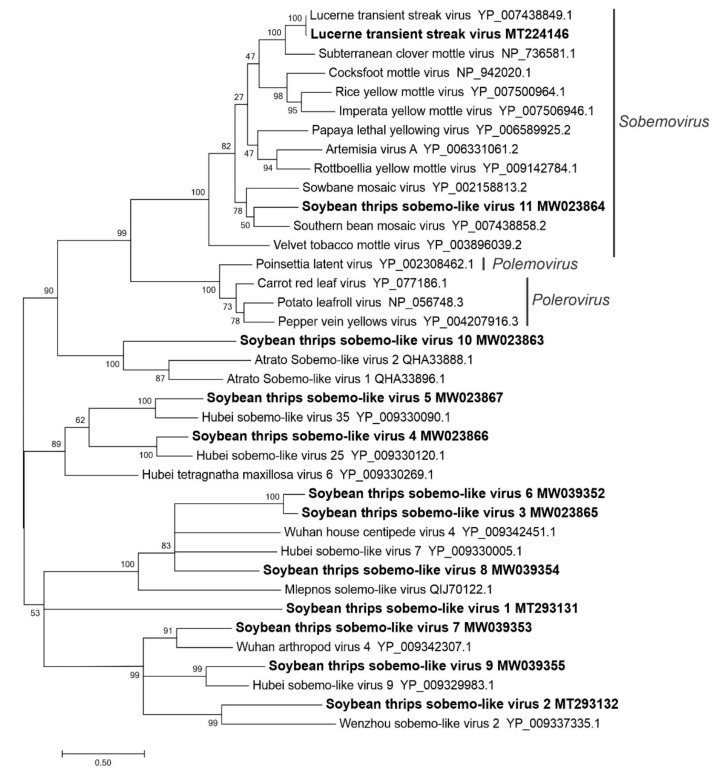
Phylogenetic analysis of the predicted RNA-dependent RNA polymerase amino acid sequences encoded by contigs assembled from soybean thrips RNA-seq data (indicated in bold) and related viruses in the order Sobelivirales. See Figure 2 legend for details.
Figure 4
Figure 4
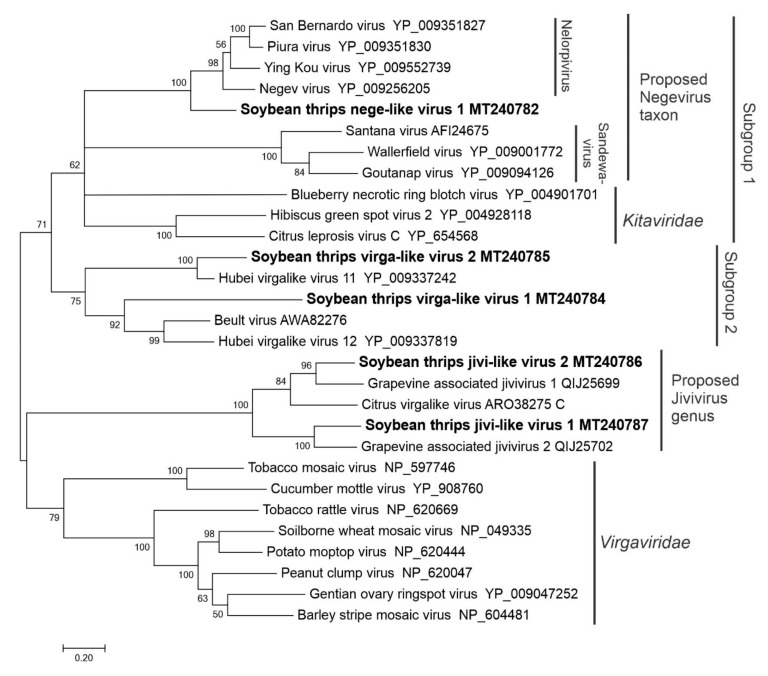
Phylogenetic analysis of the predicted RNA-dependent RNA polymerase amino acid sequences encoded by contigs assembled from soybean thrips RNA-seq data (indicated in bold) and related viruses in the order Martellivirales. See Figure 2 legend for details.
Figure 5
Figure 5
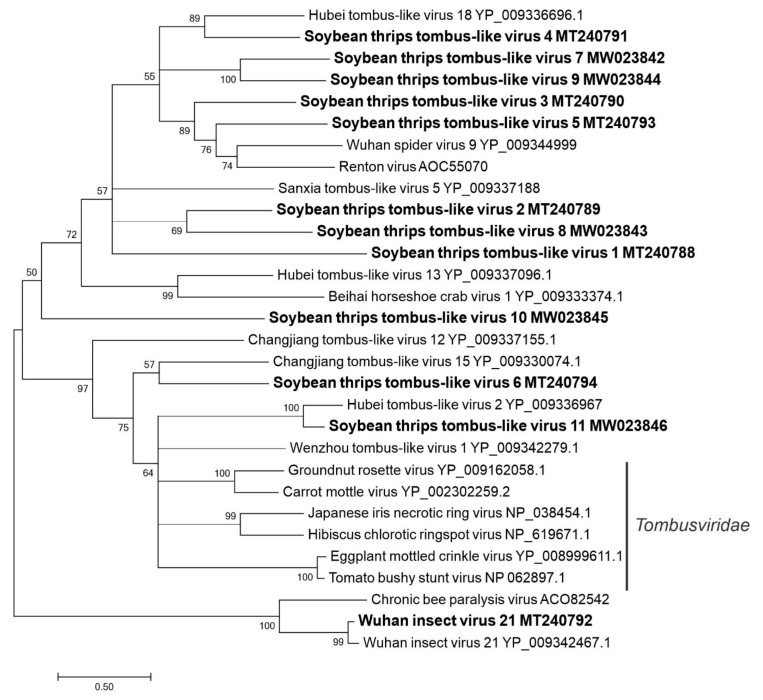
Phylogenetic analysis of the predicted RNA-dependent RNA polymerase amino acid sequences encoded by contigs assembled from soybean thrips RNA-seq data (indicated in bold) and related viruses in the order Tolivirales. See Figure 2 legend for details.
Figure 6
Figure 6
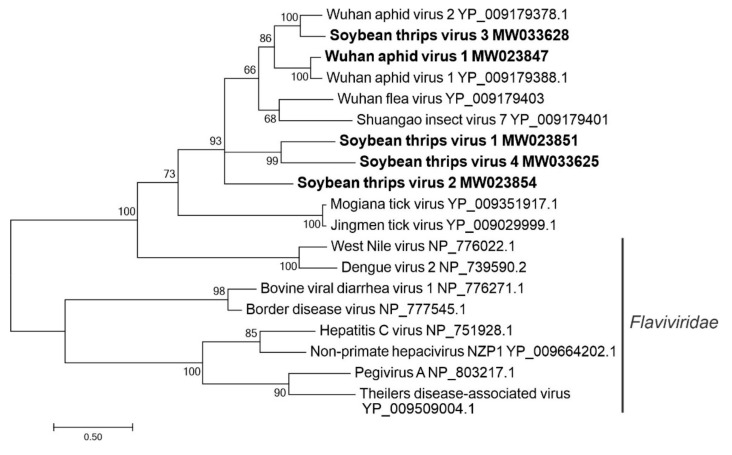
Phylogenetic analysis of the predicted RNA-dependent RNA polymerase amino acid sequences encoded by contigs assembled from soybean thrips RNA-seq data (indicated in bold) and related viruses in the order Amarillovirales. See Figure 2 legend for details.
Figure 7
Figure 7
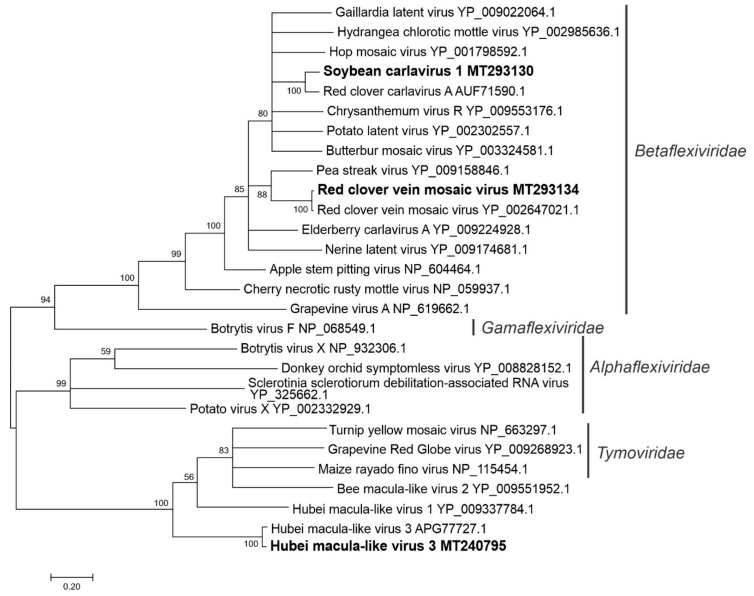
Phylogenetic analysis of the predicted RNA-dependent RNA polymerase amino acid sequences encoded by contigs assembled from soybean thrips RNA-seq data (indicated in bold) and related viruses in the order Tymovirales. See Figure 2 legend for details.
Figure 8
Figure 8
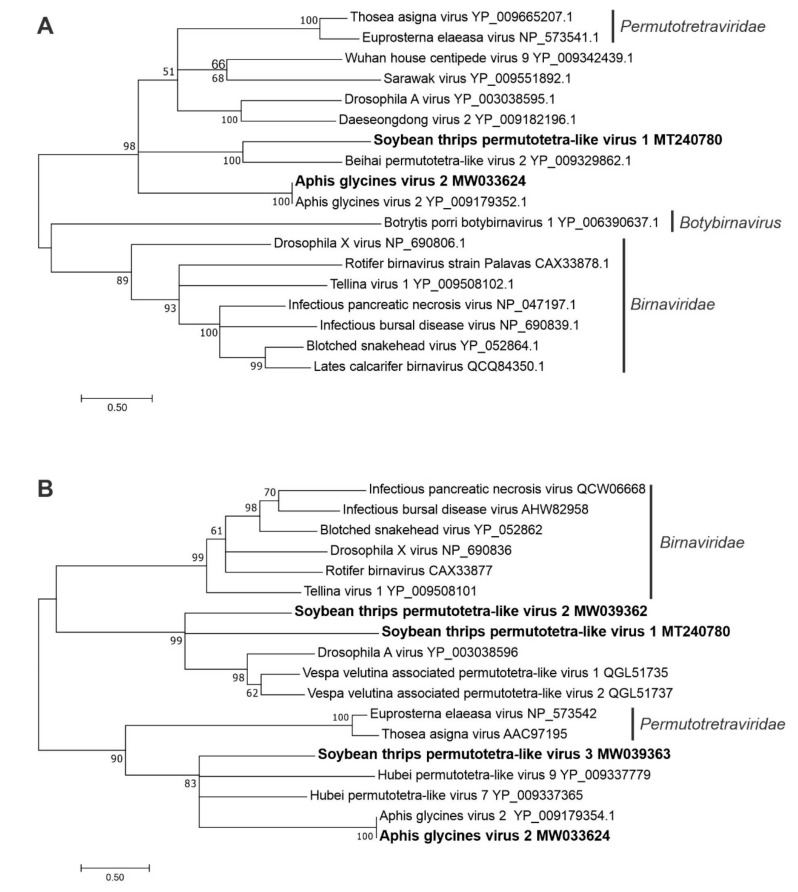
Phylogenetic analysis of the predicted amino acid sequences of RNA-dependent RNA polymerases (A) and capsid proteins (B) encoded by contigs assembled from soybean thrips RNA-seq data (indicated in bold) and related viruses in the families Birnaviridae and Permutotetraviridae and genus Botybirnavirus. See Figure 2 legend for details.
Figure 9
Figure 9
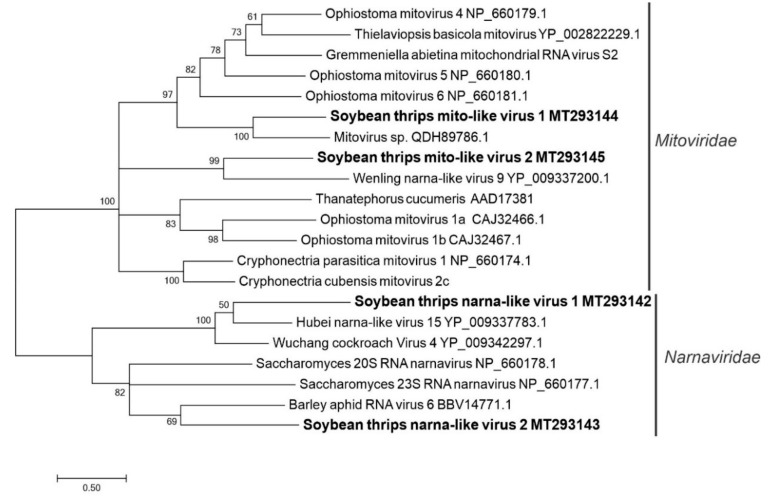
Phylogenetic analysis of the predicted RNA-dependent RNA polymerase amino acid sequences encoded by contigs assembled from soybean thrips RNA-seq data (indicated in bold) and related viruses in the orders Wolframvirales and Cryppavirales. See Figure 2 legend for details.
Figure 10
Figure 10
Phylogenetic analysis of the predicted RNA-dependent RNA polymerase amino acid sequences encoded by contigs assembled from soybean thrips RNA-seq data (indicated in bold) and related viruses in the order Ourlivirales. See Figure 2 legend for details.
Figure 11
Figure 11
Phylogenetic analysis of the predicted RNA-dependent RNA polymerase amino acid sequences encoded by contigs assembled from soybean thrips RNA-seq (indicated in bold) and related negative-stranded RNA viruses. See Figure 2 legend for details.
Figure 12
Figure 12
Phylogenetic analysis of predicted glycoprotein amino acid sequences encoded by contigs assembled from soybean thrips RNA-seq (indicated in bold) and related viruses in the order Jingchuvirales and Articulavirales. See Figure 2 legend for details.
Figure 13
Figure 13
Phylogenetic analysis of the predicted RNA-dependent RNA polymerase amino acid sequences encoded by contigs assembled from soybean thrips RNA-seq data (indicated in bold) and related viruses in the order Durnavirales. The genera Alphapratitivirus, Betapratitivirus, Deltapartitivirus, and Gammapartitivirus are indicated with Greek letters. See Figure 2 legend for details.
Figure 14
Figure 14
Phylogenetic analysis of the predicted RNA-dependent RNA polymerase amino acid sequences encoded by contigs assembled from soybean thrips RNA-seq data (indicated in bold) and related viruses in the order Ghabrivirales. See Figure 2 legend for details.
Figure 15
Figure 15
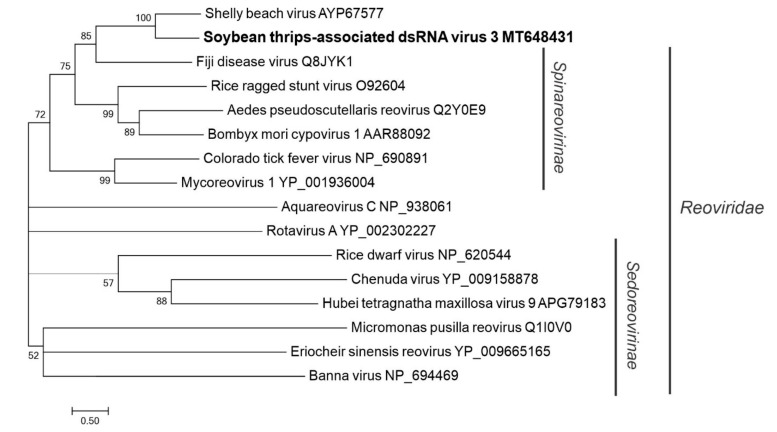
Phylogenetic analysis of the predicted RNA-dependent RNA polymerase amino acid sequences encoded by contigs assembled from soybean thrips RNA-seq data (indicated in bold) and related viruses in the order Reovirales. See Figure 2 legend for details.
Figure 16
Figure 16
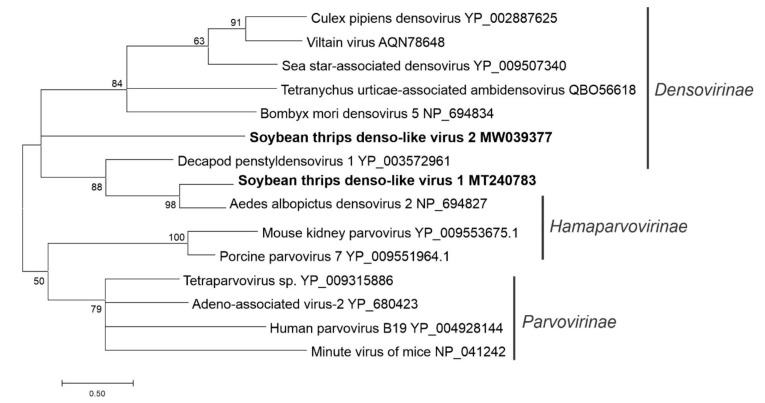
Phylogenetic analysis of predicted NS1 amino acid sequences encoded by contigs assembled from soybean thrips RNA-seq data (indicated in bold)and related viruses in the order Piccovirales. See Figure 2 legend for details.

References

    1. Jones D.R. Plant viruses transmitted by thrips. Eur. J. Plant Pathol. 2005;113:119–157. doi: 10.1007/s10658-005-2334-1. - DOI
    1. Pappu H.R., Jones R.A.C., Jain R.K. Global status of tospovirus epidemics in diverse cropping systems: Successes achieved and challenges ahead. Virus Res. 2009;141:219–236. doi: 10.1016/j.virusres.2009.01.009. - DOI - PubMed
    1. Rotenberg D., Jacobson A.L., Schneweis D.J., Whitfield A.E. Thrips transmission of tospoviruses. Curr. Opin. Virol. 2015;15:80–89. doi: 10.1016/j.coviro.2015.08.003. - DOI - PubMed
    1. Zhou J., Tzanetakis I.E. Soybean vein necrosis virus: An emerging virus in North America. Virus Genes. 2019;55:12–21. doi: 10.1007/s11262-018-1618-4. - DOI - PubMed
    1. Irizarry M.D., Elmore M.G., Batzer J.C., Whitham S.A., Mueller D.S. Alternative hosts for soybean vein necrosis virus and feeding preferences of its vector soybean thrips. Plant Health Prog. 2018;19:176–181. doi: 10.1094/PHP-11-17-0071-RS. - DOI

Publication types

LinkOut - more resources