


Accuracy of virtual planning in orthognathic surgery: a systematic review
- PMID: 33272289
- PMCID: PMC7716456
- DOI: 10.1186/s13005-020-00250-2
Accuracy of virtual planning in orthognathic surgery: a systematic review
Abstract
Background: The elaboration of a precise pre-surgical plan is essential during surgical treatment of dentofacial deformities. The aim of this study was to evaluate the accuracy of computer-aided simulation compared with the actual surgical outcome, following orthognathic surgery reported in clinical trials.
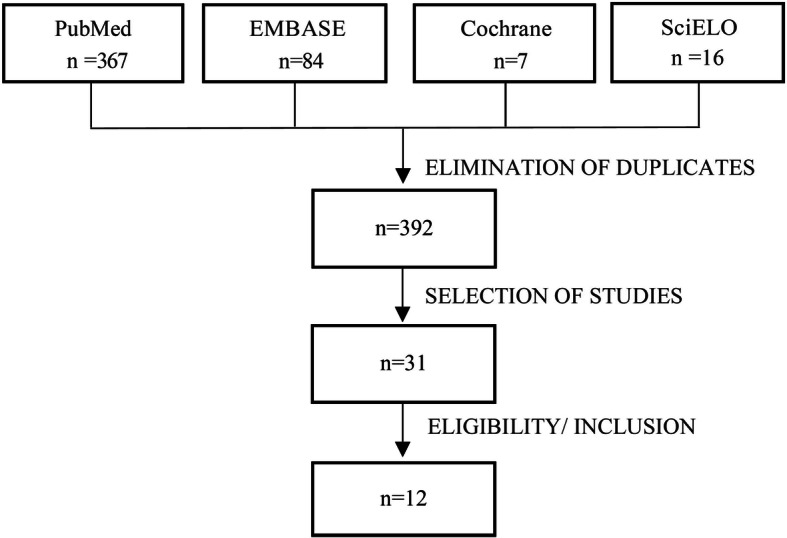
Methods: Our search was performed in PubMed, EMBASE, Cochrane Library and SciELO for articles published in the last decade. A total of 392 articles identified were assessed independently and in a blinded manner using eligibility criteria, out of which only twelve articles were selected for inclusion in our research. Data were presented using intra-class correlation coefficient, and linear and angular differences in three planes.
Results: The comparison of the accuracy analyses of the examined method has shown an average translation (< 2 mm) in the maxilla and also in the mandible (in three planes). The accuracy values for pitch, yaw, and roll (°) were (< 2.75, < 1.7 and < 1.1) for the maxilla, respectively, and (< 2.75, < 1.8, < 1.1) for the mandible. Cone-beam computed tomography (CBCT) with intra-oral scans of the dental casts is the most used imaging protocols for virtual orthognathic planning. Furthermore, calculation of the linear and angular differences between the virtual plan and postoperative outcomes was the most frequented method used for accuracy assessment (10 out of 12 studies) and a difference less than 2 mm/° was considered acceptable and accurate. When comparing this technique with the classical planning, virtual planning appears to be more accurate, especially in terms of frontal symmetry.
Conclusion: Virtual planning seems to be an accurate and reproducible method for orthognathic treatment planning. However, more clinical trials are needed to clearly determine the accuracy and validation of the virtual planning in orthognathic surgery.
Keywords: Cone-beam computed tomography; Dentofacial deformities; Orthognathic surgery; Surgery, computer-assisted.
Conflict of interest statement
The authors declare that they have no competing interests.
References
-
- Haas OL Jr, Becker OE, de Oliveira RB. Computer-aided planning in orthognathic surgery-systematic review. Int J Oral Maxillofac Surg. 2015;44:329-42. - PubMed
Publication types
MeSH terms
LinkOut - more resources
Full Text Sources
