Trends, patterns and health consequences of multimorbidity among South Korea adults: Analysis of nationally representative survey data 2007-2016
- PMID: 33274065
- PMCID: PMC7698588
- DOI: 10.7189/jogh.10.020426
Trends, patterns and health consequences of multimorbidity among South Korea adults: Analysis of nationally representative survey data 2007-2016
Abstract
Background: Multimorbidity is a global challenge. It is more common in the elderly and deprived populations. Health systems are not providing appropriate care for people with multimorbidity as they are focused on managing single diseases and are not oriented to effectively manage complexity of care-coordination for multimorbidity. This study aims to examine trends, disparities and consequences of multimorbidity over a 10-year period. It also aims to analyze different multimorbidity clusters and their association with quality of life.
Methods: This study analyzes Korea National Health and Nutrition Examination Survey - a cross-sectional survey repeated each year of 100 000 individuals aged one or more in 192 regions of South Korea - for the 10-year period 2007-2016. This is a population-based study based on nationally representative survey data for 10 years in Korea. Our study included 68 590 adults aged 19 or more who answered questions on presence of diseases. 39 chronic conditions were included. Disease clustering by frequency, composition and number of diseases from the top 10 most common chronic conditions were used to establish patterns of multimorbidity clusters. We performed regression analyses to analyze annual trend and the prevalence of multimorbidity across socioeconomic strata. Regressions were performed to measure association between multimorbidity and unmet need, health care service utilization, sickness days, perceived health status, and EQ-5D.
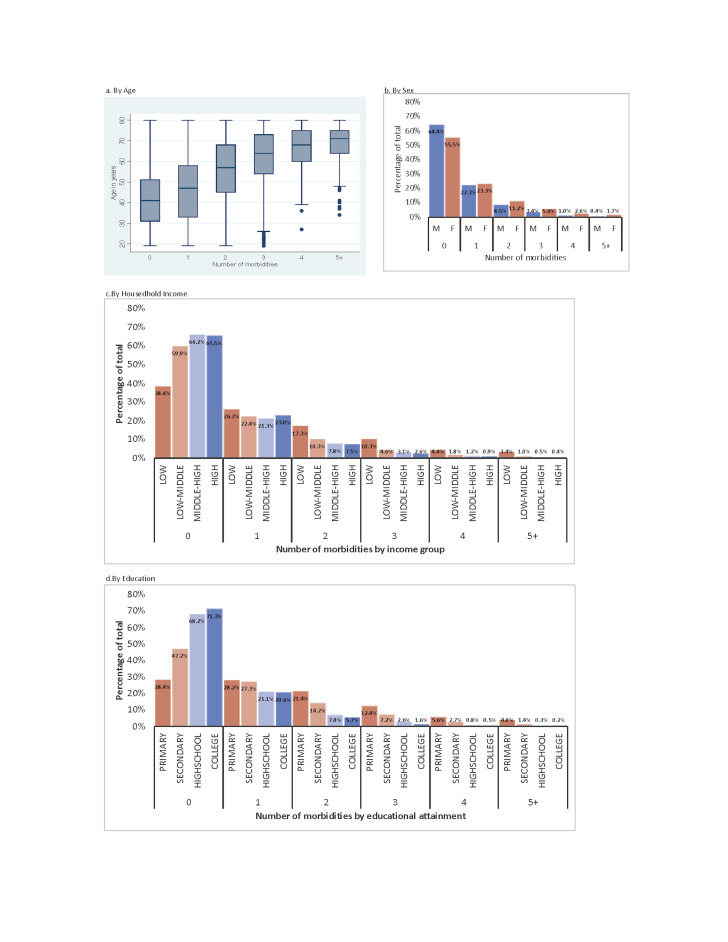
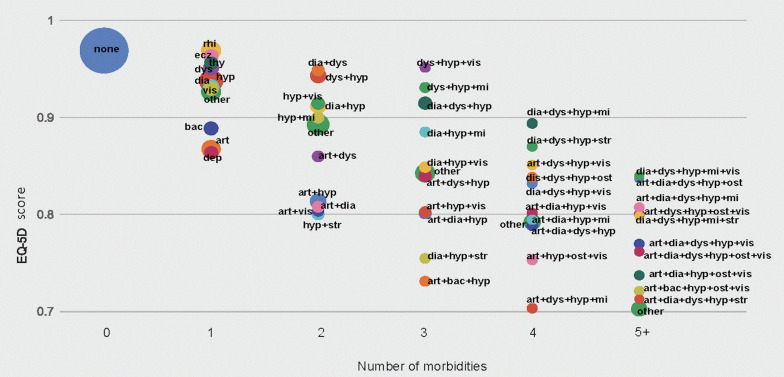
Results: Multimorbidity increased in the study period and was more prevalent in the elderly, females, and people with lower household income and education level. Multimorbidity was associated with increased unmet need, health care utilization and sickness days and reduced perceived health status and quality of life. Hypertension was the most common condition in individuals with multimorbidity. Reduced quality of life was associated with increasing number of chronic diseases and multimorbidity clusters which included stroke and arthritis.
Conclusions: The prevalence of multimorbidity varied across socioeconomic strata, with higher levels and health consequences observed in individuals in lower socio-economic income groups. Different multimorbidity clusters had differential effect on the quality of life. Health system designs incorporating integrated care strategies for complex conditions are required to effectively manage multimorbidity and different multimorbidity clusters.
Copyright © 2020 by the Journal of Global Health. All rights reserved.
Conflict of interest statement
Competing interests: The authors completed the ICMJE Unified Competing Interest form (available upon request from the corresponding author), and declare no conflicts of interest.
Figures
References
-
- Violán C, Foguet-Boreu Q, Roso-Llorach A, Rodriguez-Blanco T, Pons-Vigués M, Pujol-Ribera E, et al. Burden of multimorbidity, socioeconomic status and use of health services across stages of life in urban areas: a cross-sectional study. BMC Public Health. 2014;14:530. 10.1186/1471-2458-14-530 - DOI - PMC - PubMed
Publication types
MeSH terms
LinkOut - more resources
Full Text Sources