


"Locked up inside home" - Head injury patterns during coronavirus disease of 2019 pandemic
- PMID: 33274111
- PMCID: PMC7708961
- DOI: 10.25259/SNI_675_2020
"Locked up inside home" - Head injury patterns during coronavirus disease of 2019 pandemic
Abstract
Background: As citizens have been forced to stay home during coronavirus disease of 2019 (COVID-19) pandemic, the crisis created unique trends in the neurotrauma patterns with changes in mode, severity, and outcome of head injured patients.
Methods: Details of neurotrauma admissions under the neurosurgery department at our institute since the onset of COVID-19 pandemic in the country were collected retrospectively and compared to the same period last year in terms of demographic profile, mode of injury, GCS at admission, severity of head injury, radiological diagnosis, management (surgical/conservative), and outcome. The patients were studied according to which phase of pandemic they were admitted in - "lockdown" period (March 25 to May 31, 2020) or "unlock" period (June 1 to September 15, 2020).
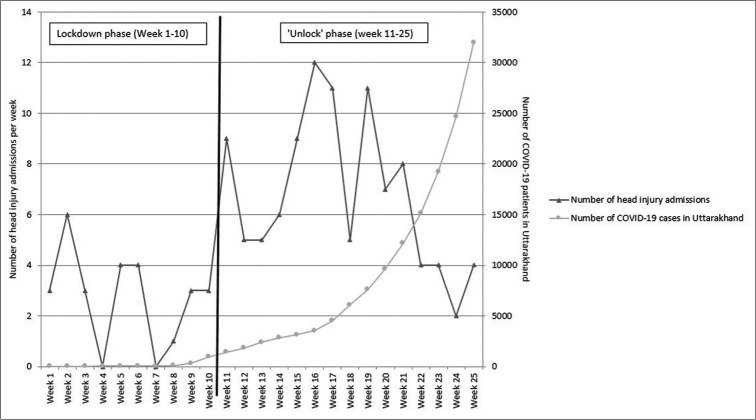
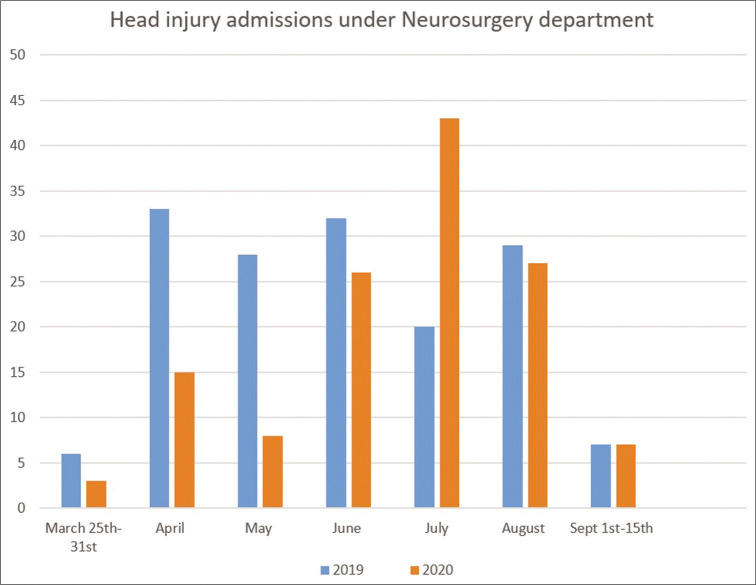
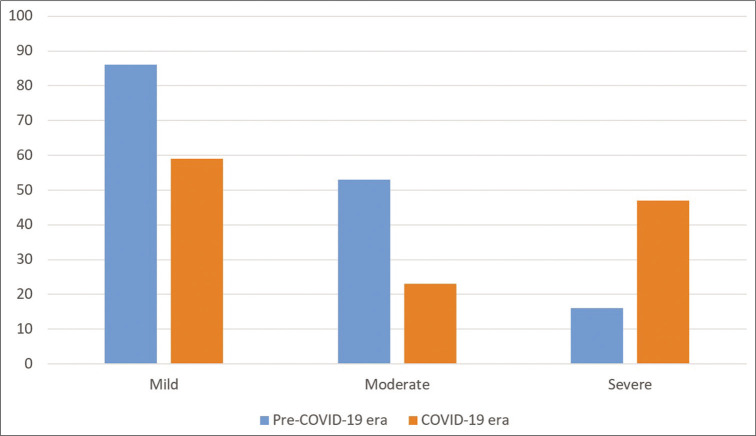
Results: The number of head injuries decreased by 16.8% during the COVID-19 pandemic. Furthermore, during the lockdown period, the number of admissions was 2.7/week while it was 6.8/week during the "unlock" period. RTA was the mode of injury in 29.6% patients during the lockdown, while during the unlock period, it was 56.9% (P = 0.000). Mild and moderate head injuries decreased by 41% and severe head injuries increased by 156.25% during the COVID-19 pandemic (P = 0.000). The mortality among neurotrauma patients increased from 12.4% to 22.5% during the COVID-19 era (P = 0.009).
Conclusion: We observed a decline in the number of head injury admissions during the pandemic, especially during the lockdown. At the same time, there was increase in the severity of head injuries and associated injuries, resulting in significantly higher mortality in our patients during the ongoing COVID-19 pandemic.
Keywords: Coronavirus disease of 2019; Head injury; Lockdown; Motor vehicle accidents; Neurotrauma; Road traffic accidents; Unlock.
Copyright: © 2020 Surgical Neurology International.
Conflict of interest statement
There are no conflicts of interest.
Figures
References
-
- Ahuja S, Shah P, Mohammed R. Impact of COVID-19 pandemic on acute spine surgery referrals to UK tertiary spinal unit: Any lessons to be learnt? Br J Neurosurg. 2020;1:1–5. - PubMed
-
- AIIMS Rishikesh Becomes First Government Hospital in India to Have Helipad Facility Dehradun News-Times of India. 2020. Available from: https://www.timesofindia.indiatimes.com/city/dehradun/aiims-rishikesh-be... [Last accessed on 2020 Sep 25]
-
- Christey G, Amey J, Campbell A, Smith A. Variation in volumes and characteristics of trauma patients admitted to a level one trauma centre during national level 4 lockdown for COVID-19 in New Zealand. N Z Med J. 2020;133:81–8. - PubMed
LinkOut - more resources
Full Text Sources
Research Materials