


Strongyloidiasis in Africa: Systematic Review and Meta-Analysis on Prevalence, Diagnostic Methods, and Study Settings
- PMID: 33274200
- PMCID: PMC7683116
- DOI: 10.1155/2020/2868564
Strongyloidiasis in Africa: Systematic Review and Meta-Analysis on Prevalence, Diagnostic Methods, and Study Settings
Abstract
Background: Strongyloidiasis is an intestinal parasitic infection mainly caused by Strongyloides stercoralis. Although it is a predominant parasite in tropics and subtropics where sanitation and hygiene are poorly practiced, the true prevalence of strongyloidiasis is not known due to low-sensitivity diagnostic methods.
Objective: This systematic review and meta-analysis is aimed at determining the pooled prevalence of strongyloidiasis in African countries, stratified by diagnostic methods, study settings, and patients.
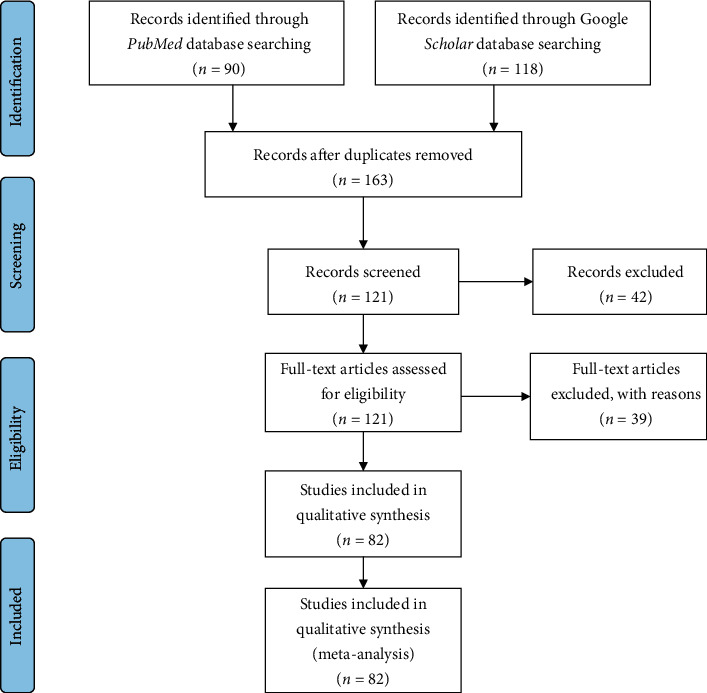
Methods: Cross-sectional studies on strongyloidiasis published in African countries from the year 2008 up to 2018 in PubMed and Google Scholar databases and which reported at least one Strongyloides spp. infection were included. Identification and screening of eligible articles were also done. Articles whose focus was on strongyloidiasis in animals, soil, and foreigners infected by Strongyloides spp. in Africa were excluded. The random effects model was used to calculate the pooled prevalence of strongyloidiasis across African countries as well as by diagnostic methods and study settings. The heterogeneity between studies was also computed.
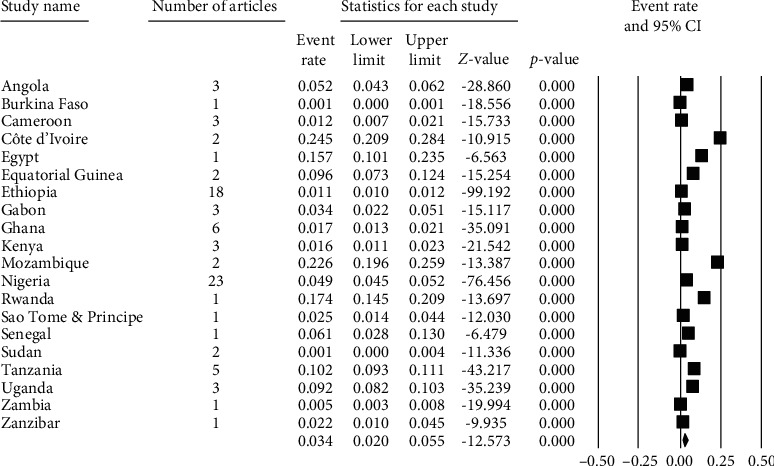
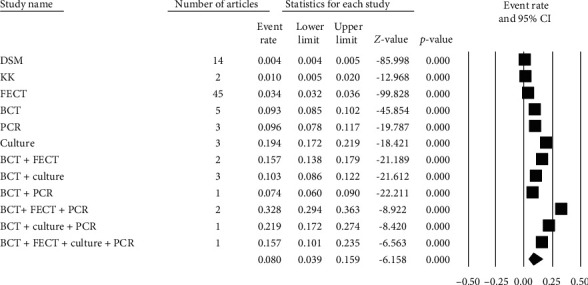
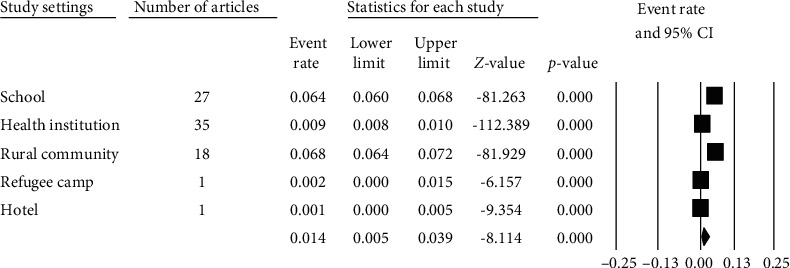
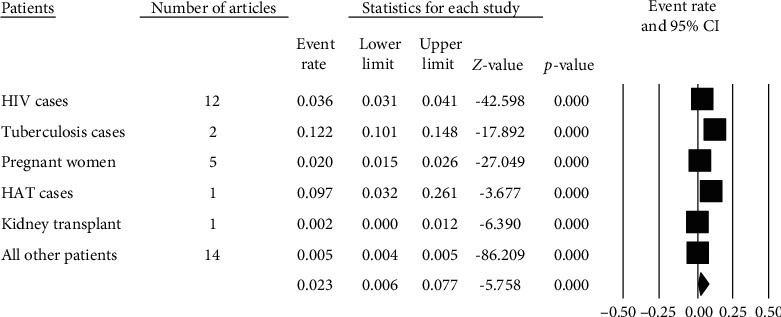
Result: A total of 82 studies were included. The overall pooled prevalence of strongyloidiasis was 2.7%. By individual techniques, the pooled prevalence of strongyloidiasis was 0.4%, 1.0%, 3.4%, 9.3%, 9.6%, and 19.4% by the respective direct saline microscopy, Kato-Katz, formol ether concentration, polymerase chain reaction, Baermann concentration, and culture diagnostic techniques. The prevalence rates of strongyloidiasis among rural community, school, and health institution studies were 6.8%, 6.4%, and 0.9%, respectively. The variation on the effect size comparing African countries, diagnostic methods, study settings, and patients was significant (P ≤ 0.001).
Conclusions: This review shows that strongyloidiasis is overlooked and its prevalence is estimated to be low in Africa due to the use of diagnostic methods with low sensitivity. Therefore, there is a need for using a combination of appropriate diagnostic methods to approach the actual strongyloidiasis rates in Africa.
Copyright © 2020 Tadesse Hailu et al.
Conflict of interest statement
The author(s) declare(s) that they have no conflicts of interest.
Figures
References
-
- WHO The world Health Organaization. Soil-transmitted helminth infections. Fact sheet. 2016. September 2019 http://www.who.int/intestinal_worms/en/
Publication types
MeSH terms
LinkOut - more resources
Full Text Sources
Miscellaneous
