Review
. 2020;216(8):138.
doi: 10.1007/s11214-020-00764-w. Epub 2020 Nov 26.

SuperCam Calibration Targets: Design and Development

Affiliations
Review

SuperCam Calibration Targets: Design and Development

J A Manrique et al. Space Sci Rev. 2020.

Abstract

SuperCam is a highly integrated remote-sensing instrumental suite for NASA's Mars 2020 mission. It consists of a co-aligned combination of Laser-Induced Breakdown Spectroscopy (LIBS), Time-Resolved Raman and Luminescence (TRR/L), Visible and Infrared Spectroscopy (VISIR), together with sound recording (MIC) and high-magnification imaging techniques (RMI). They provide information on the mineralogy, geochemistry and mineral context around the Perseverance Rover. The calibration of this complex suite is a major challenge. Not only does each technique require its own standards or references, their combination also introduces new requirements to obtain optimal scientific output. Elemental composition, molecular vibrational features, fluorescence, morphology and texture provide a full picture of the sample with spectral information that needs to be co-aligned, correlated, and individually calibrated. The resulting hardware includes different kinds of targets, each one covering different needs of the instrument. Standards for imaging calibration, geological samples for mineral identification and chemometric calculations or spectral references to calibrate and evaluate the health of the instrument, are all included in the SuperCam Calibration Target (SCCT). The system also includes a specifically designed assembly in which the samples are mounted. This hardware allows the targets to survive the harsh environmental conditions of the launch, cruise, landing and operation on Mars during the whole mission. Here we summarize the design, development, integration, verification and functional testing of the SCCT. This work includes some key results obtained to verify the scientific outcome of the SuperCam system.

Keywords: Calibration; Infrared spectroscopy; Jezero crater; LIBS; Perseverance rover; Raman spectroscopy; SuperCam.


Conflict of interest statement

Conflicts of interest/Competing interestsThe authors declare that there are no conflicts of interest or competing interests.

Figures
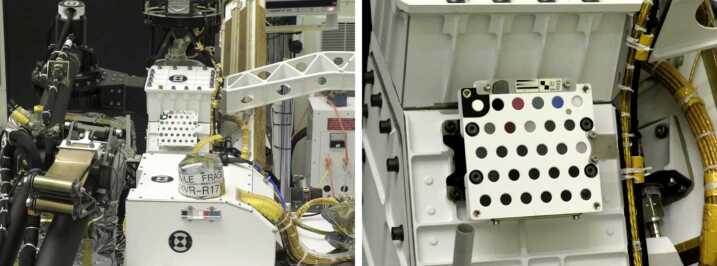
Fig. 1
Fig. 1
The SuperCam Calibration Targets are at the rear of Perseverance’s deck, on the right side in the forward direction. Photo at Kennedy Space Center. Credits NASA/JPL-Caltech. (Left) An ESD bag is covering the Mastcam-Z primary calibration target; below Mastcam-Z secondary calibration targets
Fig. 2
Fig. 2
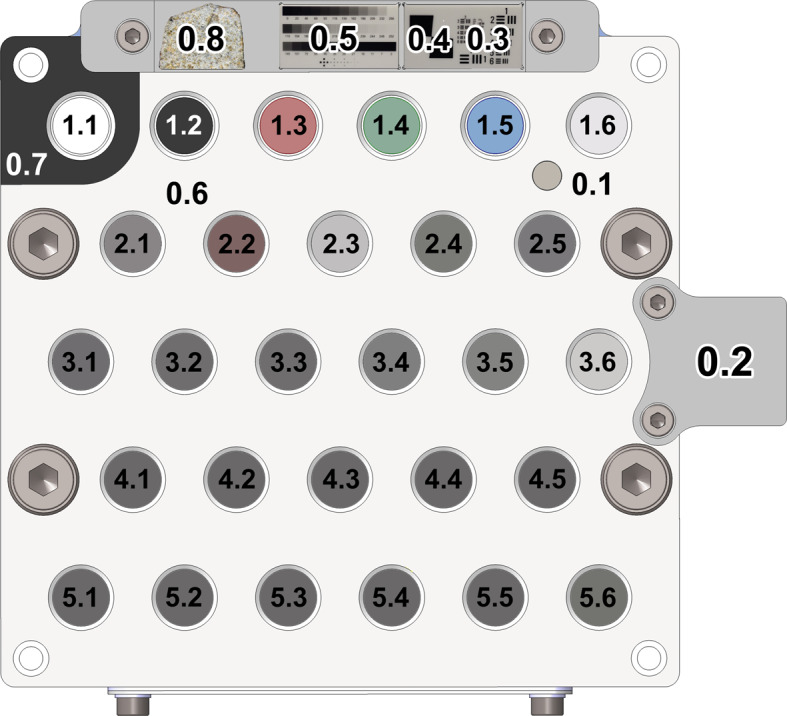
Arrangement of targets with identifiers for each of them
Fig. 3
Fig. 3
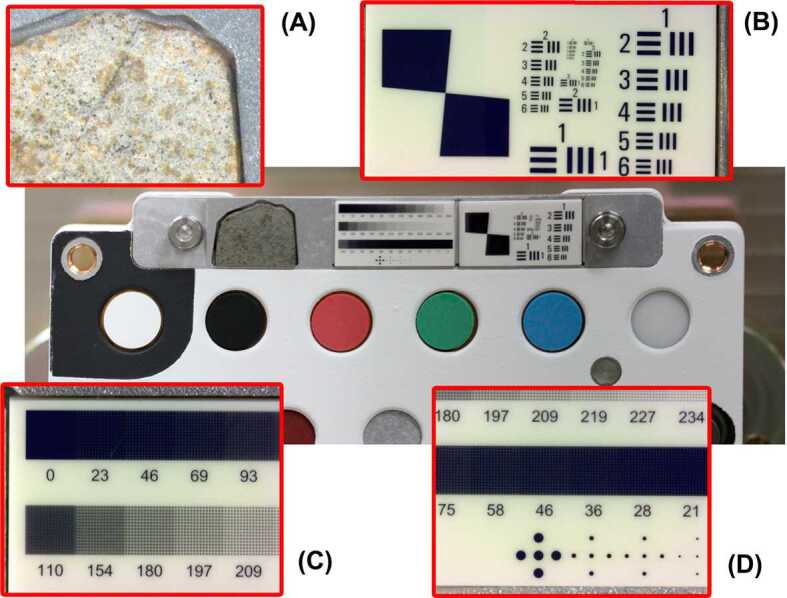
The geometric target provides two different patterns that help with different imaging calibrations. A gray scale is for white and HDR calibration (c), and different geometric patterns are shown (b, d) that can be used to fine adjust the autofocus and estimate the resolution of the system
Fig. 4
Fig. 4
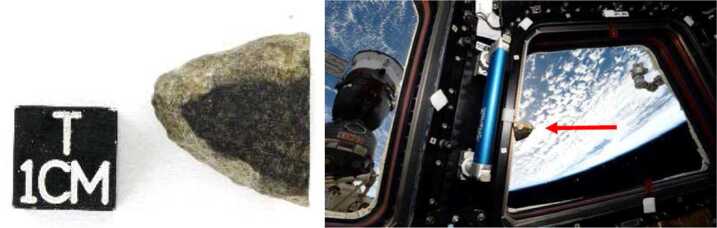
Left, the SuperCam NWA 10170 (Shergottite) meteorite placed on the geometric target before it was sliced (a 5.65 g fragment). Right, the meteorite floating inside the International Space Station (ISS). Credit ESA/T. Pesquet
Fig. 5
Fig. 5
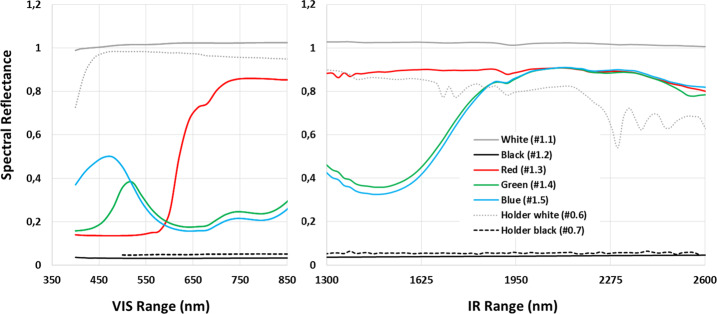
Spectral reflectance of passive targets for the VIS (400 – 853 nm) and IR (1.3 – 2.6 μm) ranges
Fig. 6
Fig. 6
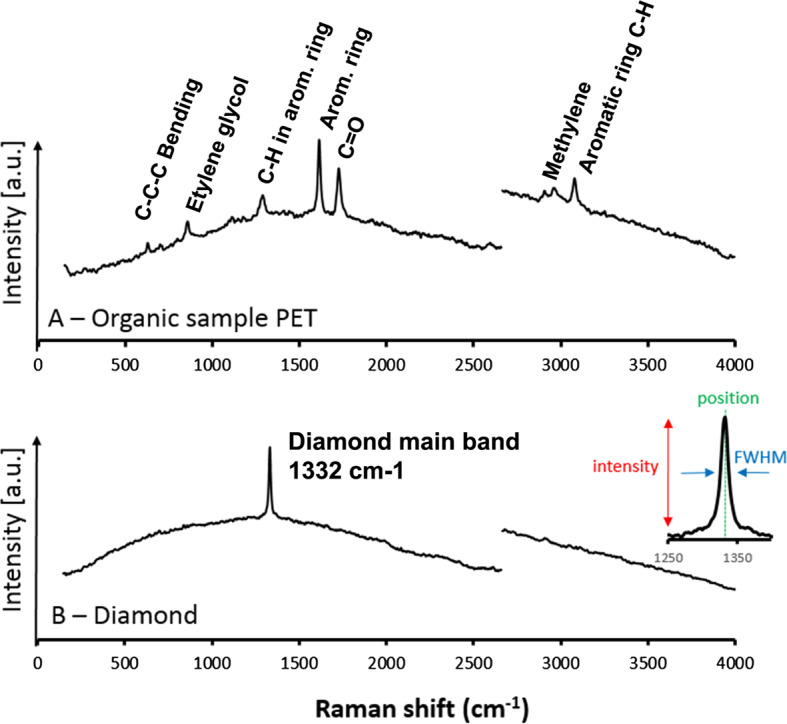
Raw spectra acquired by SuperCam during ATLO tests at JPL. (A) Raman spectrum of the organic PET target. Spectrum acquired by SuperCam using 10 single shots. See text for the peak identification. (B) Raman spectrum of the Diamond showing its main band at 1332 cm−1. The luminescence background from the adhesive under the diamond piece can be seen. The main parameters used for checking the instrument health are depicted in the right inset
Fig. 7
Fig. 7
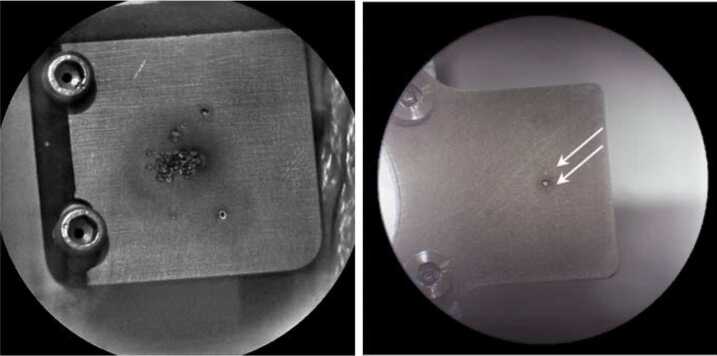
(Left) RMI image of ChemCam Ti plate on board MSL on Sol 2276, (12/31/2018). (Right) RMI image SuperCam Ti plate after two bursts (arrows) during ATLO tests at JPL
Fig. 8
Fig. 8
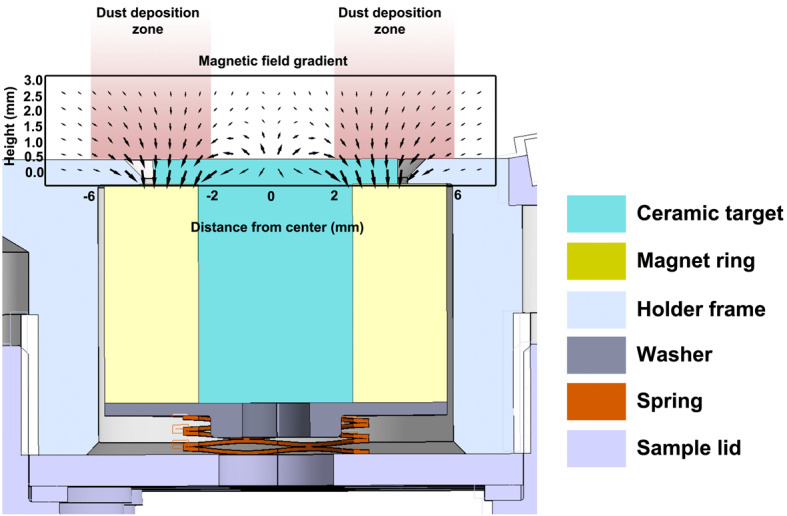
Passive sample cross section, where the magnet (yellow) can be identified wrapping the lower part of the reflectance standard (cyan), mounted on the SCCT holder (light blue). Magnetic field is represented defining the zones of deposition of the fraction of airborne dust with a significant magnetic susceptibility
Fig. 9
Fig. 9
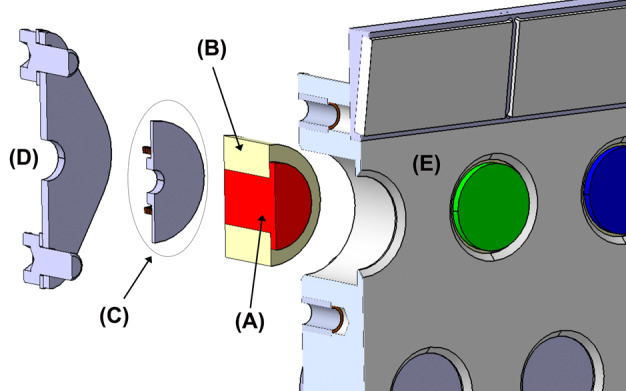
Cut-away view of how a passive sample is integrated into the holder. (A) Passive sample, (B) magnet, (C) protective washer, (D) closeout lid, (E) sample holder. Kapton® shims are included between the sample and the protective washer, and also on top of the sample, covering only the magnet, and between this element and the holder. Finally, Kapton® pieces wrap the whole target covering the lateral surface of the magnet
Fig. 10
Fig. 10
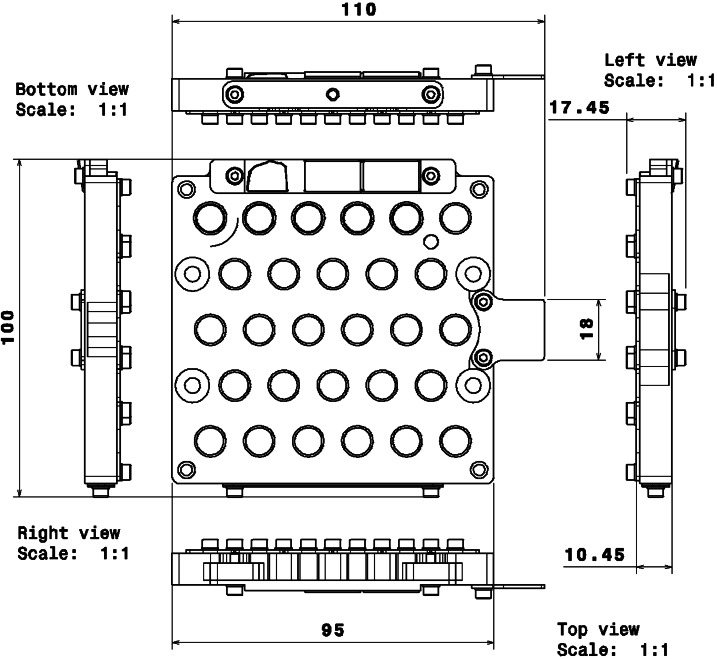
General dimensions of the SCCT. The total mass of the whole system is 248.5 g, with targets. See Fig. 2 and Table 1 for targets information
Fig. 11
Fig. 11
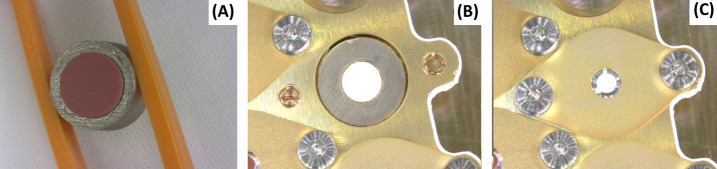
Assembly process of the passive samples with magnets. (A) is the red target inserted within its magnet. (B) The white target plus magnet assembly, upside-down, inserted into the sample holder. The fixation lid on the back of the SCCT (C) applies the designed preload to the target, due to the enclosed washer and spring (not shown). The center of the target can be seen through a hole in the lid (Fig. 7)
Fig. 12
Fig. 12
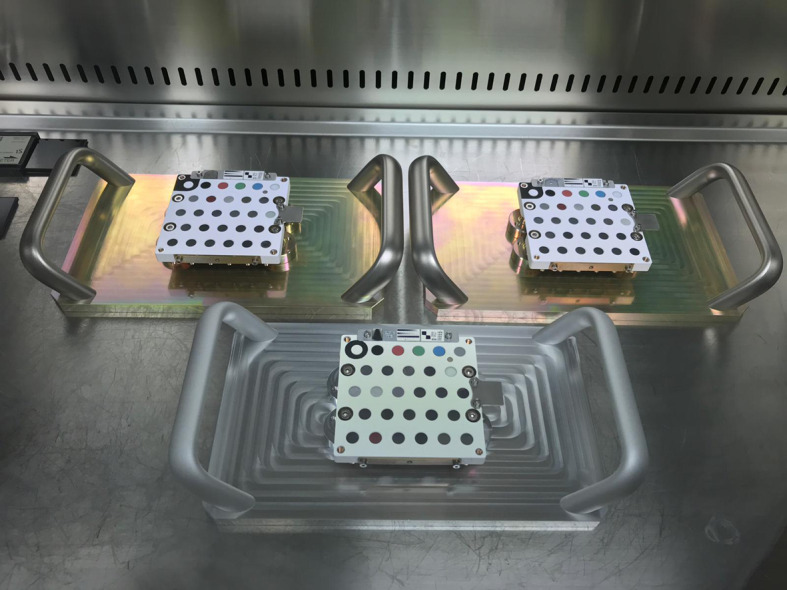
Family picture of three of the SCCT models; FM and FS are on the top; the EQM is at the bottom
Fig. 13
Fig. 13
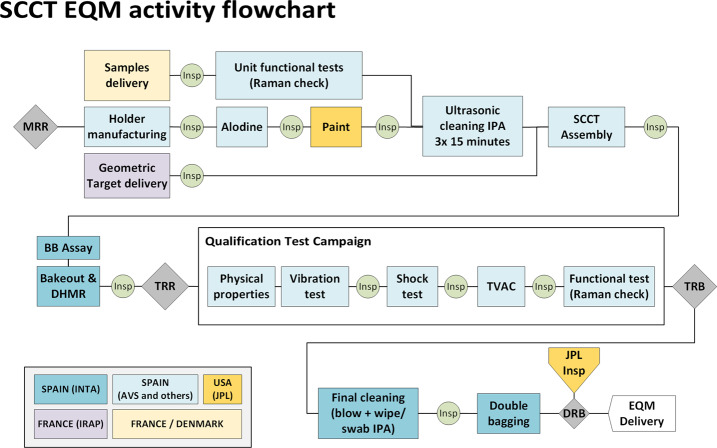
Integration and testing flowchart of the SCCT EQM. Including assembly, qualification campaign and post campaign verification and cleaning. Acronyms are manufacturing readiness review (MRR), isopropyl alcohol (IPA), breadboard (BB), dry-heat microbial reduction (DHMR), test readiness review (TRR), thermal vacuum test (TVAC). Other acronyms are given in the main text

References

    1. Barber N.A. Polyethylene Terephthalate: Uses, Properties and Degradation. New York: Nova Science Publishers; 2017.
    1. Beck P., Pommerol A., Thomas N., Schmitt B., Moynier F., Barrat J.A. Icarus. 2012;218:364. doi: 10.1016/j.icarus.2011.12.005. - DOI
    1. Beck P., Fau A., Meslin P.-Y., Forni O., Lasue J., Lewin E., Cousin A., Maurice S., Rapin W., Gasnault O., Wiens R.C., Mangold N., Sautter V., Coll P., Szopa C., Dequaire T., Garcia B., Schwartz S. Lunar Planet. Sci. Conf. 2017;48:1216.
    1. Bell J.F., Godber A., McNair S., Caplinger M.A., Maki J.N., Lemmon M.T., Van Beek J., Malin M.C., Wellington D., Kinch K.M., Madsen M.B., Hardgrove C., Ravine M.A., Jensen E., Harker D., Anderson R.B., Herkenhoff K.E., Morris R.V., Cisneros E., Deen R.G. Earth Space Sci. 2017;4:396. doi: 10.1002/2016EA000219. - DOI
    1. Bernard S., Papineau D. Elements. 2014;10:435–440. doi: 10.2113/gselements.10.6.435. - DOI

LinkOut - more resources