


The IL-23/IL-17 Pathway in Inflammatory Skin Diseases: From Bench to Bedside
- PMID: 33281823
- PMCID: PMC7705238
- DOI: 10.3389/fimmu.2020.594735
The IL-23/IL-17 Pathway in Inflammatory Skin Diseases: From Bench to Bedside
Abstract
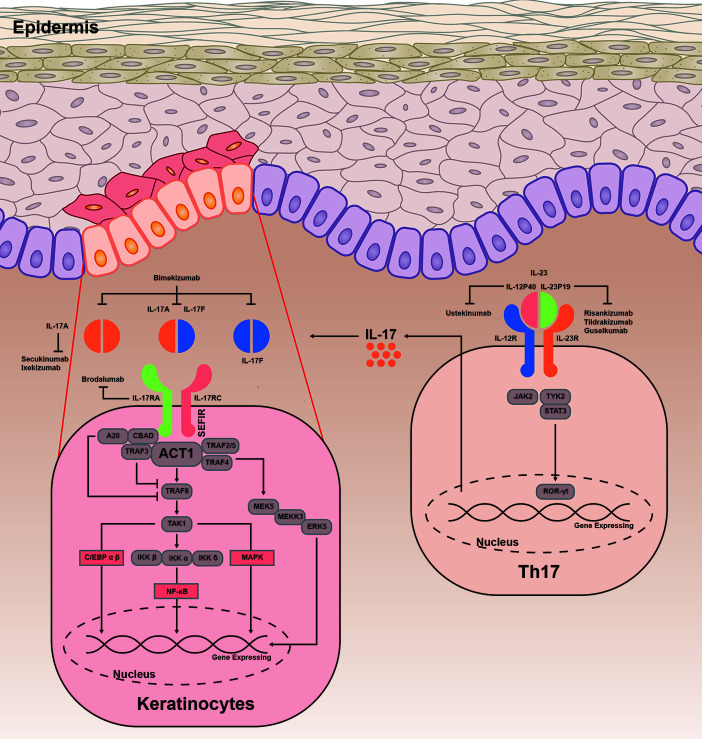
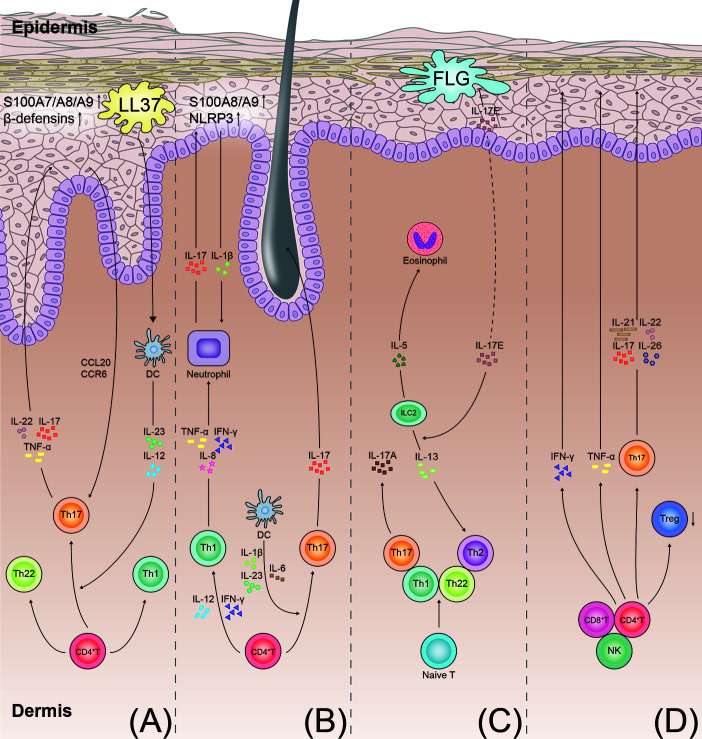
Interleukin-17 (IL-17) is an essential proinflammatory cytokine, which is mainly secreted by the CD4+ helper T cells (Th17 cells) and subsets of innate lymphoid cells. IL-17A is associated with the pathogenesis of inflammatory diseases, including psoriasis, atopic dermatitis, hidradenitis suppurativa, alopecia areata, pityriasis rubra pilaris, pemphigus, and systemic sclerosis. Interleukin-23 (IL-23) plays a pivotal role in stimulating the production of IL-17 by activating the Th17 cells. The IL-23/IL-17 axis is an important pathway for targeted therapy for inflammatory diseases. Emerging evidence from clinical trials has shown that monoclonal antibodies against IL-23, IL-17, and tumor necrosis factor are effective in the treatment of patients with psoriasis, atopic dermatitis, hidradenitis suppurativa, pityriasis rubra pilaris, pemphigus, and systemic sclerosis. Here, we summarize the latest knowledge about the biology, signaling, and pathophysiological functions of the IL-23/IL-17 axis in inflammatory skin diseases. The currently available biologics targeting the axis is also discussed.
Keywords: IL-17 family; IL-23; IL-23/IL-17 axis; psoriasis; targeted therapy.
Copyright © 2020 Liu, Li, Ying, Tang, Ding, Li, Qiao and Fang.
Figures
References
-
- Rouvier E, Luciani MF, Mattéi MG, Denizot F, Golstein P. CTLA-8, cloned from an activated T cell, bearing AU-rich messenger RNA instability sequences, and homologous to a herpesvirus saimiri gene. J Immunol (1993) 150(12):5445–56. - PubMed
Publication types
MeSH terms
Substances
LinkOut - more resources
Full Text Sources
Other Literature Sources
Medical
Research Materials
