


Cell Surface Biosynthesis and Remodeling Pathways in Mycobacteria Reveal New Drug Targets
- PMID: 33282752
- PMCID: PMC7688586
- DOI: 10.3389/fcimb.2020.603382
Cell Surface Biosynthesis and Remodeling Pathways in Mycobacteria Reveal New Drug Targets
Abstract
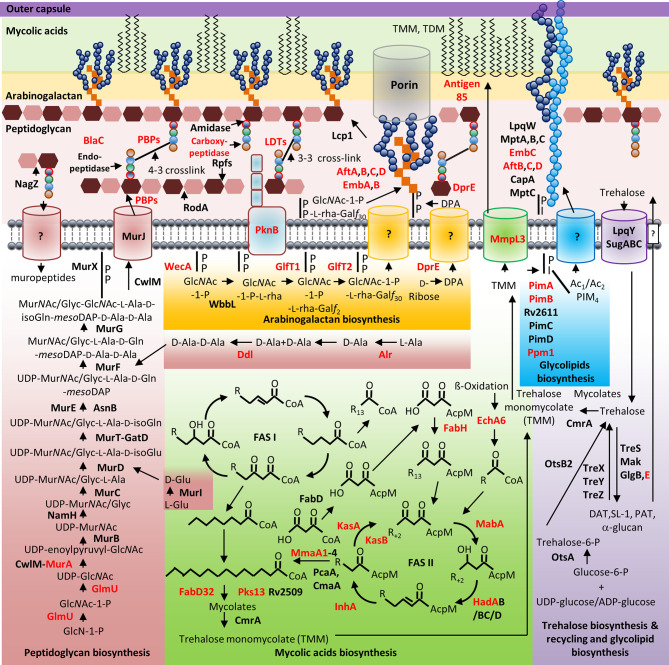
Mycobacterium tuberculosis (Mtb), the causative agent of tuberculosis (TB), remains the leading cause of death from an infectious bacterium and is responsible for 1.8 million deaths annually. The emergence of drug resistance, together with the need for a shorter more effective regimen, has prompted the drive to identify novel therapeutics with the bacterial cell surface emerging as a tractable area for drug development. Mtb assembles a unique, waxy, and complex cell envelope comprised of the mycolyl-arabinogalactan-peptidoglycan complex and an outer capsule like layer, which are collectively essential for growth and pathogenicity while serving as an inherent barrier against antibiotics. A detailed understanding of the biosynthetic pathways required to assemble the polymers that comprise the cell surface will enable the identification of novel drug targets as these structures provide a diversity of biochemical reactions that can be targeted. Herein, we provide an overview of recently described mycobacterial cell wall targeting compounds, novel drug combinations and their modes of action. We anticipate that this summary will enable prioritization of the best pathways to target and triage of the most promising molecules to progress for clinical assessment.
Keywords: arabinogalactan; cell surface; mycolic acids; peptidoglycan; tuberculosis drugs.
Copyright © 2020 Shaku, Ealand and Kana.
Figures
References
Publication types
MeSH terms
Substances
LinkOut - more resources
Full Text Sources
Medical
