


The Gut Microbiome and the Big Eight
- PMID: 33287179
- PMCID: PMC7761723
- DOI: 10.3390/nu12123728
The Gut Microbiome and the Big Eight
Abstract
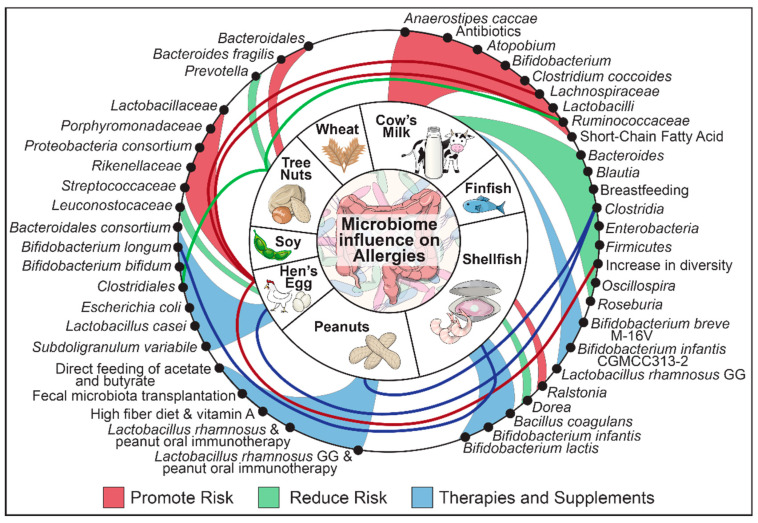
Food allergies are increasing at an alarming rate, with 6.5% of the general population affected. It has been hypothesized that the increase in allergies stems from the "hygiene hypothesis". The gut microbiome, a collection of microbiota and their genetic contents from the gastrointestinal tract, has been shown to play a part in the development of food allergies. The Food and Drug Administration requires all regulated food companies to clearly state an inclusion of the major, or "big eight" food allergens on packaging. This review is to provide information on the significant advancements related to the gut microbiome and each of the eight major food allergies individually. Establishment of causal connection between the microbiome and food allergies has uncovered novel mechanisms. New strategies are discussed to prevent future sensitization and reaction through novel treatments involving functional additives and dietary changes that target the microbiome.
Keywords: cow milk allergy; dysbiosis; food allergy; microbiome; short-chain fatty acids.
Conflict of interest statement
The authors declare no conflict of interest.
Figures
References
-
- Venegas D.P., De La Fuente M.K., Landskron G., González M.J., Quera R., Dijkstra G., Harmsen H.J.M., Faber K.N., Hermoso M.A. Short chain fatty acids (SCFAs)mediated gut epithelial and immune regulation and its relevance for inflammatory bowel diseases. Front. Immunol. 2019;10 doi: 10.3389/fimmu.2019.00277. - DOI - PMC - PubMed
Publication types
MeSH terms
Substances
LinkOut - more resources
Full Text Sources
Medical
