


Thromboembolic complications in critically ill COVID-19 patients are associated with impaired fibrinolysis
- PMID: 33287877
- PMCID: PMC7719734
- DOI: 10.1186/s13054-020-03401-8
Thromboembolic complications in critically ill COVID-19 patients are associated with impaired fibrinolysis
Abstract
Background: There is emerging evidence for enhanced blood coagulation in coronavirus 2019 (COVID-19) patients, with thromboembolic complications contributing to morbidity and mortality. The mechanisms underlying this prothrombotic state remain enigmatic. Further data to guide anticoagulation strategies are urgently required.
Methods: We used viscoelastic rotational thromboelastometry (ROTEM) in a single-center cohort of 40 critically ill COVID-19 patients.
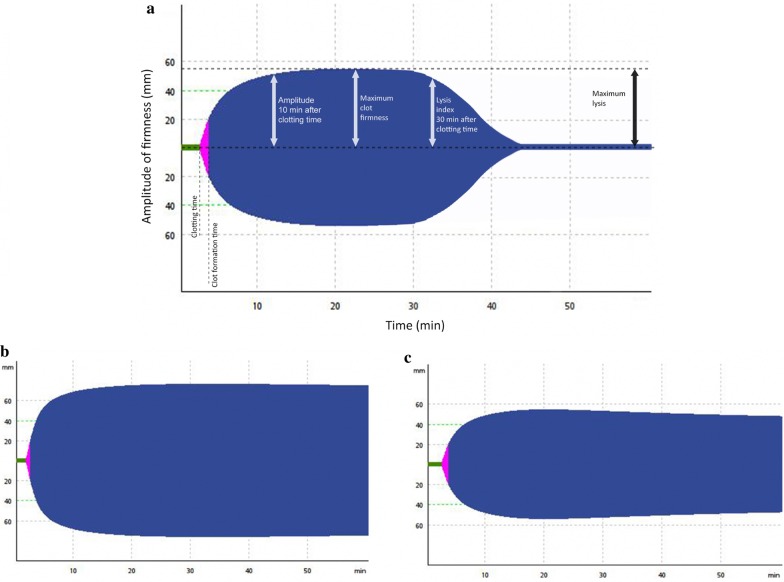
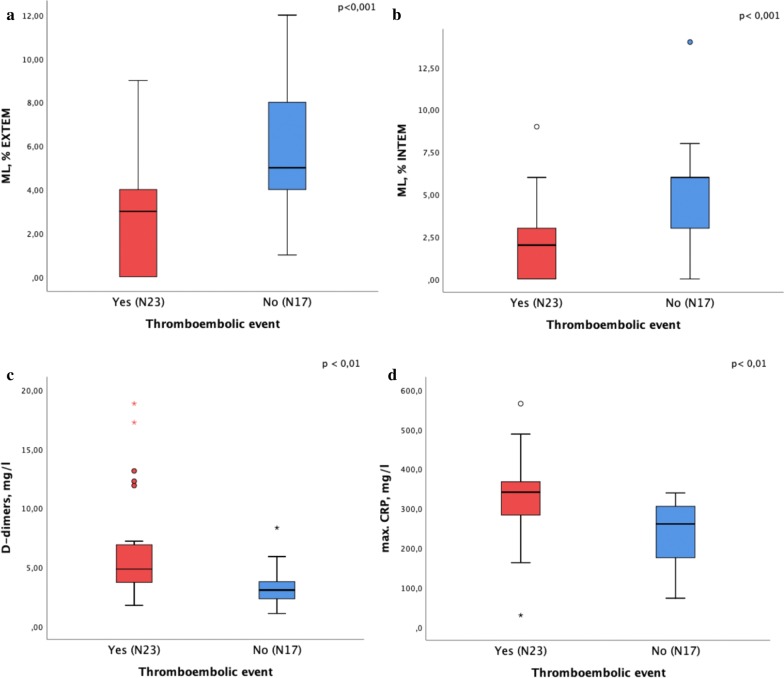
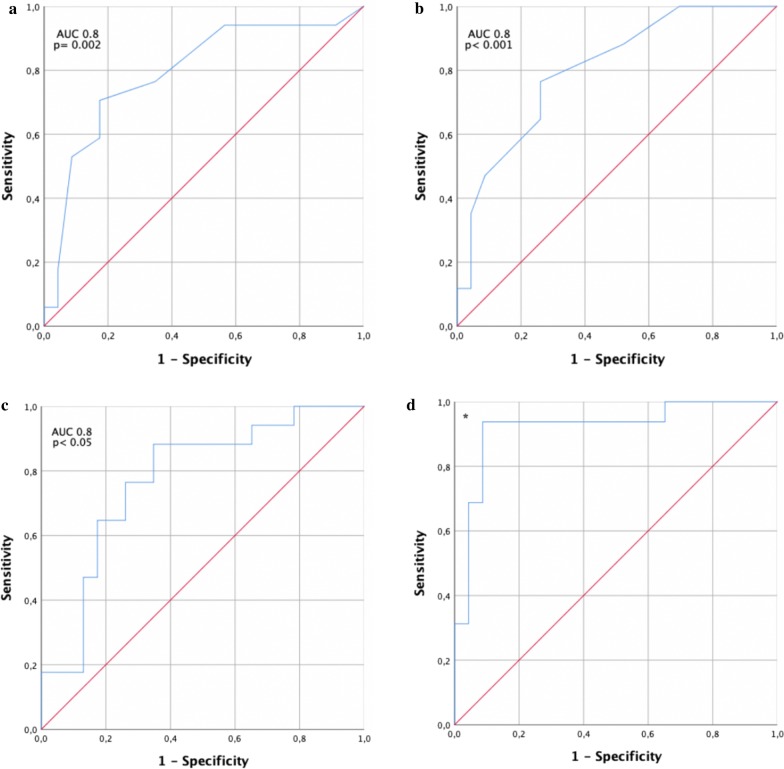
Results: Clear signs of a hypercoagulable state due to severe hypofibrinolysis were found. Maximum lysis, especially following stimulation of the extrinsic coagulation system, was inversely associated with an enhanced risk of thromboembolic complications. Combining values for maximum lysis with D-dimer concentrations revealed high sensitivity and specificity of thromboembolic risk prediction.
Conclusions: The study identifies a reduction in fibrinolysis as an important mechanism in COVID-19-associated coagulopathy. The combination of ROTEM and D-dimer concentrations may prove valuable in identifying patients requiring higher intensity anticoagulation.
Keywords: COVID-19; Coagulopathy; D-dimers; Hypofibrinolysis; ROTEM.
Conflict of interest statement
Dr. Kruse, Dr. Magomedov, Dr. Kurreck, Dr. Münch, Dr. Koerner, Dr. Kamhieh-Milz, Dr. Kahl, Dr. Piper and Dr. Dörner have nothing to disclose. Dr. Eckardt reports personal fees from Akebia, grants from Amgen, grants from Astra Zeneca, grants and personal fees from Bayer, grants from Fresenius, from Genzyme, from Shire and grants and personal fees from Vifor, outside the submitted work. Dr. Zickler reports grants and personal fees from Baxter, outside the submitted work.
Figures
References
MeSH terms
Substances
LinkOut - more resources
Full Text Sources
Medical
