


Molecular identification of four Sarcocystis species in cattle from Lithuania, including S. hominis, and development of a rapid molecular detection method
- PMID: 33287879
- PMCID: PMC7720396
- DOI: 10.1186/s13071-020-04473-9
Molecular identification of four Sarcocystis species in cattle from Lithuania, including S. hominis, and development of a rapid molecular detection method
Abstract
Background: Six Sarcocystis species are known to use cattle (Bos taurus) as the intermediate host, two of which, S. hominis and S. heydorni, are zoonotic. There is a need for a method that will enable rapid identification of the Sarcocystis species in cattle.
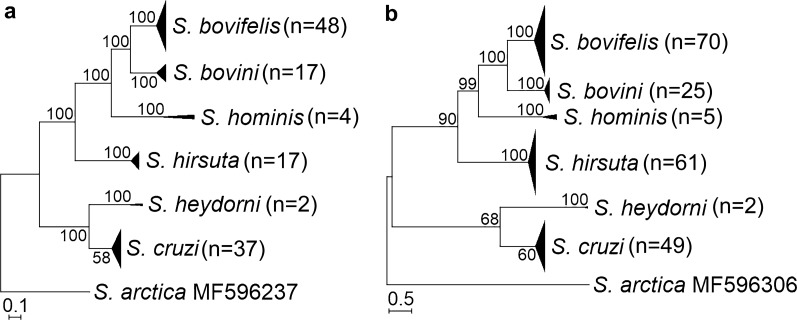
Methods: The diaphragm muscles of 102 cattle from Lithuania were examined for the presence of Sarcocystis spp., using two different methods for species identification. Individual sarcocysts were isolated from squash preparations of the diaphragm muscle under the light microscope, followed by genetic characterisation of excised cysts using sequence analysis of the 18S rRNA (18S rRNA) and cytochrome c oxidase subunit I (cox1) genes. The same cattle muscle samples were digested and species-specific PCR analyses targeting cox1 were developed to identify the Sarcocystis isolates to the species level.
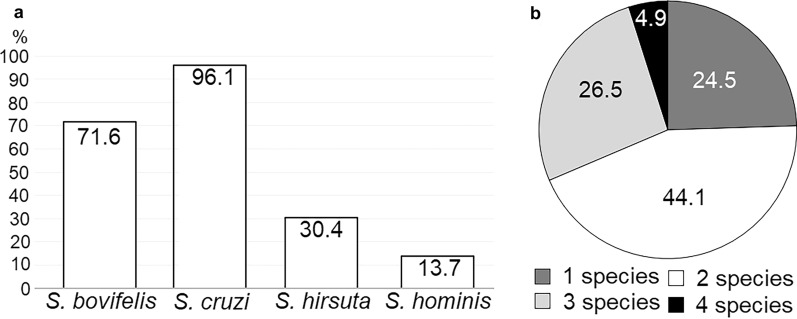
Results: Under the light microscope, sarcocysts were detected in 87.3% of animals, and Sarcocystis infection was verified in all digested samples. Three species, namely S. cruzi (n = 20), S. bovifelis (n = 23) and S. hirsuta (n = 6), were identified by DNA sequence analysis of isolated sarcocysts. Based on sequence analysis of cox1, the level of genetic variability depended on Sarcocystis species and geographical location. Four Sarcocystis species, S. cruzi (96.1%), S. bovifelis (71.6%), S. hirsuta (30.4%) and S. hominis (13.7%), were confirmed in the digested samples. In individual samples, the most common finding was two species of Sarcocystis (44.1%), followed by three species (26.5%), a single species (24.5%) and four species (4.9%).
Conclusions: Although examination of tissue preparations under the light microscrope did not detect any sarcocysts belonging to S. hominis, this species was identified in the digested samples subjected to a cox1-specific PCR analysis. These results demonstrate the need for effective molecular diagnosis techniques to detect Sarcocystis spp., which may be present at a lower prevalence and not detectable among the limited number of sarcocysts identified individually under the light microscope.
Keywords: 18S rRNA gene; Cattle; Molecular identification; Sarcocystis hominis; Trypsin digestion; cox1.
Conflict of interest statement
The authors declare that they have no competing interests.
Figures
References
-
- Dubey JP, Calero-Bernal R, Rosenthal BM, Speer CA, Fayer R. Sarcocystosis of animals and humans. 2. Boca Raton: CRC Press; 2016.
-
- Heydorn AO. Beiträge zum Lebenszyklus der Sarkosporidien. IX. Entwicklungszyklus von Sarcocystis suihominis n. spec. Berl Münch Tierärztl Wochenschr. 1977;90:218–224. - PubMed
-
- Heydorn AO, Gestrich R, Janitschke K. Beiträge zum Lebenszyklus der Sarkosporidien. VIII. Sporozysten von Sarcocystis bovihominis in den Fäzes von Rhesusaffen (Macaca rhesus) und Pavianen (Papio cynocephalus) Berl Münch Tierärztl Wochenschr. 1976;89:116–120. - PubMed
MeSH terms
Substances
LinkOut - more resources
Full Text Sources
Miscellaneous
