


Potential and Applications of Nanocarriers for Efficient Delivery of Biopharmaceuticals
- PMID: 33291312
- PMCID: PMC7762162
- DOI: 10.3390/pharmaceutics12121184
Potential and Applications of Nanocarriers for Efficient Delivery of Biopharmaceuticals
Abstract
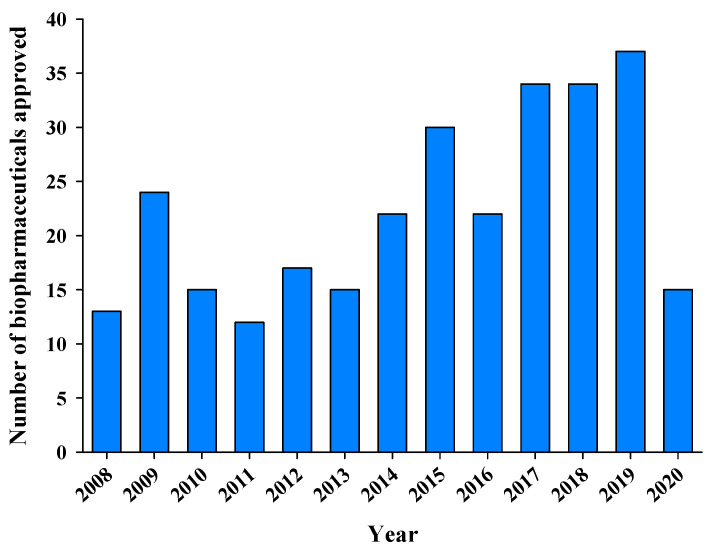
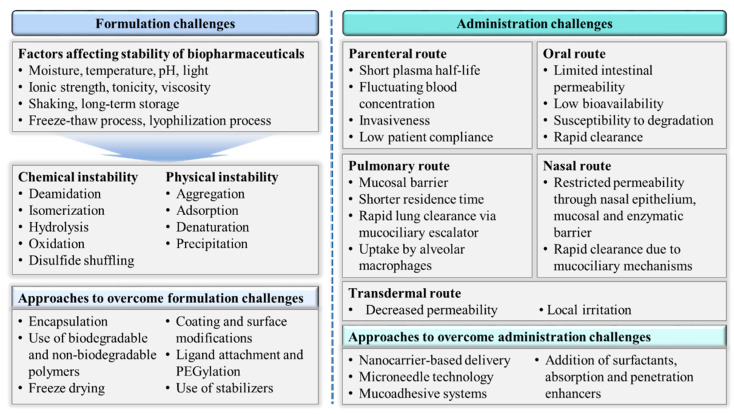
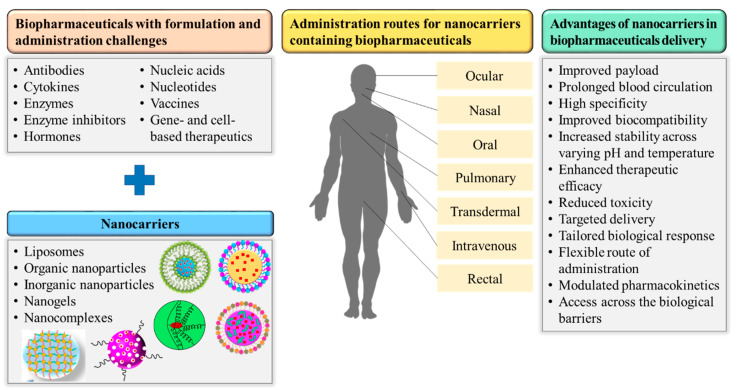
During the past two decades, the clinical use of biopharmaceutical products has markedly increased because of their obvious advantages over conventional small-molecule drug products. These advantages include better specificity, potency, targeting abilities, and reduced side effects. Despite the substantial clinical and commercial success, the macromolecular structure and intrinsic instability of biopharmaceuticals make their formulation and administration challenging and render parenteral delivery as the only viable option in most cases. The use of nanocarriers for efficient delivery of biopharmaceuticals is essential due to their practical benefits such as protecting from degradation in a hostile physiological environment, enhancing plasma half-life and retention time, facilitating absorption through the epithelium, providing site-specific delivery, and improving access to intracellular targets. In the current review, we highlight the clinical and commercial success of biopharmaceuticals and the overall applications and potential of nanocarriers in biopharmaceuticals delivery. Effective applications of nanocarriers for biopharmaceuticals delivery via invasive and noninvasive routes (oral, pulmonary, nasal, and skin) are presented here. The presented data undoubtedly demonstrate the great potential of combining nanocarriers with biopharmaceuticals to improve healthcare products in the future clinical landscape. In conclusion, nanocarriers are promising delivery tool for the hormones, cytokines, nucleic acids, vaccines, antibodies, enzymes, and gene- and cell-based therapeutics for the treatment of multiple pathological conditions.
Keywords: biopharmaceuticals; cytokines; delivery and formulation challenges; enzymes; hormones; monoclonal antibodies; nanocarriers; proteins; recombinant DNA technology; vaccines.
Conflict of interest statement
The authors report no conflicts of interest in this work.
Figures
References
Publication types
Grants and funding
LinkOut - more resources
Full Text Sources
Miscellaneous
