


Proteomic Study Identifies Glycolytic and Inflammation Pathways Involved in Recurrent Otitis Media
- PMID: 33291465
- PMCID: PMC7731350
- DOI: 10.3390/ijms21239291
Proteomic Study Identifies Glycolytic and Inflammation Pathways Involved in Recurrent Otitis Media
Abstract
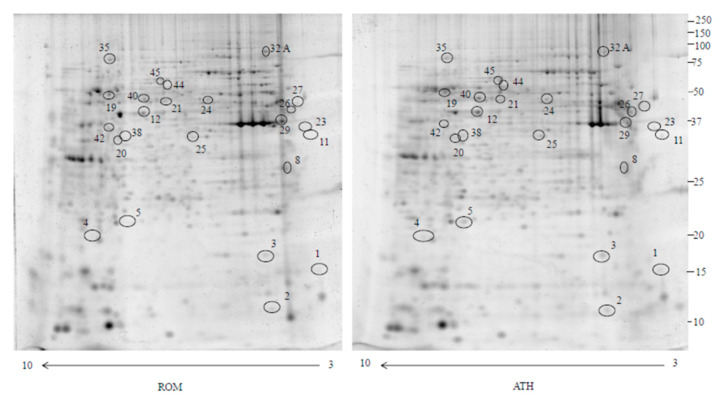
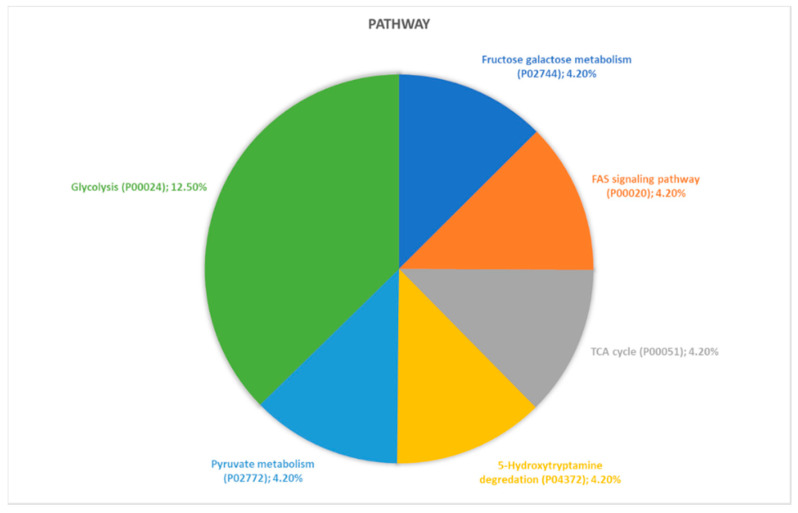
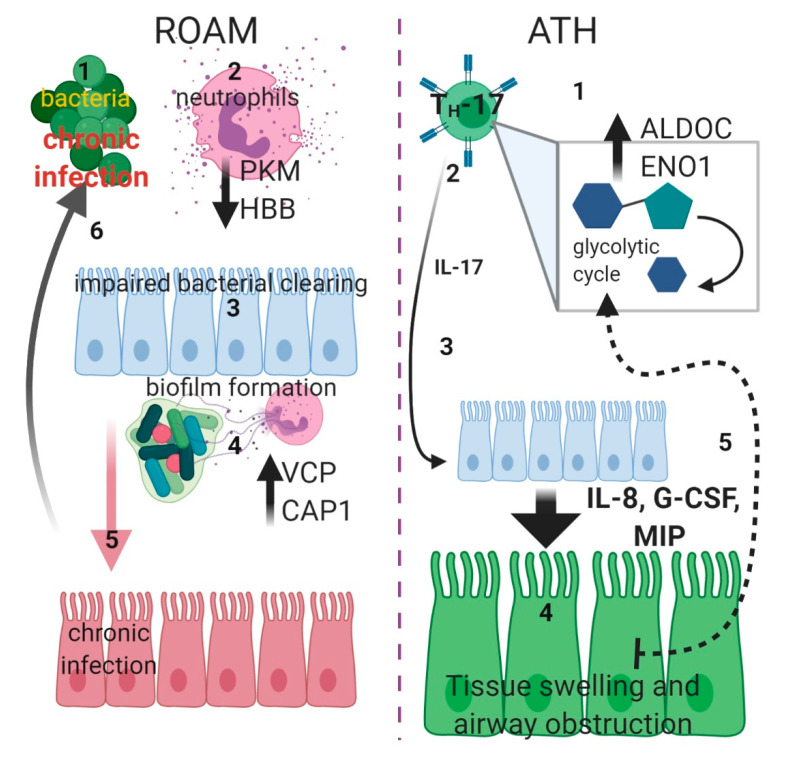
Recurrent acute otitis media (RAOM) in children is clinically defined as the occurrence of at least three episodes of acute otitis media over a course of 6 months. A further common pathological condition of interest in the context of pediatric otolaryngology is adenotonsillar hypertrophy (ATH), a common cause of obstructive sleep apnea syndrome. Aimed at unraveling the differential modulation of proteins in the two pathologies and at understanding the possible pathways involved in their onset, we analyzed the proteomic profile of the adenoids from 14 RAOM and ATH patients by using two-dimensional gel electrophoresis (2-DE) and mass spectrometry (MS). The 2-DE coupled with MS allowed us to identify 23 spots with significant (p-value < 0.05) changes in protein amount, recognizing proteins involved in neutrophil degranulation and glycolysis pathways.
Keywords: 2-DE; adenotonsillar hypertrophy; proteomics; recurrent otitis.
Conflict of interest statement
The authors declare no conflict of interest.
Figures
References
-
- Gaddey H.L., Wright M.T., Nelson T.N. Otitis Media: Rapid Evidence Review. Am. Fam. Physician. 2019;100:350–356. - PubMed
MeSH terms
Substances
Grants and funding
LinkOut - more resources
Full Text Sources
Medical
