


Impaired liver regeneration and lipid homeostasis in CCl4 treated WDR13 deficient mice
- PMID: 33292732
- PMCID: PMC7666495
- DOI: 10.1186/s42826-020-00076-8
Impaired liver regeneration and lipid homeostasis in CCl4 treated WDR13 deficient mice
Abstract
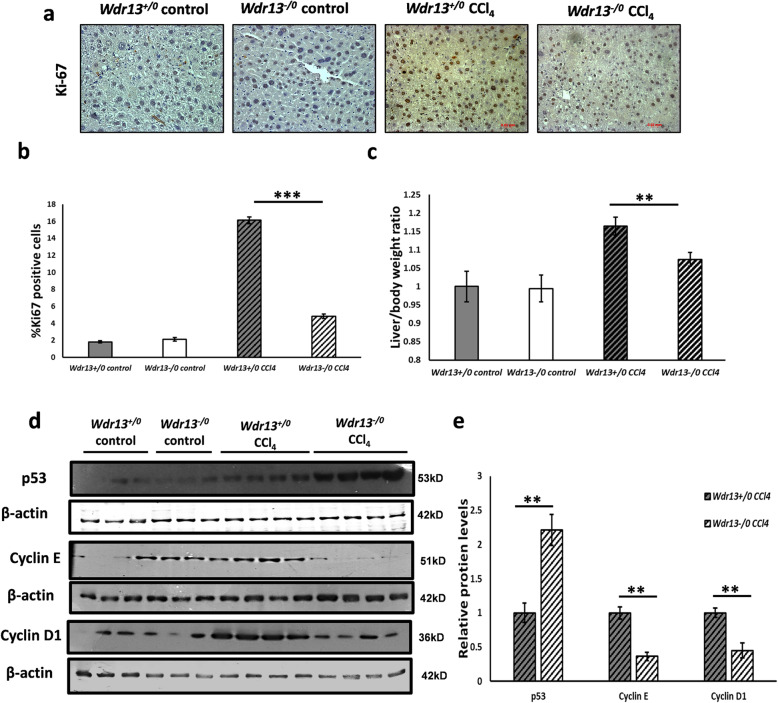
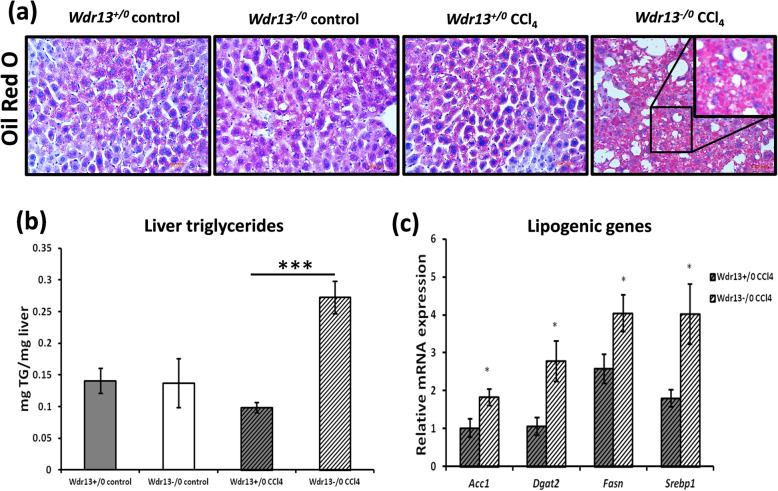
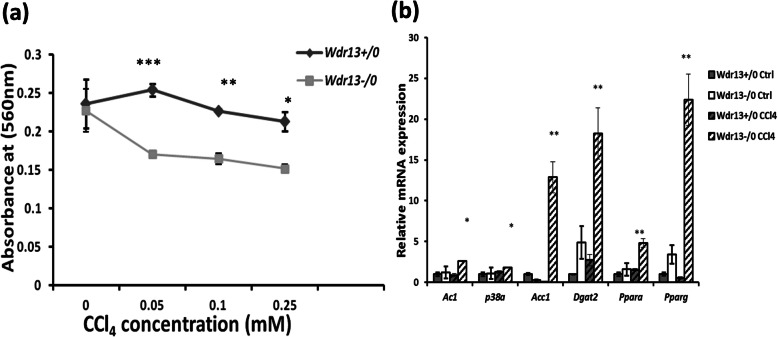
WDR13 - a WD repeat protein, is abundant in pancreas, liver, ovary and testis. Absence of this protein in mice has been seen to be associated with pancreatic β-cell proliferation, hyperinsulinemia and age dependent mild obesity. Previously, we have reported that the absence of WDR13 in diabetic Leprdb/db mice helps in amelioration of fatty liver phenotype along with diabetes and systemic inflammation. This intrigued us to study direct liver injury and hepatic regeneration in Wdr13-/0 mice using hepatotoxin CCl4. In the present study we report slower hepatic regeneration in Wdr13-/0 mice as compared to their wild type littermates after CCl4 administration. Interestingly, during the regeneration phase, hepatic hypertriglyceridemia was observed in Wdr13-/0 mice. Further analyses revealed an upregulation of PPAR pathway in the liver of CCl4- administered Wdr13-/0 mice, causing de novo lipogenesis. The slower hepatic regeneration observed in CCl4 administered Wdr13-/0 mice, may be linked to liver hypertriglyceridemia because of activation of PPAR pathway.
Keywords: Fatty liver; Hepatosteatosis; Hepatotoxin; Hypertriglyceridemia; PPARg.
Conflict of interest statement
Authors declare no conflict of interest.
Figures


References
-
- Reddy JK, Rao MS. Lipid metabolism and liver inflammation. II. Fatty liver disease and fatty acid oxidation. Am J Physiol Gastrointest Liver Physiol. 2006;290(5):G852–8. - PubMed
LinkOut - more resources
Full Text Sources
Miscellaneous
