


Urinary soluble VCAM-1 is a useful biomarker of disease activity and treatment response in lupus nephritis
- PMID: 33292825
- PMCID: PMC7706063
- DOI: 10.1186/s41927-020-00162-3
Urinary soluble VCAM-1 is a useful biomarker of disease activity and treatment response in lupus nephritis
Abstract
Introduction: Vascular cell adhesion molecule-1 (VCAM-1) is involved in the progression of glomerular and tubulointerstitial injury in lupus nephritis (LN) and can be easily assessed in urine. The aim of this study was to assess urinary soluble VCAM-1 (uVCAM-1) as a biomarker of disease activity and treatment response in LN.
Methods: This prospective study enrolled 62 patients with class III, IV or V LN diagnosed within the last 3 years and divided them in two groups: with and without active nephritis at the inclusion, each group with 31 patients. At each visit, a urine sample was collected for uVCAM-1 evaluation and the nephritis status was assessed.
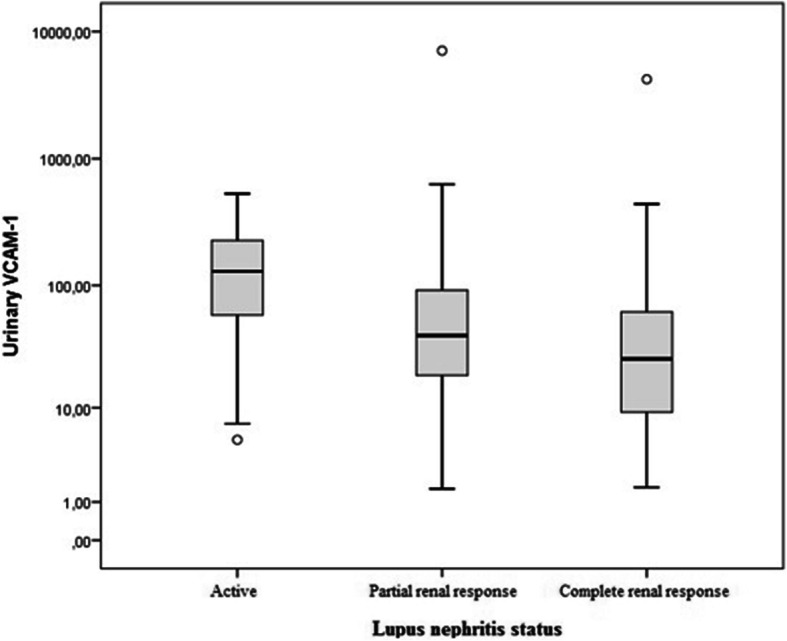
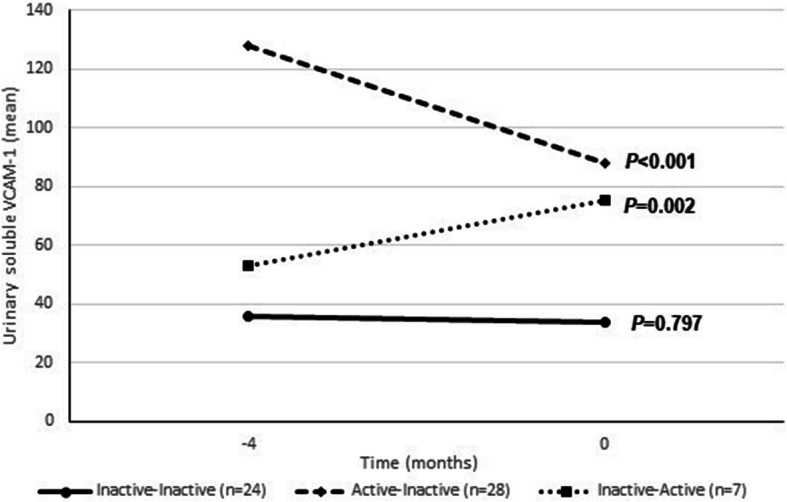
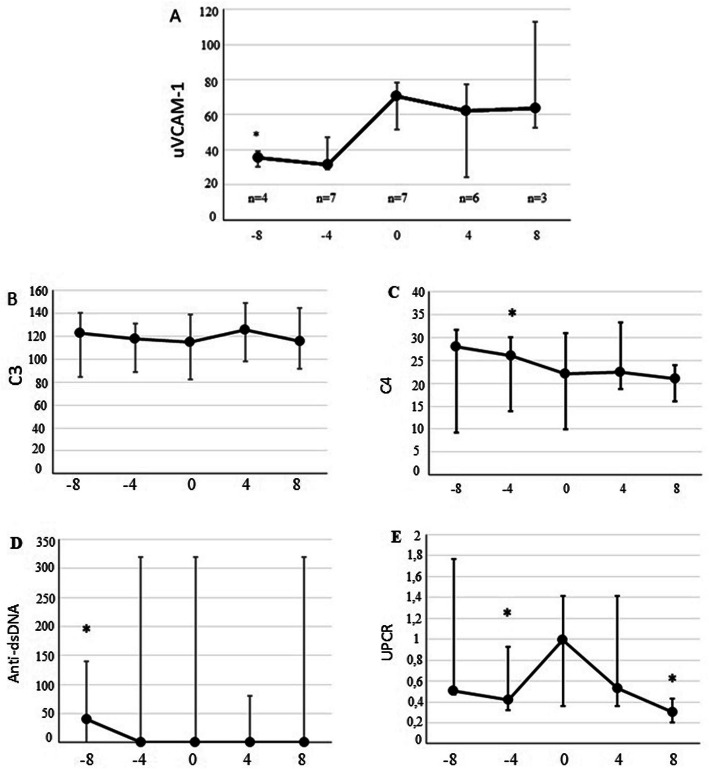
Results: Median uVCAM-1 level was elevated in patients with active compared to inactive LN (P < 0.001). The ROC curve of uVCAM-1 demonstrated an AUC of 0.84 and a cutoff of 47.2 ng/mgCr yielded a good sensitivity (74.2%) and specificity (74.2%) for the diagnosis of active LN. A significant correlation was found between uVCAM-1 level and renal activity scores and traditional biomarkers of LN. The level of uVCAM-1 dropped in patients with active LN who went into remission (P < 0.001), increased in patients who went into activity (P = 0.002) and did not change in patients who remained inactive (P = 0.797). The level of uVCAM-1 peaked during the flare of LN (P < 0.05).
Conclusion: The uVCAM-1 is a reliable biomarker that reflects renal disease activity and is useful for monitoring individual patients with lupus nephritis over time.
Keywords: Lupus nephritis; Urinary biomarker; VCAM-1; Vascular cell adhesion molecule-1.
Conflict of interest statement
The authors declare that they have no competing interests.
Figures
References
-
- Faurschou M, Starklint H, Halberg P, Jacobsen S. Prognostic factors in lupus nephritis: diagnostic and therapeutic delay increases the risk of terminal renal failure. J Rheumatol. 2006;33(8):1563–1569. - PubMed
Grants and funding
LinkOut - more resources
Full Text Sources
Miscellaneous
