


Optimal Management of Frontal Fibrosing Alopecia: A Practical Guide
- PMID: 33293846
- PMCID: PMC7718862
- DOI: 10.2147/CCID.S235980
Optimal Management of Frontal Fibrosing Alopecia: A Practical Guide
Abstract
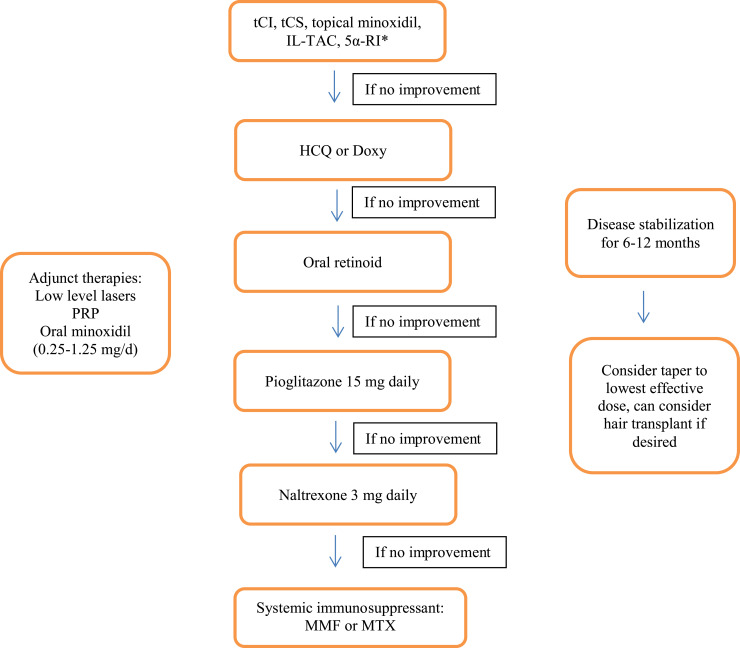
Frontal fibrosing alopecia (FFA) is a primary lymphocytic cicatricial alopecia that is often considered a clinical variant of lichen planopilaris (LPP) due to their shared histopathologic features. FFA is characterized by the recession of the frontal, temporal, or frontotemporal hairline; the clinical pattern is distinct and usually includes eyebrow hair loss, as well as other associated symptoms. Pruritus, facial papules, eyelash loss, body hair involvement, and trichodynia may also occur in addition to the frontotemporal recession and eyebrow loss classically seen. Early diagnosis and prompt treatment are critical as FFA is a progressive disorder that can result in permanent hair loss. FFA is challenging as patients may not present or be recognized until the disease has progressed. Additionally, there is currently no consensus or standard treatment regimen for FFA. While many different therapies have been reported as beneficial, there are a limited number of published guidelines for the treatment of FFA. This article is a review of the literature on treatment modalities for FFA and the objective is to offer a practical guide for clinicians on the evidence-based management options currently available in the literature.
Keywords: alopecia; frontal fibrosing alopecia; hair; hair loss; inflammatory hair disorder; lichen planopilaris; management; primary lymphocytic cicatricial alopecia; scarring; scarring alopecia; treatment.
© 2020 Imhof and Tolkachjov.
Conflict of interest statement
The authors report no conflicts of interest for this work.
References
-
- Kossard S, Lee MS, Wilkinson B. Postmenopausal frontal fibrosing alopecia: a frontal variant of lichen planopilaris. J Am Acad Dermatol. 1997;36(1):59–66. - PubMed
Publication types
LinkOut - more resources
Full Text Sources
